
News News
Cricket Bat Oiling Explained: Why It Matters Most Cricket Bat Oiling Explained: Why It Matters Most
Cricket matches can be won or lost on the tiniest edge, and every amateur cricketer knows how quickly a neglected bat loses its power. Proper maintenance keeps your bat match-ready, with oiling standing out as the ‘secret weapon’ for peak performance. Regular oiling builds a protective barrier against moisture and impact damage, transforming vulnerable willow into a tough, reliable partner at the crease. Discover how the right oiling routine boosts both your bat’s longevity and your confidence at the wicket.
Table of Contents
- Defining Cricket Bat Oiling And Its Purpose
- Choosing The Right Oil For Your Bat
- Oiling Techniques And Timing For Optimal Protection
- Risks Of Over-Oiling And Common Errors To Avoid
- Maintaining Peak Performance After Oiling
Key Takeaways
| Point | Details |
|---|---|
| Importance of Oiling | Regular oiling with raw linseed or castor oil protects the bat from moisture and extends its lifespan. |
| Correct Application | Apply a light, even coat and avoid over-oiling to maintain the bat’s performance and structural integrity. |
| Timing for Oiling | Oil your bat immediately after purchase and every 10-15 hours of use, especially after exposure to wet conditions. |
| Post-Oiling Care | Knocking-in and proper storage are crucial for ensuring the bat’s responsiveness and durability after oiling. |
Defining cricket bat oiling and its purpose
Cricket bat oiling sounds simple, but it’s genuinely one of the most effective things you can do to protect your investment. At its core, cricket bat oiling means applying a protective coat of linseed oil to your willow wood bat to strengthen it against damage.
Willow wood is naturally absorbent and vulnerable. Without proper protection, moisture seeps in, cracks form, and your bat’s sweet spot deteriorates. Oiling acts as a barrier, keeping moisture out whilst making the wood structurally tougher.
Why your bat needs oiling
Raw linseed oil treatments give white willow wood the resilience it needs to withstand constant impact from a cricket ball at high speed. The oil doesn’t just sit on the surface—it penetrates the wood fibres, making them more shock-resistant and durable.
Think of it like this: an unprotected willow bat is like exposed skin in harsh weather. It deteriorates quickly. An oiled bat is weatherproofed, prepared for whatever conditions and impacts come its way.
The primary benefits of regular oiling include:
- Prevents cracking and splintering from moisture absorption and temperature changes
- Enhances shock resistance when the ball strikes the bat at pace
- Extends bat lifespan by years, protecting your financial investment
- Maintains playing quality so the bat performs consistently throughout its life
- Reduces denting from repeated impacts that would otherwise degrade the edge
The protective function explained
Oiling increases bat lifespan by creating a protective seal that shields the wood from environmental stress. Moisture is the enemy of willow—it causes swelling, warping, and internal weakness. Oil blocks moisture entry at the molecular level.
When you hit the ball, the bat experiences enormous stress. The wood compresses, expands, and vibrates. Without oiling, these repeated impacts gradually weaken the internal structure. Oiled wood stays tougher, maintaining its integrity through thousands of deliveries.
You’ll notice the difference immediately after your first proper oiling. The bat feels slightly different in your hands—more stable, more responsive. That’s the structural improvement happening beneath the surface.
Regular oiling transforms how your bat performs and how long it lasts. It’s not optional maintenance; it’s essential protection for any serious cricketer.
What oiling actually does
Oiling accomplishes three critical things simultaneously:
- Creates a moisture barrier that prevents water absorption
- Increases wood density and shock resistance through oil penetration
- Fills surface imperfections, reducing vulnerability to cracks
You’re essentially hardening the wood from within, making it more durable without changing its fundamental performance characteristics.
Pro tip: Start oiling your bat immediately after purchase, not after it shows damage—prevention is far cheaper and more effective than trying to restore a compromised bat.
Choosing the right oil for your bat
Not all oils are created equal when it comes to cricket bat maintenance. The oil you choose directly affects how well your bat performs and how long it lasts. Using the wrong oil can actually damage your bat rather than protect it.
Your bat needs an oil that penetrates deep into the wood whilst maintaining its structural integrity. This means choosing between genuine options that work and avoiding products that’ll harm your investment.
Raw linseed oil: the traditional choice
Raw linseed oil is the traditionally recommended option for cricket bats because it penetrates the wood fibres effectively and creates a protective barrier. The key word here is “raw”—not boiled linseed oil, which creates problems you don’t want.
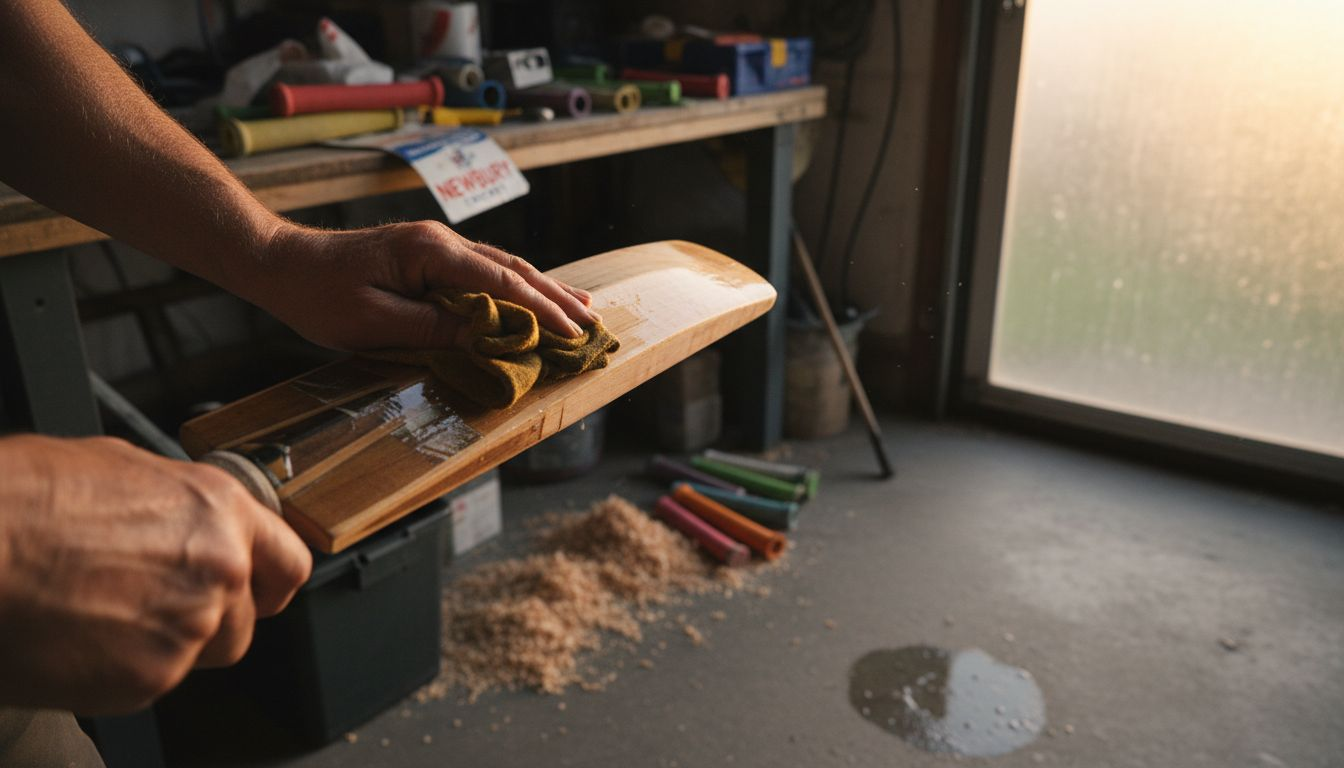
Boiled linseed oil sounds like the better option, but it actually makes the wood surface tacky and prone to damage. Raw linseed oil absorbs into the wood gradually, hardening it from within without creating a sticky surface.
When you apply raw linseed oil, you’re working with a product that’s been used for generations. Countless cricketers have proven its effectiveness through actual playing experience.
Why castor oil works too
Castor oil provides deep protective coating without compromising the wood’s structural integrity. It’s another excellent choice for bat conditioning that maintains durability and surface protection.
Castor oil is naturally safer and gentler than some alternatives. It won’t make your bat tacky or create unwanted surface issues. Many players prefer castor oil because it produces a cleaner finish.
Both raw linseed oil and castor oil achieve the same goal: protecting your bat from moisture and impact damage. The choice between them often comes down to personal preference and availability.
Oils to avoid
Stay away from these options:
- Boiled linseed oil (makes wood tacky and fragile)
- Vegetable oils (too heavy, don’t penetrate properly)
- Machine oil or industrial oils (chemically damage wood)
- Coconut oil (leaves sticky residue, attracts dirt)
These might seem cheaper or easier to find, but they’ll compromise your bat’s performance and lifespan.
Comparing your best options
| Oil Type | Penetration | Feel | Drying Time | Best For |
|---|---|---|---|---|
| Raw linseed oil | Deep | Clean, dry | 2-3 weeks | Traditional approach |
| Castor oil | Deep | Clean, smooth | 1-2 weeks | Faster results |
The best oil is the one you’ll use consistently. Either raw linseed oil or castor oil will protect your bat effectively if applied regularly.
Pro tip: Buy your oil from a reputable cricket specialist rather than generic hardware stores—cricket-grade oils are specifically processed to avoid additives that damage willow wood.
Oiling techniques and timing for optimal protection
How you apply oil matters just as much as which oil you choose. Poor application technique wastes your time and money, whilst proper technique ensures your bat stays protected for years.
The goal is simple: apply a light, even coat that penetrates the wood without creating a sticky mess. This requires understanding both the method and the timing.
The right way to apply oil
Apply oil in light and even coats after thoroughly cleaning your bat. Start with a clean cloth and pour a small amount of oil onto it—roughly a teaspoon per application.
Wipe the oil across the bat’s surface using long, even strokes following the grain of the wood. Don’t oversaturate; you’re aiming for a light coating, not a drenching.
Focus on these key areas:
- The blade edge (where impact occurs most)
- The toe and heel of the bat
- Any exposed wood areas
- The splice where blade meets handle
Avoid pouring oil directly onto the bat. This leads to over-application and uneven absorption.
Timing: when to oil your bat
Oil your bat at the right moments to maximise protection:
- Immediately after purchase (before first use)
- Every 10-15 hours of playing time
- After exposure to rain or high humidity
- Before storing for extended periods
- Whenever the bat starts looking dry or dull
New bats need more frequent oiling in their first month whilst the wood adjusts to playing stress.
The waiting period is critical
Allow sufficient time for oil to penetrate and spread evenly before using your bat. Never use your bat immediately after oiling—this reduces protection and causes premature wear.
Wait at least 24 hours between oiling and playing. Raw linseed oil takes 2-3 weeks to fully cure, whilst castor oil dries faster in about 1-2 weeks. Plan your oiling sessions around your match schedule.
The waiting period allows the oil to penetrate deep into wood fibres rather than sitting on the surface where it gets wiped away during play.
Patience after oiling transforms how effectively it protects your bat. Rush the process and you waste both time and oil.
Storage between sessions
Store your oiled bat in a cool, dry place between playing sessions. Keep it flat or on a bat stand—never leave it standing upright as this causes uneven oil distribution.
Avoid extreme temperature swings, which affect oil curing and wood stability.
Pro tip: Oil your bat on Friday evening before a weekend rest so it has full days to cure before you play, ensuring maximum protection when you need it most.
Risks of over-oiling and common errors to avoid
More oil does not equal better protection. In fact, excessive oiling creates serious problems that damage your bat far more than insufficient oiling ever could. Understanding what goes wrong helps you avoid costly mistakes.
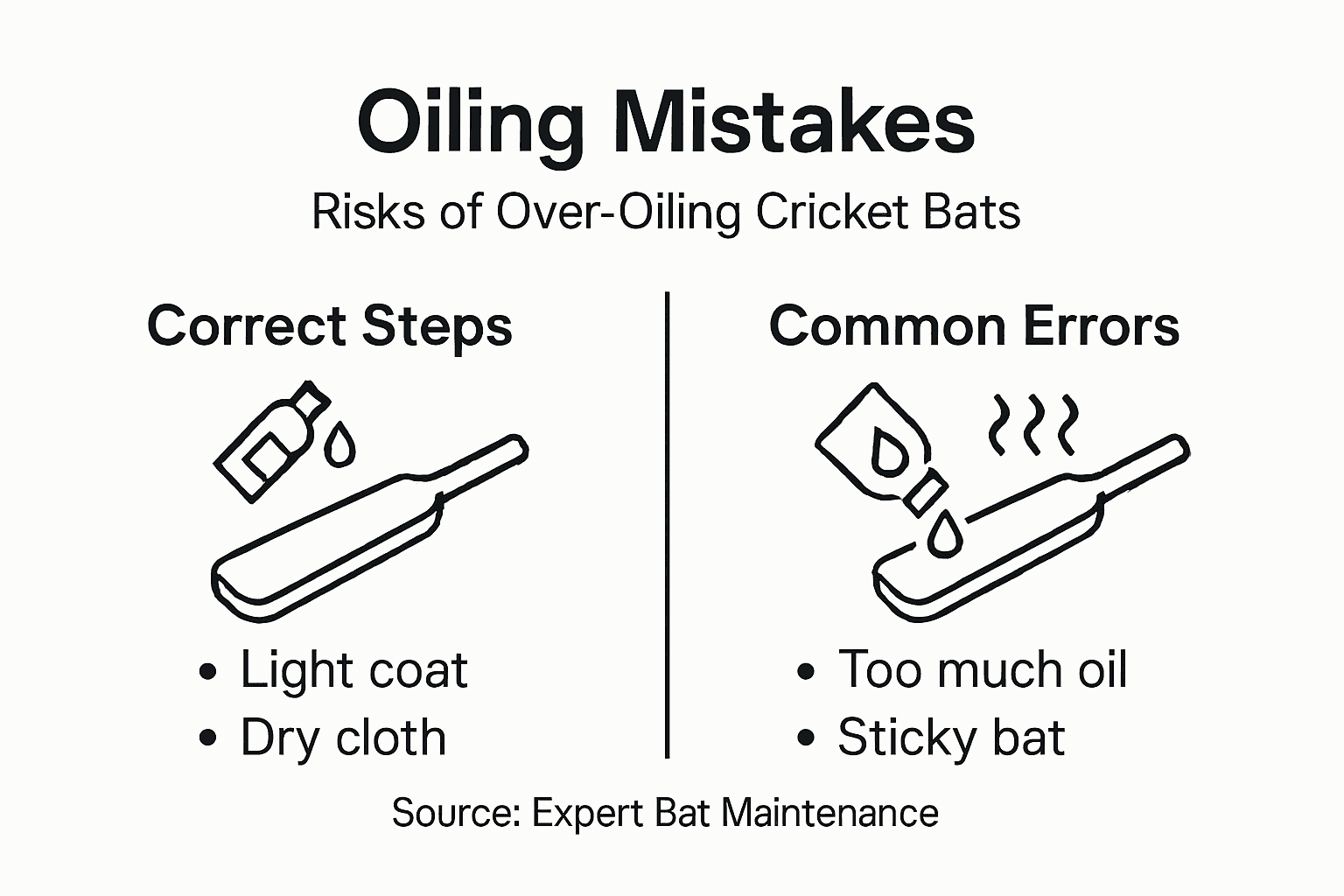
Over-oiling transforms your protective measure into a destructive one. The wood becomes soft, the surface turns sticky, and your bat’s performance deteriorates rapidly.
What happens when you over-oil
Over-oiling causes the surface to become sticky and attracts contaminants that damage the wood structure. Dirt, dust, and moisture stick to the oily surface, creating a grimy layer that traps water against the wood.
Excessive oil also makes the wood soften and swell. The willow becomes less dense and loses its shock-resistant properties. This weakens the bat’s ability to handle impact, reducing its lifespan considerably.
Your bat’s sweet spot diminishes. The edge becomes less crisp. Performance drops noticeably when you’re batting. And yes, I’ve learned this the hard way.
The specific problems over-oiling creates
Watch out for these consequences:
- Surface becomes tacky and uncomfortable to grip
- Wood swells unevenly, affecting bat balance
- Existing protective layers wash away instead of building up
- Sludge build-up develops from trapped dirt and old oil
- Bat becomes slower and less responsive
- Dents and damage occur more easily
- Structural integrity weakens significantly
Each of these problems compounds the others, accelerating your bat’s decline.
Common application mistakes
Applying too much oil impairs bat performance by affecting wood density and durability. These mistakes happen frequently among amateur players:
- Pouring oil directly onto the bat (creates puddles)
- Oiling too frequently (every week instead of every 10-15 hours)
- Using excessive quantities per application (more than one teaspoon)
- Not waiting for cure time before playing
- Applying oil to already-wet bats
- Using wrong oil types that don’t dry properly
How to tell if you’ve over-oiled
Your bat shows obvious signs of over-oiling. The surface feels sticky rather than smooth. Oil comes off on your hands and gloves during play. The bat looks wet or glistening hours after oiling.
The batting feel changes—less responsive, slower ball contact, reduced acceleration through the shot.
Less oil, applied sparingly and at the right intervals, protects your bat far better than generous applications ever could.
Fixing an over-oiled bat
If you’ve already over-oiled, don’t panic. Wipe the bat down with a clean, dry cloth to remove excess surface oil. Let it sit in a cool, dry place for several weeks to allow the wood to stabilise.
For future applications, use roughly half the amount you used previously. Quality matters far more than quantity.
Pro tip: Use the “teaspoon test”—if more than a teaspoon of oil appears on your cloth per application, you’re using too much and need to reduce it by at least half.
Here’s how oil selection, timing, and errors impact your cricket bat’s long-term care:
| Aspect | Correct Approach | Common Mistake | Result |
|---|---|---|---|
| Oil type | Raw linseed or castor oil | Vegetable, machine, or coconut oil | Lasting protection or rapid damage |
| Application timing | Every 10-15 playing hours | Oiling weekly or before fully dry | Consistent quality or weakened wood |
| Oil amount | Light, even coat (teaspoon) | Heavy application, puddling | Durable finish or sticky, soft surface |
| Curing period | Wait at least 24 hours | Using bat too soon | Complete absorption or wasted oil |
Maintaining peak performance after oiling
Oiling your bat is just the beginning. What you do after oiling determines whether your bat stays protected and performs brilliantly, or whether your effort gets wasted. Peak performance comes from consistent aftercare.
Think of oiling as preventive medicine. The maintenance that follows is what keeps your bat healthy long-term.
Knocking-in strengthens the bat
Periodic knocking-in compresses the fibres and prepares the bat for actual game use. This process involves gently striking the bat with a ball or mallet to compress the wood structure.
Start knocking-in immediately after oiling has cured. Gentle strikes gradually harden the wood’s surface, preparing it for the rigours of match play. This compression makes the bat more responsive and durable.
Knocking-in takes 30-45 minutes per session. Do this 2-3 times in the first month, then sporadically as needed. You’ll feel the difference in how your bat responds to the ball.
Post-oiling storage matters
Store your bat correctly to maintain the oiling’s benefits. Keep it in a cool, dry place away from direct sunlight and heating sources. Temperature swings affect how well the oil stays absorbed.
Use a protective cover or bat sleeve to shield against dust and accidental damage. Store the bat horizontally on a rack rather than upright, which prevents uneven pressure on the handle.
Avoid damp environments like basements or garages. Moisture reactivates the problems oiling prevents.
Regular cleaning and inspection
Regularly clean your bat with a soft, dry cloth. Remove dirt and sweat after each playing session before storing it. This prevents contamination build-up that traps moisture.
Inspect your bat monthly for:
- Small cracks or splinters
- Dents that affect performance
- Areas where oil has worn away
- Loose edges or damage to the splice
Catch small problems early before they become expensive repairs.
This table summarises strategies to keep your bat performing at its best after oiling:
| Care Routine | When to Perform | Expected Benefit |
|---|---|---|
| Knocking-in | After curing oil | Harder, responsive surface |
| Clean & inspect | After each use, monthly check | Early action on minor issues |
| Store properly | Always between uses | Stable structure, prevents warping |
| Re-oil | As wood looks dry or after rain | Maintains moisture resistance |
Avoiding moisture damage
Keeping the bat oiled prevents the wood from drying and cracking whilst proper storage prevents excessive moisture exposure. Never leave your bat in wet conditions or damp storage areas.
If your bat gets rained on during play, dry it immediately after. Wipe it down and leave it in a dry place overnight before storing it. Don’t oil a wet bat—wait until it’s completely dry.
Consistent aftercare transforms oiling from a one-time treatment into a system that keeps your bat performing season after season.
When to re-oil and maintain
Re-oil your bat based on playing frequency and conditions:
- After every 10-15 hours of batting time
- Immediately after exposure to rain
- When the bat surface starts looking dry or dull
- Before storing for extended breaks
- At the start of each playing season
Minor damage like small dents or scuff marks don’t always need professional repair. Often, re-oiling and careful use help the wood recover naturally.
Pro tip: Keep your bat in a protective sleeve during transport and storage, and inspect it monthly—catching problems early costs far less than replacing a damaged bat.
Protect Your Investment with Expert Cricket Bat Care Solutions
Understanding the crucial role that oiling plays in extending the life of your cricket bat brings new appreciation for proper maintenance. If you want to avoid the pitfalls of cracking, softening, and diminished performance caused by improper bat care, it is essential to start with a high-quality bat paired with the right accessories. At Cricketbats.com, we offer a curated range of top-tier bats like those from Kookaburra Cricket Bats – Cricket Bats Com and New Balance Cricket Bats – Cricket Bats Com so you can begin with premium willow ideal for oiling and long-term durability.

Take control of your game and your equipment now by investing in the bat that deserves the best care. Visit our Home page – Cricket Bats Com to explore our exclusive selection, learn more about essential bat care, and secure free shipping on your purchase. Your bat’s health and performance depend on selecting the right tools from the start so do not wait to upgrade your cricket gear today.
Frequently Asked Questions
What is cricket bat oiling and why is it important?
Cricket bat oiling involves applying a protective layer of linseed oil to a willow wood bat, which helps prevent moisture absorption, cracking, and splintering, ultimately extending the bat’s lifespan and maintaining its performance.
How often should I oil my cricket bat?
It’s recommended to oil your cricket bat every 10-15 hours of playing time, immediately after purchase, after exposure to rain, and before long-term storage to ensure optimal protection.
What type of oil should I use for my cricket bat?
Raw linseed oil is the traditional choice as it penetrates deeply and hardens the wood effectively. Castor oil is another good option as it also provides excellent protection without making the surface tacky.
What are the risks of over-oiling my cricket bat?
Over-oiling can cause the surface to become sticky, leading to dirt build-up and potentially softening the wood. This impairs the bat’s performance, reduces its shock resistance, and can significantly shorten its lifespan.
Recommended
Cricket matches can be won or lost on the tiniest edge, and every amateur cricketer knows how quickly a neglected bat loses its power. Proper maintenance keeps your bat match-ready, with oiling standing out as the ‘secret weapon’ for peak performance. Regular oiling builds a protective barrier against moisture and impact damage, transforming vulnerable willow into a tough, reliable partner at the crease. Discover how the right oiling routine boosts both your bat’s longevity and your confidence at the wicket.
Table of Contents
- Defining Cricket Bat Oiling And Its Purpose
- Choosing The Right Oil For Your Bat
- Oiling Techniques And Timing For Optimal Protection
- Risks Of Over-Oiling And Common Errors To Avoid
- Maintaining Peak Performance After Oiling
Key Takeaways
| Point | Details |
|---|---|
| Importance of Oiling | Regular oiling with raw linseed or castor oil protects the bat from moisture and extends its lifespan. |
| Correct Application | Apply a light, even coat and avoid over-oiling to maintain the bat’s performance and structural integrity. |
| Timing for Oiling | Oil your bat immediately after purchase and every 10-15 hours of use, especially after exposure to wet conditions. |
| Post-Oiling Care | Knocking-in and proper storage are crucial for ensuring the bat’s responsiveness and durability after oiling. |
Defining cricket bat oiling and its purpose
Cricket bat oiling sounds simple, but it’s genuinely one of the most effective things you can do to protect your investment. At its core, cricket bat oiling means applying a protective coat of linseed oil to your willow wood bat to strengthen it against damage.
Willow wood is naturally absorbent and vulnerable. Without proper protection, moisture seeps in, cracks form, and your bat’s sweet spot deteriorates. Oiling acts as a barrier, keeping moisture out whilst making the wood structurally tougher.
Why your bat needs oiling
Raw linseed oil treatments give white willow wood the resilience it needs to withstand constant impact from a cricket ball at high speed. The oil doesn’t just sit on the surface—it penetrates the wood fibres, making them more shock-resistant and durable.
Think of it like this: an unprotected willow bat is like exposed skin in harsh weather. It deteriorates quickly. An oiled bat is weatherproofed, prepared for whatever conditions and impacts come its way.
The primary benefits of regular oiling include:
- Prevents cracking and splintering from moisture absorption and temperature changes
- Enhances shock resistance when the ball strikes the bat at pace
- Extends bat lifespan by years, protecting your financial investment
- Maintains playing quality so the bat performs consistently throughout its life
- Reduces denting from repeated impacts that would otherwise degrade the edge
The protective function explained
Oiling increases bat lifespan by creating a protective seal that shields the wood from environmental stress. Moisture is the enemy of willow—it causes swelling, warping, and internal weakness. Oil blocks moisture entry at the molecular level.
When you hit the ball, the bat experiences enormous stress. The wood compresses, expands, and vibrates. Without oiling, these repeated impacts gradually weaken the internal structure. Oiled wood stays tougher, maintaining its integrity through thousands of deliveries.
You’ll notice the difference immediately after your first proper oiling. The bat feels slightly different in your hands—more stable, more responsive. That’s the structural improvement happening beneath the surface.
Regular oiling transforms how your bat performs and how long it lasts. It’s not optional maintenance; it’s essential protection for any serious cricketer.
What oiling actually does
Oiling accomplishes three critical things simultaneously:
- Creates a moisture barrier that prevents water absorption
- Increases wood density and shock resistance through oil penetration
- Fills surface imperfections, reducing vulnerability to cracks
You’re essentially hardening the wood from within, making it more durable without changing its fundamental performance characteristics.
Pro tip: Start oiling your bat immediately after purchase, not after it shows damage—prevention is far cheaper and more effective than trying to restore a compromised bat.
Choosing the right oil for your bat
Not all oils are created equal when it comes to cricket bat maintenance. The oil you choose directly affects how well your bat performs and how long it lasts. Using the wrong oil can actually damage your bat rather than protect it.
Your bat needs an oil that penetrates deep into the wood whilst maintaining its structural integrity. This means choosing between genuine options that work and avoiding products that’ll harm your investment.
Raw linseed oil: the traditional choice
Raw linseed oil is the traditionally recommended option for cricket bats because it penetrates the wood fibres effectively and creates a protective barrier. The key word here is “raw”—not boiled linseed oil, which creates problems you don’t want.
Boiled linseed oil sounds like the better option, but it actually makes the wood surface tacky and prone to damage. Raw linseed oil absorbs into the wood gradually, hardening it from within without creating a sticky surface.
When you apply raw linseed oil, you’re working with a product that’s been used for generations. Countless cricketers have proven its effectiveness through actual playing experience.
Why castor oil works too
Castor oil provides deep protective coating without compromising the wood’s structural integrity. It’s another excellent choice for bat conditioning that maintains durability and surface protection.
Castor oil is naturally safer and gentler than some alternatives. It won’t make your bat tacky or create unwanted surface issues. Many players prefer castor oil because it produces a cleaner finish.
Both raw linseed oil and castor oil achieve the same goal: protecting your bat from moisture and impact damage. The choice between them often comes down to personal preference and availability.
Oils to avoid
Stay away from these options:
- Boiled linseed oil (makes wood tacky and fragile)
- Vegetable oils (too heavy, don’t penetrate properly)
- Machine oil or industrial oils (chemically damage wood)
- Coconut oil (leaves sticky residue, attracts dirt)
These might seem cheaper or easier to find, but they’ll compromise your bat’s performance and lifespan.
Comparing your best options
| Oil Type | Penetration | Feel | Drying Time | Best For |
|---|---|---|---|---|
| Raw linseed oil | Deep | Clean, dry | 2-3 weeks | Traditional approach |
| Castor oil | Deep | Clean, smooth | 1-2 weeks | Faster results |
The best oil is the one you’ll use consistently. Either raw linseed oil or castor oil will protect your bat effectively if applied regularly.
Pro tip: Buy your oil from a reputable cricket specialist rather than generic hardware stores—cricket-grade oils are specifically processed to avoid additives that damage willow wood.
Oiling techniques and timing for optimal protection
How you apply oil matters just as much as which oil you choose. Poor application technique wastes your time and money, whilst proper technique ensures your bat stays protected for years.
The goal is simple: apply a light, even coat that penetrates the wood without creating a sticky mess. This requires understanding both the method and the timing.
The right way to apply oil
Apply oil in light and even coats after thoroughly cleaning your bat. Start with a clean cloth and pour a small amount of oil onto it—roughly a teaspoon per application.
Wipe the oil across the bat’s surface using long, even strokes following the grain of the wood. Don’t oversaturate; you’re aiming for a light coating, not a drenching.
Focus on these key areas:
- The blade edge (where impact occurs most)
- The toe and heel of the bat
- Any exposed wood areas
- The splice where blade meets handle
Avoid pouring oil directly onto the bat. This leads to over-application and uneven absorption.
Timing: when to oil your bat
Oil your bat at the right moments to maximise protection:
- Immediately after purchase (before first use)
- Every 10-15 hours of playing time
- After exposure to rain or high humidity
- Before storing for extended periods
- Whenever the bat starts looking dry or dull
New bats need more frequent oiling in their first month whilst the wood adjusts to playing stress.
The waiting period is critical
Allow sufficient time for oil to penetrate and spread evenly before using your bat. Never use your bat immediately after oiling—this reduces protection and causes premature wear.
Wait at least 24 hours between oiling and playing. Raw linseed oil takes 2-3 weeks to fully cure, whilst castor oil dries faster in about 1-2 weeks. Plan your oiling sessions around your match schedule.
The waiting period allows the oil to penetrate deep into wood fibres rather than sitting on the surface where it gets wiped away during play.
Patience after oiling transforms how effectively it protects your bat. Rush the process and you waste both time and oil.
Storage between sessions
Store your oiled bat in a cool, dry place between playing sessions. Keep it flat or on a bat stand—never leave it standing upright as this causes uneven oil distribution.
Avoid extreme temperature swings, which affect oil curing and wood stability.
Pro tip: Oil your bat on Friday evening before a weekend rest so it has full days to cure before you play, ensuring maximum protection when you need it most.
Risks of over-oiling and common errors to avoid
More oil does not equal better protection. In fact, excessive oiling creates serious problems that damage your bat far more than insufficient oiling ever could. Understanding what goes wrong helps you avoid costly mistakes.
Over-oiling transforms your protective measure into a destructive one. The wood becomes soft, the surface turns sticky, and your bat’s performance deteriorates rapidly.
What happens when you over-oil
Over-oiling causes the surface to become sticky and attracts contaminants that damage the wood structure. Dirt, dust, and moisture stick to the oily surface, creating a grimy layer that traps water against the wood.
Excessive oil also makes the wood soften and swell. The willow becomes less dense and loses its shock-resistant properties. This weakens the bat’s ability to handle impact, reducing its lifespan considerably.
Your bat’s sweet spot diminishes. The edge becomes less crisp. Performance drops noticeably when you’re batting. And yes, I’ve learned this the hard way.
The specific problems over-oiling creates
Watch out for these consequences:
- Surface becomes tacky and uncomfortable to grip
- Wood swells unevenly, affecting bat balance
- Existing protective layers wash away instead of building up
- Sludge build-up develops from trapped dirt and old oil
- Bat becomes slower and less responsive
- Dents and damage occur more easily
- Structural integrity weakens significantly
Each of these problems compounds the others, accelerating your bat’s decline.
Common application mistakes
Applying too much oil impairs bat performance by affecting wood density and durability. These mistakes happen frequently among amateur players:
- Pouring oil directly onto the bat (creates puddles)
- Oiling too frequently (every week instead of every 10-15 hours)
- Using excessive quantities per application (more than one teaspoon)
- Not waiting for cure time before playing
- Applying oil to already-wet bats
- Using wrong oil types that don’t dry properly
How to tell if you’ve over-oiled
Your bat shows obvious signs of over-oiling. The surface feels sticky rather than smooth. Oil comes off on your hands and gloves during play. The bat looks wet or glistening hours after oiling.
The batting feel changes—less responsive, slower ball contact, reduced acceleration through the shot.
Less oil, applied sparingly and at the right intervals, protects your bat far better than generous applications ever could.
Fixing an over-oiled bat
If you’ve already over-oiled, don’t panic. Wipe the bat down with a clean, dry cloth to remove excess surface oil. Let it sit in a cool, dry place for several weeks to allow the wood to stabilise.
For future applications, use roughly half the amount you used previously. Quality matters far more than quantity.
Pro tip: Use the “teaspoon test”—if more than a teaspoon of oil appears on your cloth per application, you’re using too much and need to reduce it by at least half.
Here’s how oil selection, timing, and errors impact your cricket bat’s long-term care:
| Aspect | Correct Approach | Common Mistake | Result |
|---|---|---|---|
| Oil type | Raw linseed or castor oil | Vegetable, machine, or coconut oil | Lasting protection or rapid damage |
| Application timing | Every 10-15 playing hours | Oiling weekly or before fully dry | Consistent quality or weakened wood |
| Oil amount | Light, even coat (teaspoon) | Heavy application, puddling | Durable finish or sticky, soft surface |
| Curing period | Wait at least 24 hours | Using bat too soon | Complete absorption or wasted oil |
Maintaining peak performance after oiling
Oiling your bat is just the beginning. What you do after oiling determines whether your bat stays protected and performs brilliantly, or whether your effort gets wasted. Peak performance comes from consistent aftercare.
Think of oiling as preventive medicine. The maintenance that follows is what keeps your bat healthy long-term.
Knocking-in strengthens the bat
Periodic knocking-in compresses the fibres and prepares the bat for actual game use. This process involves gently striking the bat with a ball or mallet to compress the wood structure.
Start knocking-in immediately after oiling has cured. Gentle strikes gradually harden the wood’s surface, preparing it for the rigours of match play. This compression makes the bat more responsive and durable.
Knocking-in takes 30-45 minutes per session. Do this 2-3 times in the first month, then sporadically as needed. You’ll feel the difference in how your bat responds to the ball.
Post-oiling storage matters
Store your bat correctly to maintain the oiling’s benefits. Keep it in a cool, dry place away from direct sunlight and heating sources. Temperature swings affect how well the oil stays absorbed.
Use a protective cover or bat sleeve to shield against dust and accidental damage. Store the bat horizontally on a rack rather than upright, which prevents uneven pressure on the handle.
Avoid damp environments like basements or garages. Moisture reactivates the problems oiling prevents.
Regular cleaning and inspection
Regularly clean your bat with a soft, dry cloth. Remove dirt and sweat after each playing session before storing it. This prevents contamination build-up that traps moisture.
Inspect your bat monthly for:
- Small cracks or splinters
- Dents that affect performance
- Areas where oil has worn away
- Loose edges or damage to the splice
Catch small problems early before they become expensive repairs.
This table summarises strategies to keep your bat performing at its best after oiling:
| Care Routine | When to Perform | Expected Benefit |
|---|---|---|
| Knocking-in | After curing oil | Harder, responsive surface |
| Clean & inspect | After each use, monthly check | Early action on minor issues |
| Store properly | Always between uses | Stable structure, prevents warping |
| Re-oil | As wood looks dry or after rain | Maintains moisture resistance |
Avoiding moisture damage
Keeping the bat oiled prevents the wood from drying and cracking whilst proper storage prevents excessive moisture exposure. Never leave your bat in wet conditions or damp storage areas.
If your bat gets rained on during play, dry it immediately after. Wipe it down and leave it in a dry place overnight before storing it. Don’t oil a wet bat—wait until it’s completely dry.
Consistent aftercare transforms oiling from a one-time treatment into a system that keeps your bat performing season after season.
When to re-oil and maintain
Re-oil your bat based on playing frequency and conditions:
- After every 10-15 hours of batting time
- Immediately after exposure to rain
- When the bat surface starts looking dry or dull
- Before storing for extended breaks
- At the start of each playing season
Minor damage like small dents or scuff marks don’t always need professional repair. Often, re-oiling and careful use help the wood recover naturally.
Pro tip: Keep your bat in a protective sleeve during transport and storage, and inspect it monthly—catching problems early costs far less than replacing a damaged bat.
Protect Your Investment with Expert Cricket Bat Care Solutions
Understanding the crucial role that oiling plays in extending the life of your cricket bat brings new appreciation for proper maintenance. If you want to avoid the pitfalls of cracking, softening, and diminished performance caused by improper bat care, it is essential to start with a high-quality bat paired with the right accessories. At Cricketbats.com, we offer a curated range of top-tier bats like those from Kookaburra Cricket Bats – Cricket Bats Com and New Balance Cricket Bats – Cricket Bats Com so you can begin with premium willow ideal for oiling and long-term durability.
Take control of your game and your equipment now by investing in the bat that deserves the best care. Visit our Home page – Cricket Bats Com to explore our exclusive selection, learn more about essential bat care, and secure free shipping on your purchase. Your bat’s health and performance depend on selecting the right tools from the start so do not wait to upgrade your cricket gear today.
Frequently Asked Questions
What is cricket bat oiling and why is it important?
Cricket bat oiling involves applying a protective layer of linseed oil to a willow wood bat, which helps prevent moisture absorption, cracking, and splintering, ultimately extending the bat’s lifespan and maintaining its performance.
How often should I oil my cricket bat?
It’s recommended to oil your cricket bat every 10-15 hours of playing time, immediately after purchase, after exposure to rain, and before long-term storage to ensure optimal protection.
What type of oil should I use for my cricket bat?
Raw linseed oil is the traditional choice as it penetrates deeply and hardens the wood effectively. Castor oil is another good option as it also provides excellent protection without making the surface tacky.
What are the risks of over-oiling my cricket bat?
Over-oiling can cause the surface to become sticky, leading to dirt build-up and potentially softening the wood. This impairs the bat’s performance, reduces its shock resistance, and can significantly shorten its lifespan.