
News News
Difference in Junior and Senior Bats: Why Size Matters Difference in Junior and Senior Bats: Why Size Matters
Finding the right cricket bat for your junior cricketer can feel daunting, especially as nearly 60 percent of British parents say they confuse junior and senior equipment when shopping. The difference between these bats is not just about size, but crucial factors like weight, balance, and materials directly affect your child’s comfort and gameplay. Understanding these distinctions gives families the confidence to select gear that fosters skill development and safety, setting your young athlete up for success in local leagues.
Table of Contents
- What Sets Junior and Senior Bats Apart
- Key Size, Weight and Balance Differences
- Appropriate Bat Selection by Age and Height
- Performance, Safety and Comfort Implications
- Common Pitfalls When Choosing Bat Sizes
Key Takeaways
| Point | Details |
|---|---|
| Understanding Bat Types | Junior and senior bats differ significantly beyond size; they cater to specific age groups and skill levels, with junior bats designed for younger players. |
| Importance of Bat Selection | Selecting the right bat involves considering age, height, weight, and swing comfort to support player development and technique formation. |
| Bat Specifications Matter | Knowing the bat drop range is crucial; junior bats typically feature a drop of -13 to -10, while senior bats range from -10 to -5 for optimal performance. |
| Avoid Common Mistakes | Misconceptions about size and weight can hinder performance; selecting a bat that fits the player’s current abilities is essential for skill progression. |
What Sets Junior and Senior Bats Apart
Choosing the right cricket bat involves understanding the critical differences between junior and senior bats. These variations go far beyond simple size considerations, encompassing design, weight, materials, and performance characteristics tailored to specific age groups and skill levels.
Junior bats are specifically engineered for younger players, typically aged 5–7, with lighter construction and thinner barrel walls. These bats prioritise manoeuvrability and ease of handling, allowing children to develop fundamental batting techniques without being overwhelmed by equipment weight. Conversely, senior bats are designed for players aged 9–14, featuring thicker barrel walls, increased weight, and more robust construction to support developing strength and emerging batting skills.
The primary distinctions between junior and senior bats include:
- Weight Distribution: Junior bats have more centralised weight for easier control
- Barrel Thickness: Progressively increasing from junior to senior models
- Length-to-Weight Ratio: Senior bats offer more advanced performance metrics
- Material Complexity: More sophisticated wood grading in senior bat designs
Expert Tip: Always select a bat that allows your young cricketer to swing comfortably while maintaining proper technique, rather than choosing based solely on age recommendations.
To help distinguish the suitability of junior versus senior cricket bats, observe these key comparison points:
| Criteria | Junior Bat | Senior Bat |
|---|---|---|
| Target Age Group | 5–7 years | 9–14 years |
| Bat Drop Range | -13 to -10 | -10 to -5 |
| Typical Bat Length | 24–28 inches | 29–32 inches |
| Barrel Wall Construction | Thin, lightweight | Thicker, robust |
| Swing Weight Focus | Easier control | Higher power potential |
Key Size, Weight and Balance Differences
Understanding the nuanced differences in size, weight, and balance between junior and senior cricket bats is crucial for young players seeking optimal performance and skill development. These characteristics directly influence a player’s ability to control the bat, generate power, and develop proper batting technique.
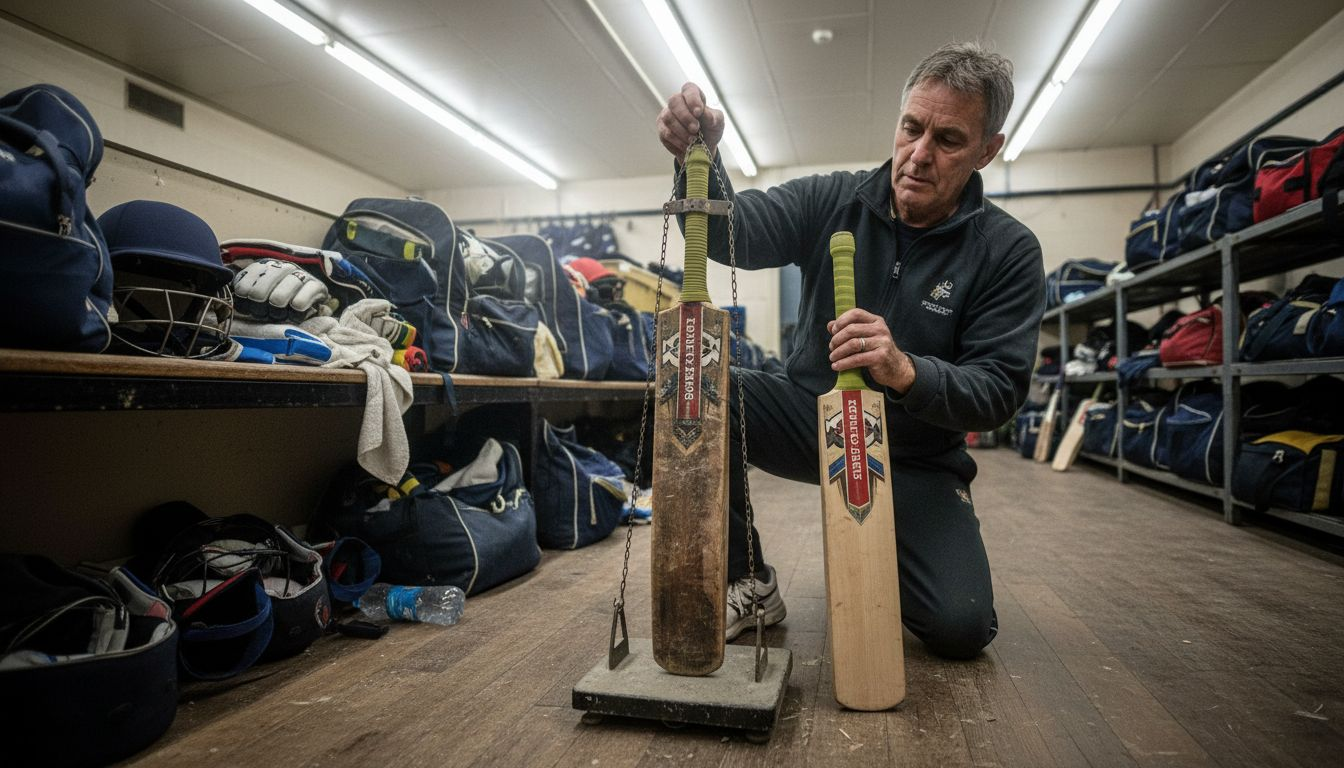
The most significant differentiator is the bat drop, which represents the numerical difference between the bat’s length and weight. Junior bats typically feature a drop range from -13 to -10, designed for lighter swing weight and lower pitch speeds, whereas senior bats transition to a more substantial drop range of -10 to -5, accommodating increased strength and swing velocity.
Key size and weight characteristics include:
-
Junior Bat Specifications:
- Lighter overall weight
- Smaller handle circumference
- More centralised weight distribution
- Shorter length relative to player height
-
Senior Bat Specifications:
- Increased weight for power generation
- Thicker handle for enhanced grip
- More distributed weight towards barrel end
- Length proportional to player’s growing physique
The progression from junior to senior bats mirrors a player’s physical development, with each design stage carefully engineered to support improving batting skills and muscular strength. Manufacturers meticulously calibrate these specifications to ensure young cricketers have equipment that challenges and supports their evolving capabilities.
Expert Tip: Consider having your young cricketer professionally measured to ensure the bat’s weight and length align perfectly with their current physical development and skill level.
Appropriate Bat Selection by Age and Height
Selecting the perfect cricket bat requires a nuanced understanding of how a young player’s physical characteristics directly influence equipment performance. Proper bat sizing combines precise measurements of both age and height to ensure optimal swing mechanics and player comfort, creating a foundation for skill development and injury prevention.
Age-specific bat length recommendations provide a crucial guide for parents and young cricketers. Typically, players aged 6–8 benefit from 26–28 inch bats, while 9–10-year-old athletes perform best with 28–30 inch models. As players mature, bat lengths progressively increase: 11–12-year-old players typically require 30–32 inch bats, with subsequent adjustments based on individual physical development and strength.
Key selection criteria for matching bats to young players include:
-
Height Proportions:
- Shorter players need lighter, shorter bats
- Taller players can manage longer, slightly heavier equipment
-
Weight Considerations:
- Bat should be light enough for comfortable swinging
- Weight must support developing muscle strength
-
Grip and Handle:
- Circumference should match player’s hand size
- Comfortable grip prevents potential technique issues
Careful bat selection goes beyond simple measurements. Interactive sizing guides help ensure players select equipment that optimises swing speed and reduces injury risks, transforming equipment choice from guesswork into a strategic decision that supports a young cricketer’s developmental journey.
For quick reference, consider these matching guidelines between player height and recommended bat length:
| Player Height | Suggested Bat Length | Notes |
|---|---|---|
| Under 4 ft (122 cm) | 24–26 inches | Suits beginners, easy manoeuvre |
| 4 ft to 4.5 ft (122–137 cm) | 27–29 inches | Supports elementary skill growth |
| 4.5 ft to 5 ft (137–152 cm) | 29–30 inches | Transition stage, increased strength |
| Over 5 ft (152+ cm) | 31–32 inches | Approaches full-size, for advancing players |
Expert Tip: Always test the bat’s weight and balance by having your young player perform several practice swings, ensuring natural movement and comfortable control.
Performance, Safety and Comfort Implications
Performance metrics in cricket bat selection extend far beyond simple measurements, directly impacting a player’s safety, technique, and overall sporting experience. The intricate relationship between bat design, player physiology, and equipment performance creates a complex ecosystem where every design choice carries significant consequences for young cricketers.
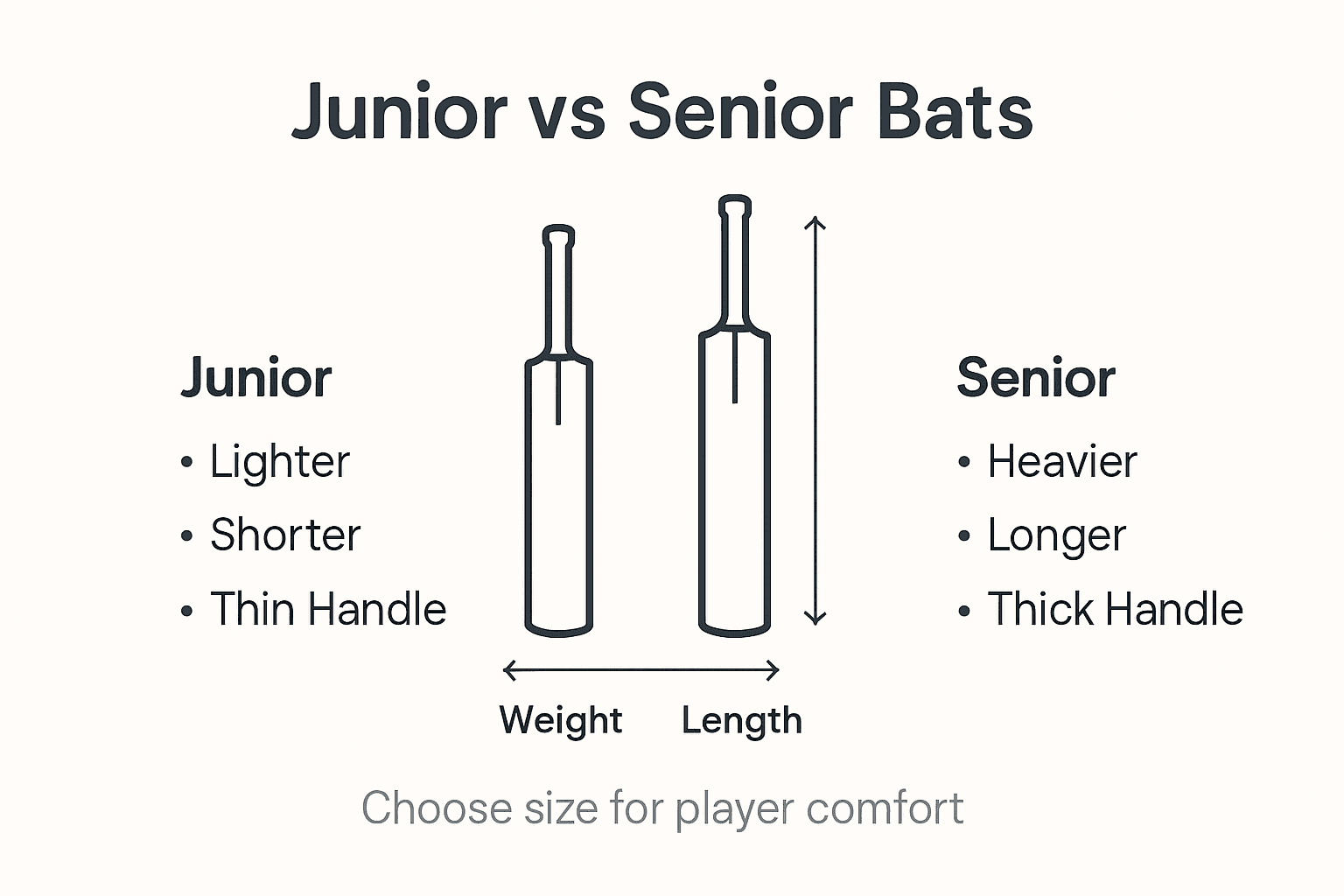
The bat-ball coefficient of restitution (BBCOR) represents a critical performance indicator, determining how energy transfers between bat and ball. Junior bats, characterised by lighter construction, provide easier swing mechanics but generate less impact force, whereas senior bats offer increased performance potential at the cost of requiring more advanced technical skill and physical strength.
Key performance and safety considerations include:
-
Injury Prevention:
- Balanced bat weight reduces strain on developing muscles
- Appropriate bat length minimises unnatural swing mechanics
-
Technical Development:
- Matched equipment supports proper technique formation
- Prevents compensatory movement patterns
-
Performance Metrics:
- Energy transfer efficiency
- Swing speed potential
- Impact force consistency
Safety regulations in bat design demonstrate profound connections between equipment selection and potential injury risks for both batters and defensive players, underlining the importance of thoughtful, developmental-stage-appropriate equipment selection. Understanding these nuanced interactions helps parents and coaches make informed decisions that protect young athletes while supporting their sporting progression.
Expert Tip: Regularly reassess your young cricketer’s bat requirements, as rapid growth can quickly render previously suitable equipment obsolete.
Common Pitfalls When Choosing Bat Sizes
Navigating the complex world of cricket bat selection requires careful consideration and awareness of potential missteps that can significantly impact a young player’s performance and development. Common mistakes in bat selection often stem from misunderstandings about the critical relationship between player physique and equipment specifications.
One of the most prevalent errors parents and young cricketers make is assuming that larger or heavier bats automatically translate to better performance. In reality, an oversized bat can dramatically impede a player’s technique, reducing swing speed and creating compensatory movement patterns that can harm long-term skill development. Choosing bats based on appearance or price, rather than proper fit and player capabilities, represents a fundamental misconception that can hinder athletic progression.
Key pitfalls to avoid include:
-
Size Misconceptions:
- Selecting bats too long or heavy for the player’s current physical development
- Ignoring individual strength and technique levels
- Overlooking league-specific equipment regulations
-
Selection Errors:
- Prioritising aesthetic appeal over functional performance
- Assuming age is the sole determinant of appropriate bat size
- Neglecting to test multiple bat options
-
Technical Consequences:
- Reduced swing mechanics
- Increased injury risk
- Diminished player confidence
Successful bat selection requires a holistic approach that considers the player’s current physical capabilities, future development potential, and specific technical requirements. Parents and coaches must look beyond surface-level characteristics and focus on finding equipment that genuinely supports the young cricketer’s skill progression.
Expert Tip: Always conduct multiple practice swings with potential bats, assessing not just weight and length, but the overall feel and natural movement during swing.
Find the Perfect Cricket Bat to Match Your Player’s Growth
Understanding the crucial differences between junior and senior bats is essential to ensure young cricketers develop the right technique without struggling with ill-fitting equipment. Whether you are selecting a bat for a 5-year-old just starting out or a confident 12-year-old ready for more power and control, choosing the appropriate size, weight and balance can transform their game.
Explore our comprehensive collection of Junior Cricket Bats | Cheap Junior Cricket Bats – Cricket Bats Com designed for ease of swing and comfort. When strength and skill improve, transition smoothly to our expertly crafted Senior Cricket Bats – Cricket Bats Com that support higher performance and power generation.

Don’t let your young player struggle with unsuitable equipment. Visit https://cricketbats.com today to browse, compare and select the best cricket bat tailored to their age and physical development. Act now to ensure every practice session and match is supported by equipment that enhances confidence, technique and safety.
Frequently Asked Questions
What is the main difference between junior and senior cricket bats?
Junior bats are designed for younger players aged 5–7, featuring lighter construction and thinner barrel walls for ease of handling, while senior bats are for players aged 9–14, with thicker barrel walls and increased weight to support developing strength and skills.
How should I choose the right size cricket bat for my child?
When selecting a bat, consider your child’s age and height. Generally, players aged 6–8 benefit from 26–28 inch bats, while 9–10-year-olds perform best with 28–30 inch models. Always ensure the bat feels comfortable for them to swing.
Why is the bat drop important when selecting a cricket bat?
The bat drop is the difference between the bat’s length and weight. Junior bats typically have a drop range of -13 to -10 for lighter swing weights, while senior bats have a drop range of -10 to -5, allowing for increased strength and swing velocity.
What safety considerations should I keep in mind when buying a cricket bat?
Choose a bat that is the appropriate length and weight for your child’s developing muscles to reduce the risk of injury. Properly sized equipment will support their technique and ensure safe play.
Recommended
Finding the right cricket bat for your junior cricketer can feel daunting, especially as nearly 60 percent of British parents say they confuse junior and senior equipment when shopping. The difference between these bats is not just about size, but crucial factors like weight, balance, and materials directly affect your child’s comfort and gameplay. Understanding these distinctions gives families the confidence to select gear that fosters skill development and safety, setting your young athlete up for success in local leagues.
Table of Contents
- What Sets Junior and Senior Bats Apart
- Key Size, Weight and Balance Differences
- Appropriate Bat Selection by Age and Height
- Performance, Safety and Comfort Implications
- Common Pitfalls When Choosing Bat Sizes
Key Takeaways
| Point | Details |
|---|---|
| Understanding Bat Types | Junior and senior bats differ significantly beyond size; they cater to specific age groups and skill levels, with junior bats designed for younger players. |
| Importance of Bat Selection | Selecting the right bat involves considering age, height, weight, and swing comfort to support player development and technique formation. |
| Bat Specifications Matter | Knowing the bat drop range is crucial; junior bats typically feature a drop of -13 to -10, while senior bats range from -10 to -5 for optimal performance. |
| Avoid Common Mistakes | Misconceptions about size and weight can hinder performance; selecting a bat that fits the player’s current abilities is essential for skill progression. |
What Sets Junior and Senior Bats Apart
Choosing the right cricket bat involves understanding the critical differences between junior and senior bats. These variations go far beyond simple size considerations, encompassing design, weight, materials, and performance characteristics tailored to specific age groups and skill levels.
Junior bats are specifically engineered for younger players, typically aged 5–7, with lighter construction and thinner barrel walls. These bats prioritise manoeuvrability and ease of handling, allowing children to develop fundamental batting techniques without being overwhelmed by equipment weight. Conversely, senior bats are designed for players aged 9–14, featuring thicker barrel walls, increased weight, and more robust construction to support developing strength and emerging batting skills.
The primary distinctions between junior and senior bats include:
- Weight Distribution: Junior bats have more centralised weight for easier control
- Barrel Thickness: Progressively increasing from junior to senior models
- Length-to-Weight Ratio: Senior bats offer more advanced performance metrics
- Material Complexity: More sophisticated wood grading in senior bat designs
Expert Tip: Always select a bat that allows your young cricketer to swing comfortably while maintaining proper technique, rather than choosing based solely on age recommendations.
To help distinguish the suitability of junior versus senior cricket bats, observe these key comparison points:
| Criteria | Junior Bat | Senior Bat |
|---|---|---|
| Target Age Group | 5–7 years | 9–14 years |
| Bat Drop Range | -13 to -10 | -10 to -5 |
| Typical Bat Length | 24–28 inches | 29–32 inches |
| Barrel Wall Construction | Thin, lightweight | Thicker, robust |
| Swing Weight Focus | Easier control | Higher power potential |
Key Size, Weight and Balance Differences
Understanding the nuanced differences in size, weight, and balance between junior and senior cricket bats is crucial for young players seeking optimal performance and skill development. These characteristics directly influence a player’s ability to control the bat, generate power, and develop proper batting technique.
The most significant differentiator is the bat drop, which represents the numerical difference between the bat’s length and weight. Junior bats typically feature a drop range from -13 to -10, designed for lighter swing weight and lower pitch speeds, whereas senior bats transition to a more substantial drop range of -10 to -5, accommodating increased strength and swing velocity.
Key size and weight characteristics include:
-
Junior Bat Specifications:
- Lighter overall weight
- Smaller handle circumference
- More centralised weight distribution
- Shorter length relative to player height
-
Senior Bat Specifications:
- Increased weight for power generation
- Thicker handle for enhanced grip
- More distributed weight towards barrel end
- Length proportional to player’s growing physique
The progression from junior to senior bats mirrors a player’s physical development, with each design stage carefully engineered to support improving batting skills and muscular strength. Manufacturers meticulously calibrate these specifications to ensure young cricketers have equipment that challenges and supports their evolving capabilities.
Expert Tip: Consider having your young cricketer professionally measured to ensure the bat’s weight and length align perfectly with their current physical development and skill level.
Appropriate Bat Selection by Age and Height
Selecting the perfect cricket bat requires a nuanced understanding of how a young player’s physical characteristics directly influence equipment performance. Proper bat sizing combines precise measurements of both age and height to ensure optimal swing mechanics and player comfort, creating a foundation for skill development and injury prevention.
Age-specific bat length recommendations provide a crucial guide for parents and young cricketers. Typically, players aged 6–8 benefit from 26–28 inch bats, while 9–10-year-old athletes perform best with 28–30 inch models. As players mature, bat lengths progressively increase: 11–12-year-old players typically require 30–32 inch bats, with subsequent adjustments based on individual physical development and strength.
Key selection criteria for matching bats to young players include:
-
Height Proportions:
- Shorter players need lighter, shorter bats
- Taller players can manage longer, slightly heavier equipment
-
Weight Considerations:
- Bat should be light enough for comfortable swinging
- Weight must support developing muscle strength
-
Grip and Handle:
- Circumference should match player’s hand size
- Comfortable grip prevents potential technique issues
Careful bat selection goes beyond simple measurements. Interactive sizing guides help ensure players select equipment that optimises swing speed and reduces injury risks, transforming equipment choice from guesswork into a strategic decision that supports a young cricketer’s developmental journey.
For quick reference, consider these matching guidelines between player height and recommended bat length:
| Player Height | Suggested Bat Length | Notes |
|---|---|---|
| Under 4 ft (122 cm) | 24–26 inches | Suits beginners, easy manoeuvre |
| 4 ft to 4.5 ft (122–137 cm) | 27–29 inches | Supports elementary skill growth |
| 4.5 ft to 5 ft (137–152 cm) | 29–30 inches | Transition stage, increased strength |
| Over 5 ft (152+ cm) | 31–32 inches | Approaches full-size, for advancing players |
Expert Tip: Always test the bat’s weight and balance by having your young player perform several practice swings, ensuring natural movement and comfortable control.
Performance, Safety and Comfort Implications
Performance metrics in cricket bat selection extend far beyond simple measurements, directly impacting a player’s safety, technique, and overall sporting experience. The intricate relationship between bat design, player physiology, and equipment performance creates a complex ecosystem where every design choice carries significant consequences for young cricketers.
The bat-ball coefficient of restitution (BBCOR) represents a critical performance indicator, determining how energy transfers between bat and ball. Junior bats, characterised by lighter construction, provide easier swing mechanics but generate less impact force, whereas senior bats offer increased performance potential at the cost of requiring more advanced technical skill and physical strength.
Key performance and safety considerations include:
-
Injury Prevention:
- Balanced bat weight reduces strain on developing muscles
- Appropriate bat length minimises unnatural swing mechanics
-
Technical Development:
- Matched equipment supports proper technique formation
- Prevents compensatory movement patterns
-
Performance Metrics:
- Energy transfer efficiency
- Swing speed potential
- Impact force consistency
Safety regulations in bat design demonstrate profound connections between equipment selection and potential injury risks for both batters and defensive players, underlining the importance of thoughtful, developmental-stage-appropriate equipment selection. Understanding these nuanced interactions helps parents and coaches make informed decisions that protect young athletes while supporting their sporting progression.
Expert Tip: Regularly reassess your young cricketer’s bat requirements, as rapid growth can quickly render previously suitable equipment obsolete.
Common Pitfalls When Choosing Bat Sizes
Navigating the complex world of cricket bat selection requires careful consideration and awareness of potential missteps that can significantly impact a young player’s performance and development. Common mistakes in bat selection often stem from misunderstandings about the critical relationship between player physique and equipment specifications.
One of the most prevalent errors parents and young cricketers make is assuming that larger or heavier bats automatically translate to better performance. In reality, an oversized bat can dramatically impede a player’s technique, reducing swing speed and creating compensatory movement patterns that can harm long-term skill development. Choosing bats based on appearance or price, rather than proper fit and player capabilities, represents a fundamental misconception that can hinder athletic progression.
Key pitfalls to avoid include:
-
Size Misconceptions:
- Selecting bats too long or heavy for the player’s current physical development
- Ignoring individual strength and technique levels
- Overlooking league-specific equipment regulations
-
Selection Errors:
- Prioritising aesthetic appeal over functional performance
- Assuming age is the sole determinant of appropriate bat size
- Neglecting to test multiple bat options
-
Technical Consequences:
- Reduced swing mechanics
- Increased injury risk
- Diminished player confidence
Successful bat selection requires a holistic approach that considers the player’s current physical capabilities, future development potential, and specific technical requirements. Parents and coaches must look beyond surface-level characteristics and focus on finding equipment that genuinely supports the young cricketer’s skill progression.
Expert Tip: Always conduct multiple practice swings with potential bats, assessing not just weight and length, but the overall feel and natural movement during swing.
Find the Perfect Cricket Bat to Match Your Player’s Growth
Understanding the crucial differences between junior and senior bats is essential to ensure young cricketers develop the right technique without struggling with ill-fitting equipment. Whether you are selecting a bat for a 5-year-old just starting out or a confident 12-year-old ready for more power and control, choosing the appropriate size, weight and balance can transform their game.
Explore our comprehensive collection of Junior Cricket Bats | Cheap Junior Cricket Bats – Cricket Bats Com designed for ease of swing and comfort. When strength and skill improve, transition smoothly to our expertly crafted Senior Cricket Bats – Cricket Bats Com that support higher performance and power generation.
Don’t let your young player struggle with unsuitable equipment. Visit https://cricketbats.com today to browse, compare and select the best cricket bat tailored to their age and physical development. Act now to ensure every practice session and match is supported by equipment that enhances confidence, technique and safety.
Frequently Asked Questions
What is the main difference between junior and senior cricket bats?
Junior bats are designed for younger players aged 5–7, featuring lighter construction and thinner barrel walls for ease of handling, while senior bats are for players aged 9–14, with thicker barrel walls and increased weight to support developing strength and skills.
How should I choose the right size cricket bat for my child?
When selecting a bat, consider your child’s age and height. Generally, players aged 6–8 benefit from 26–28 inch bats, while 9–10-year-olds perform best with 28–30 inch models. Always ensure the bat feels comfortable for them to swing.
Why is the bat drop important when selecting a cricket bat?
The bat drop is the difference between the bat’s length and weight. Junior bats typically have a drop range of -13 to -10 for lighter swing weights, while senior bats have a drop range of -10 to -5, allowing for increased strength and swing velocity.
What safety considerations should I keep in mind when buying a cricket bat?
Choose a bat that is the appropriate length and weight for your child’s developing muscles to reduce the risk of injury. Properly sized equipment will support their technique and ensure safe play.