
News News
Cricket Bat Care 2025: Maximising Bat Life and Power Cricket Bat Care 2025: Maximising Bat Life and Power
Every british cricketer knows a well-maintained bat can make the difference between a crisp boundary and a soft dismissal. With more than 60 percent of amateur players losing bat performance due to poor care, understanding modern maintenance is now as crucial as perfecting your cover drive. This guide lays out clear, effective steps for keeping your cricket bat match-ready, so you can step onto the field with confidence, knowing your equipment is in top shape.
Table of Contents
- What Cricket Bat Care Involves Today
- Understanding Willow Types And Materials
- Modern Maintenance And Preparation Steps
- Common Errors That Shorten Bat Lifespan
- Storage, Repair, And Seasonal Protection
Key Takeaways
| Point | Details |
|---|---|
| Proper Bat Care Enhances Performance | Systematic maintenance techniques, including oiling and knocking-in, are crucial for preserving a bat’s integrity and improving its performance. |
| Understand Willow Types | Selecting the right willow, between English and Kashmir, affects durability and responsiveness, aligning with a player’s skill level and budget. |
| Routine Inspections Are Essential | Regular checks for damage and surface irregularities can prevent significant failures and extend the bat’s lifespan. |
| Store Bats Correctly | Bats should be stored vertically in breathable covers, away from sunlight and humidity, to avoid warping and material degradation. |
What Cricket Bat Care Involves Today
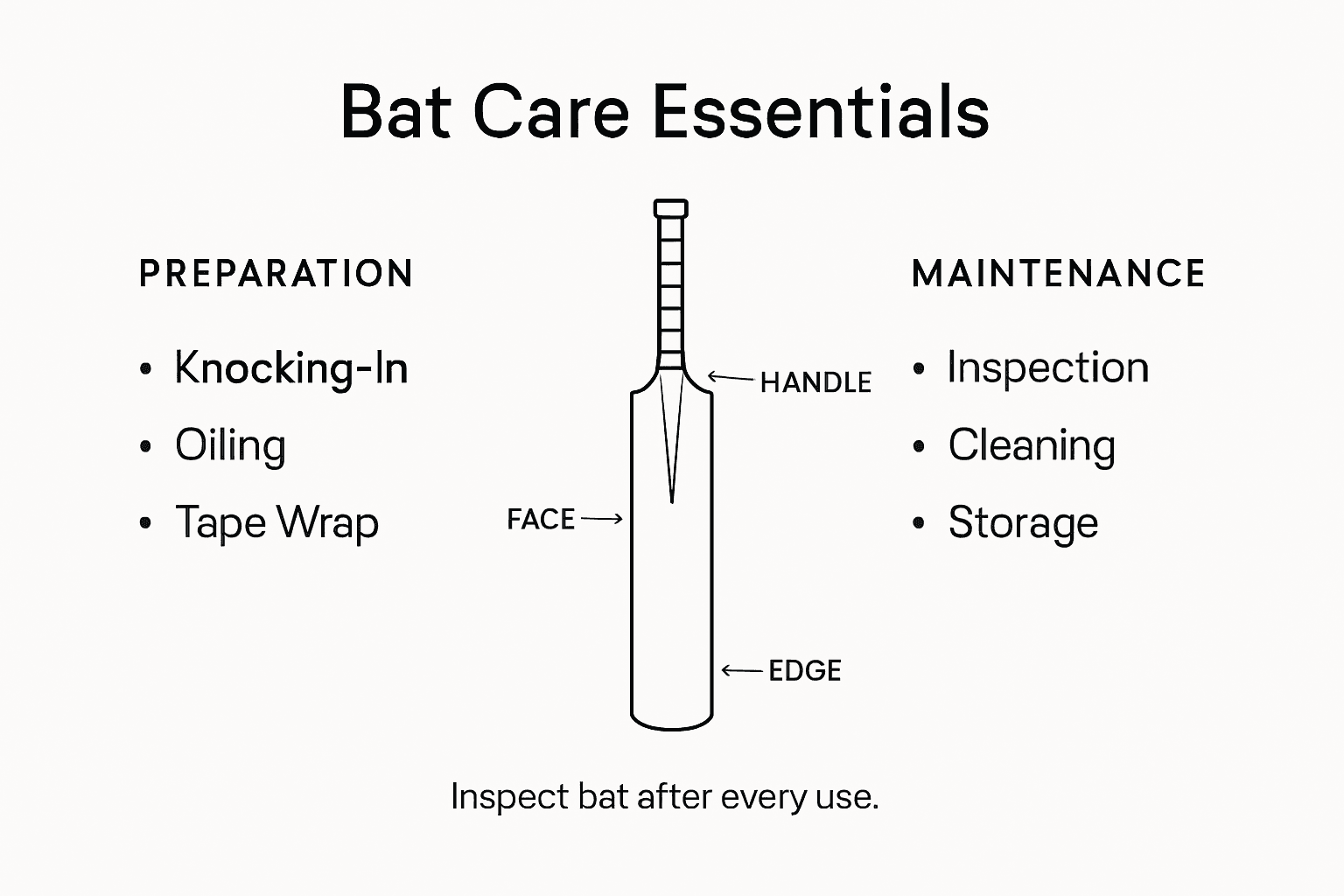
Contemporary cricket bat care represents a sophisticated process that transforms basic equipment maintenance into a strategic performance enhancement approach. Modern players understand that proper care extends far beyond occasional cleaning and involves systematic preservation techniques that protect the bat’s structural integrity and playing characteristics.
The foundation of contemporary bat care centres on a comprehensive approach that combines initial preparation, routine maintenance, and protective strategies. Cricket bat maintenance tips recommend a meticulous sequence of treatments starting with the critical initial oiling process. Raw linseed oil application creates a protective barrier that prevents moisture absorption and reduces wood fibre vulnerability. This initial treatment must be performed gradually, allowing the oil to penetrate deeply without oversaturating the willow.
After oiling, the knocking-in process becomes crucial. Players systematically condition the bat’s surface using a wooden mallet or old cricket ball, carefully striking the bat’s face to compress wood fibres and create a resilient batting surface. This technique takes several hours and requires patience, gradually increasing strike intensity to develop a robust bat profile capable of withstanding high-impact cricket shots. Regular cleaning with soft, damp cloths and storing the bat in cool, dry environments further preserves its structural qualities.
Routine maintenance involves periodic inspections to detect potential damage, checking for hairline cracks, surface irregularities, or signs of wood stress. Professional players often employ protective accessories like anti-scuff sheets and toe guards to minimise wear and extend the bat’s competitive lifespan. Understanding these nuanced care techniques transforms a basic piece of equipment into a precision instrument.
Pro tip: Always store your cricket bat vertically in a dedicated bat cover, away from direct sunlight and extreme temperature variations to prevent warping and maintain its structural integrity.
Understanding Willow Types and Materials
Cricket bat manufacturing represents a sophisticated craft where material selection plays a pivotal role in determining performance and durability. Cricket bat materials offer a nuanced spectrum of characteristics that directly influence a player’s game, with willow being the primary wood of choice for professional and amateur cricketers alike.
Two primary willow varieties dominate the cricket bat landscape: English willow and Kashmir willow. English willow stands as the premium material, prized by serious cricketers for its exceptional qualities. This wood features straighter grain patterns and a finer texture, enabling superior rebound and lightweight performance. Professional players consistently favour English willow for its remarkable responsiveness and ability to transfer maximum energy during ball strikes. The wood’s cellular structure allows for enhanced compression and resilience, making it the gold standard in competitive cricket equipment.
In contrast, Kashmir willow presents a more robust and economical alternative. Characterised by its denser composition and heavier weight, this willow variant is typically employed in training bats and entry-level equipment. While less responsive compared to English willow, Kashmir willow offers increased durability and represents an excellent option for players developing their skills or seeking a more budget-friendly solution. The wood’s inherent characteristics make it particularly suitable for practice sessions and junior cricket programmes where equipment longevity takes precedence over refined performance metrics.
The selection of willow type extends beyond mere material preference, involving complex considerations of playing style, skill level, and performance expectations. Factors such as grain straightness, weight distribution, and wood maturity significantly influence a bat’s potential. Professional bat makers meticulously grade and select willow, ensuring each piece meets stringent performance criteria that transform a simple wooden implement into a precision sporting instrument.
Here’s a concise comparison of English willow and Kashmir willow cricket bats:
| Characteristic | English Willow Bat | Kashmir Willow Bat |
|---|---|---|
| Typical Weight | Lighter, easier to handle | Heavier, more robust |
| Grain Structure | Straight and fine | Wider and uneven |
| Responsiveness | Excellent ball rebound | Moderate, less responsive |
| Ideal Use | Professional matches | Training, junior cricket |
| Cost Range | Higher price point | More economical |
| Durability | Needs careful handling | Greater longevity |
Pro tip: When selecting a cricket bat, always physically handle the bat to assess its weight, balance, and feel, as these individual characteristics matter more than generic material classifications.
Modern Maintenance and Preparation Steps
Modern cricket bat maintenance transcends traditional approaches, evolving into a sophisticated process that balances technical precision with strategic preservation. Contemporary bat preparation techniques have become increasingly nuanced, addressing the specific needs of different willow types and playing conditions.
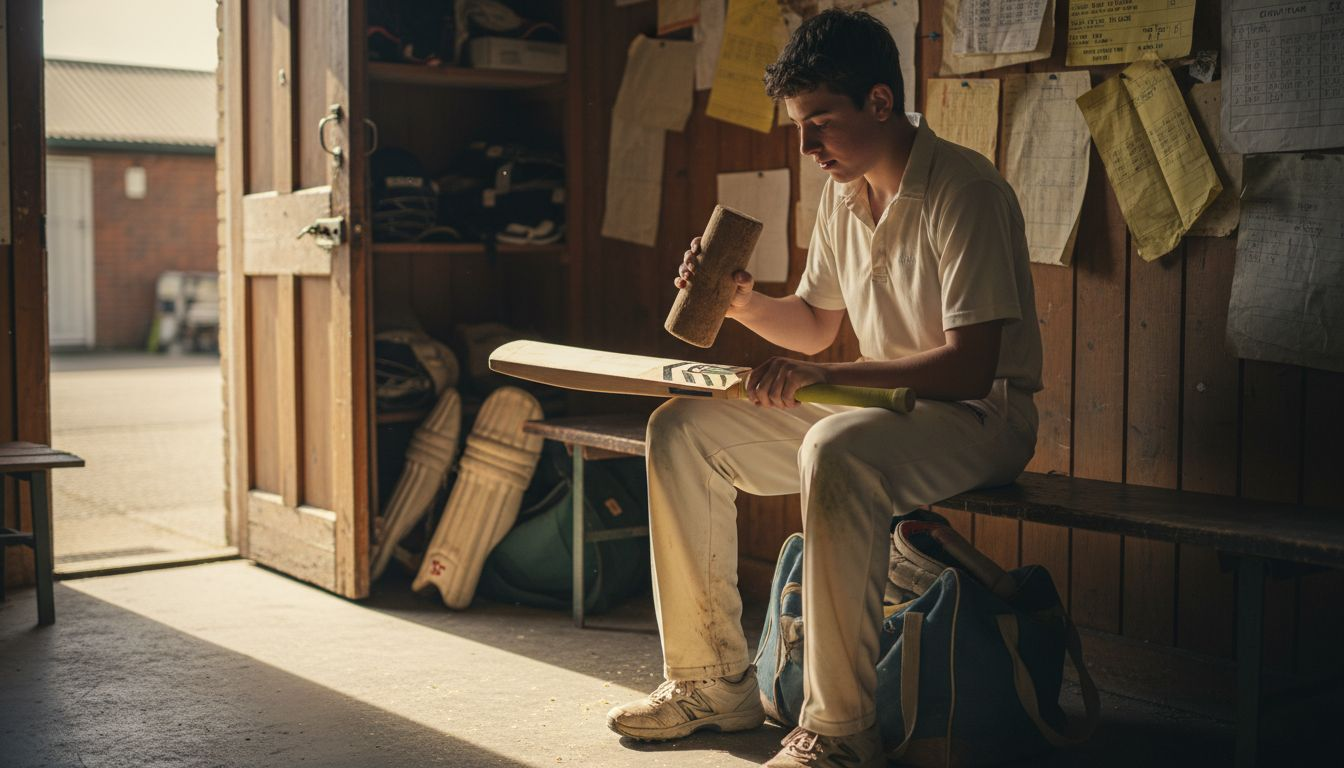
The knocking-in process represents the foundational preparation technique for any high-quality cricket bat. This methodical conditioning involves gradually compressing the bat’s surface using a wooden mallet or soft cricket ball, systematically working to strengthen the willow’s cellular structure. Professional players approach this process with meticulous care, gradually increasing strike intensity to create a resilient batting surface that can withstand high-impact shots. The technique requires patience, typically spanning several hours of careful, controlled strikes that align and compress the wood fibres without causing unnecessary stress or potential damage.
Oil application emerges as another critical maintenance step, with different willow types demanding unique approaches. English willow bats typically require more frequent and careful oiling to maintain moisture balance and prevent cracking, while Kashmir willow variants need a more conservative approach. Raw linseed oil serves as the preferred treatment, applied sparingly and allowed to penetrate deeply without oversaturating the wood. Modern players also employ protective strategies like edge tape, toe guards, and anti-scuff sheets to minimise wear and extend the bat’s competitive lifespan. These protective measures become particularly crucial for players who frequently compete in varied environmental conditions that might stress the bat’s structural integrity.
Additionally, contemporary bat maintenance involves regular inspection and careful storage practices. Players are advised to store bats vertically in dedicated bat covers, away from direct sunlight and extreme temperature variations. Cleaning should be performed using soft, dry cloths, avoiding abrasive materials that might compromise the bat’s delicate surface. Professional-grade bats require a more nuanced approach, with maintenance techniques tailored to the specific grain structure, weight distribution, and intended playing conditions.
Pro tip: Create a dedicated maintenance kit with soft cloths, linseed oil, edge tape, and a wooden mallet to ensure consistent and professional bat care throughout the season.
For quick reference, here’s a summary of essential modern cricket bat care steps and their purpose:
| Care Step | Main Purpose | Recommended Frequency |
|---|---|---|
| Initial Oiling | Prevents moisture absorption | Before first use |
| Knocking-In | Strengthens and conditions bat surface | Before first match |
| Inspection | Identifies cracks and wear early | After each use |
| Proper Storage | Maintains structural integrity | Ongoing |
| Protective Fitting | Minimises scuffs and damage | As required |
| Gentle Cleaning | Removes dirt, preserves surface | After every match or net |
Common Errors That Shorten Bat Lifespan
Cricket bat maintenance represents a delicate balance between proper care and potential inadvertent damage. Cricket bat preservation techniques reveal numerous common errors that can dramatically reduce a bat’s competitive lifespan and performance potential.
One of the most prevalent mistakes players make involves improper storage conditions. Extreme temperature variations and high humidity environments can cause significant structural damage to willow bats. Storing bats in damp locations or directly exposed to sunlight leads to wood warping, internal stress fractures, and accelerated material degradation. Professional players understand that a bat’s longevity depends as much on careful storage as on active maintenance. Wooden bats are particularly susceptible to environmental fluctuations, with moisture absorption causing uneven expansion and contraction that compromises the bat’s integral structural integrity.
Maintenance negligence represents another critical factor in bat deterioration. Players frequently overlook essential preservation steps like regular oiling, which prevents wood from becoming brittle and prone to cracking. Using the bat inappropriately compounds these risks - striking non-cricket surfaces, using the bat to remove mud from footwear, or employing incorrect knocking-in techniques can cause irreparable surface damage. The willow’s cellular structure requires gentle, methodical conditioning, and aggressive or careless handling can compromise its responsive qualities. Failing to use protective accessories like anti-scuff sheets and toe guards further exposes the bat to unnecessary wear and potential structural compromise.
Inspection and proactive maintenance emerge as crucial strategies for extending bat life. Small surface cracks, if left unaddressed, can rapidly develop into significant structural failures that render the bat unusable. Players should develop a consistent inspection routine, carefully examining the bat’s surface after each use, paying particular attention to edges, toe areas, and any developing stress points. Understanding the subtle signs of potential damage allows for early intervention and potentially saves significant investment in replacement equipment.
Pro tip: Conduct a thorough bat inspection under good lighting after every match, checking for minute cracks, surface irregularities, and potential structural stress points.
Storage, Repair, and Seasonal Protection
Cricket bat preservation requires a strategic approach that considers environmental challenges, seasonal variations, and potential damage prevention techniques. Professional players understand that protecting their equipment extends beyond simple storage, involving a comprehensive system of maintenance and proactive care.
Seasonal storage represents a critical aspect of bat maintenance, with temperature and humidity playing pivotal roles in equipment preservation. During off-season periods, bats require careful environmental management to prevent wood degradation. Ideal storage conditions involve maintaining a consistent temperature between 10-20 degrees Celsius, with relative humidity around 50-60%. Players should invest in dedicated bat covers made from breathable materials that protect against dust and moisture while allowing minimal air circulation. These covers should be loose-fitting to prevent unnecessary compression of the bat’s delicate willow fibres, which can cause structural stress and potential warping.
Repair techniques demand a nuanced understanding of willow’s structural characteristics. Minor surface cracks and edge damage can often be addressed through careful oiling and gentle compression techniques. Professional bat makers recommend using specialised wood repair compounds designed specifically for cricket bat restoration, which can effectively seal small fissures and prevent further deterioration. More significant damage might require professional intervention, with expert craftsmen capable of performing intricate repairs that restore the bat’s structural integrity and playing performance. Players should develop a habit of conducting thorough post-match inspections, identifying potential repair needs before they escalate into irreparable damage.
Seasonal transitions pose unique challenges for cricket bat maintenance. Players must adapt their care routines to accommodate changing environmental conditions, adjusting oiling frequencies and storage strategies accordingly. Humid summer months require more frequent moisture management, while dry winter periods demand additional protective treatments to prevent wood from becoming overly brittle. Developing a consistent maintenance schedule that accounts for these seasonal variations ensures optimal bat performance and longevity. Professional players often maintain multiple bats, rotating them strategically to distribute wear and minimise the impact of environmental stress.
Pro tip: Create a dedicated bat maintenance calendar that tracks oiling dates, inspection schedules, and seasonal storage strategies to ensure consistent and comprehensive equipment protection.
Enhance Your Cricket Bat Care with Premium Equipment from CricketBats.com
The challenge of maximising your cricket bat’s life and power requires more than just understanding the maintenance basics. This article highlights critical care steps such as initial oiling, knocking-in, and proper storage to protect your bat’s willow structure. Avoid common errors like improper storage and neglecting regular inspections to keep your bat performing at its peak. Embracing these advanced care techniques means your cricket equipment stays resilient match after match.
Explore our selection of high-performance bats like the New Balance Cricket Bats collection designed for players who prioritise durability and power.

Take control of your cricket performance today by choosing bats that complement your maintenance routine. Visit CricketBats.com for expert advice, quality gear from top brands like adidas, and accessories that protect your investment season after season. Start your journey to longer-lasting, more powerful cricket bats now and enjoy free shipping on all orders.
Frequently Asked Questions
What is the knocking-in process for a cricket bat?
The knocking-in process involves gradually striking the bat’s face with a wooden mallet or an old cricket ball to compress the wood fibres, creating a resilient surface that can withstand high-impact shots. This technique requires patience and typically takes several hours to complete.
How often should I oil my cricket bat?
The frequency of oiling depends on the type of willow used. English willow bats usually require more frequent oiling to maintain moisture balance, while Kashmir willow bats may need a more conservative approach. Generally, oiling should be done before the first use and periodically throughout the season to prevent cracking.
What are the common errors that can shorten a cricket bat’s lifespan?
Common errors include improper storage, such as exposing the bat to extreme temperatures and humidity, neglecting regular maintenance tasks like oiling, and using the bat for inappropriate activities. Regular inspections and proactive care are essential for preserving its lifespan.
How should I store my cricket bat during the off-season?
During the off-season, store your bat in a cool, dry place, ideally between 10-20 degrees Celsius with a humidity level of 50-60%. Use a breathable bat cover to protect it from dust and moisture while allowing air circulation, and avoid placing heavy objects on top of it to prevent compression.
Recommended
Every british cricketer knows a well-maintained bat can make the difference between a crisp boundary and a soft dismissal. With more than 60 percent of amateur players losing bat performance due to poor care, understanding modern maintenance is now as crucial as perfecting your cover drive. This guide lays out clear, effective steps for keeping your cricket bat match-ready, so you can step onto the field with confidence, knowing your equipment is in top shape.
Table of Contents
- What Cricket Bat Care Involves Today
- Understanding Willow Types And Materials
- Modern Maintenance And Preparation Steps
- Common Errors That Shorten Bat Lifespan
- Storage, Repair, And Seasonal Protection
Key Takeaways
| Point | Details |
|---|---|
| Proper Bat Care Enhances Performance | Systematic maintenance techniques, including oiling and knocking-in, are crucial for preserving a bat’s integrity and improving its performance. |
| Understand Willow Types | Selecting the right willow, between English and Kashmir, affects durability and responsiveness, aligning with a player’s skill level and budget. |
| Routine Inspections Are Essential | Regular checks for damage and surface irregularities can prevent significant failures and extend the bat’s lifespan. |
| Store Bats Correctly | Bats should be stored vertically in breathable covers, away from sunlight and humidity, to avoid warping and material degradation. |
What Cricket Bat Care Involves Today
Contemporary cricket bat care represents a sophisticated process that transforms basic equipment maintenance into a strategic performance enhancement approach. Modern players understand that proper care extends far beyond occasional cleaning and involves systematic preservation techniques that protect the bat’s structural integrity and playing characteristics.
The foundation of contemporary bat care centres on a comprehensive approach that combines initial preparation, routine maintenance, and protective strategies. Cricket bat maintenance tips recommend a meticulous sequence of treatments starting with the critical initial oiling process. Raw linseed oil application creates a protective barrier that prevents moisture absorption and reduces wood fibre vulnerability. This initial treatment must be performed gradually, allowing the oil to penetrate deeply without oversaturating the willow.
After oiling, the knocking-in process becomes crucial. Players systematically condition the bat’s surface using a wooden mallet or old cricket ball, carefully striking the bat’s face to compress wood fibres and create a resilient batting surface. This technique takes several hours and requires patience, gradually increasing strike intensity to develop a robust bat profile capable of withstanding high-impact cricket shots. Regular cleaning with soft, damp cloths and storing the bat in cool, dry environments further preserves its structural qualities.
Routine maintenance involves periodic inspections to detect potential damage, checking for hairline cracks, surface irregularities, or signs of wood stress. Professional players often employ protective accessories like anti-scuff sheets and toe guards to minimise wear and extend the bat’s competitive lifespan. Understanding these nuanced care techniques transforms a basic piece of equipment into a precision instrument.
Pro tip: Always store your cricket bat vertically in a dedicated bat cover, away from direct sunlight and extreme temperature variations to prevent warping and maintain its structural integrity.
Understanding Willow Types and Materials
Cricket bat manufacturing represents a sophisticated craft where material selection plays a pivotal role in determining performance and durability. Cricket bat materials offer a nuanced spectrum of characteristics that directly influence a player’s game, with willow being the primary wood of choice for professional and amateur cricketers alike.
Two primary willow varieties dominate the cricket bat landscape: English willow and Kashmir willow. English willow stands as the premium material, prized by serious cricketers for its exceptional qualities. This wood features straighter grain patterns and a finer texture, enabling superior rebound and lightweight performance. Professional players consistently favour English willow for its remarkable responsiveness and ability to transfer maximum energy during ball strikes. The wood’s cellular structure allows for enhanced compression and resilience, making it the gold standard in competitive cricket equipment.
In contrast, Kashmir willow presents a more robust and economical alternative. Characterised by its denser composition and heavier weight, this willow variant is typically employed in training bats and entry-level equipment. While less responsive compared to English willow, Kashmir willow offers increased durability and represents an excellent option for players developing their skills or seeking a more budget-friendly solution. The wood’s inherent characteristics make it particularly suitable for practice sessions and junior cricket programmes where equipment longevity takes precedence over refined performance metrics.
The selection of willow type extends beyond mere material preference, involving complex considerations of playing style, skill level, and performance expectations. Factors such as grain straightness, weight distribution, and wood maturity significantly influence a bat’s potential. Professional bat makers meticulously grade and select willow, ensuring each piece meets stringent performance criteria that transform a simple wooden implement into a precision sporting instrument.
Here’s a concise comparison of English willow and Kashmir willow cricket bats:
| Characteristic | English Willow Bat | Kashmir Willow Bat |
|---|---|---|
| Typical Weight | Lighter, easier to handle | Heavier, more robust |
| Grain Structure | Straight and fine | Wider and uneven |
| Responsiveness | Excellent ball rebound | Moderate, less responsive |
| Ideal Use | Professional matches | Training, junior cricket |
| Cost Range | Higher price point | More economical |
| Durability | Needs careful handling | Greater longevity |
Pro tip: When selecting a cricket bat, always physically handle the bat to assess its weight, balance, and feel, as these individual characteristics matter more than generic material classifications.
Modern Maintenance and Preparation Steps
Modern cricket bat maintenance transcends traditional approaches, evolving into a sophisticated process that balances technical precision with strategic preservation. Contemporary bat preparation techniques have become increasingly nuanced, addressing the specific needs of different willow types and playing conditions.
The knocking-in process represents the foundational preparation technique for any high-quality cricket bat. This methodical conditioning involves gradually compressing the bat’s surface using a wooden mallet or soft cricket ball, systematically working to strengthen the willow’s cellular structure. Professional players approach this process with meticulous care, gradually increasing strike intensity to create a resilient batting surface that can withstand high-impact shots. The technique requires patience, typically spanning several hours of careful, controlled strikes that align and compress the wood fibres without causing unnecessary stress or potential damage.
Oil application emerges as another critical maintenance step, with different willow types demanding unique approaches. English willow bats typically require more frequent and careful oiling to maintain moisture balance and prevent cracking, while Kashmir willow variants need a more conservative approach. Raw linseed oil serves as the preferred treatment, applied sparingly and allowed to penetrate deeply without oversaturating the wood. Modern players also employ protective strategies like edge tape, toe guards, and anti-scuff sheets to minimise wear and extend the bat’s competitive lifespan. These protective measures become particularly crucial for players who frequently compete in varied environmental conditions that might stress the bat’s structural integrity.
Additionally, contemporary bat maintenance involves regular inspection and careful storage practices. Players are advised to store bats vertically in dedicated bat covers, away from direct sunlight and extreme temperature variations. Cleaning should be performed using soft, dry cloths, avoiding abrasive materials that might compromise the bat’s delicate surface. Professional-grade bats require a more nuanced approach, with maintenance techniques tailored to the specific grain structure, weight distribution, and intended playing conditions.
Pro tip: Create a dedicated maintenance kit with soft cloths, linseed oil, edge tape, and a wooden mallet to ensure consistent and professional bat care throughout the season.
For quick reference, here’s a summary of essential modern cricket bat care steps and their purpose:
| Care Step | Main Purpose | Recommended Frequency |
|---|---|---|
| Initial Oiling | Prevents moisture absorption | Before first use |
| Knocking-In | Strengthens and conditions bat surface | Before first match |
| Inspection | Identifies cracks and wear early | After each use |
| Proper Storage | Maintains structural integrity | Ongoing |
| Protective Fitting | Minimises scuffs and damage | As required |
| Gentle Cleaning | Removes dirt, preserves surface | After every match or net |
Common Errors That Shorten Bat Lifespan
Cricket bat maintenance represents a delicate balance between proper care and potential inadvertent damage. Cricket bat preservation techniques reveal numerous common errors that can dramatically reduce a bat’s competitive lifespan and performance potential.
One of the most prevalent mistakes players make involves improper storage conditions. Extreme temperature variations and high humidity environments can cause significant structural damage to willow bats. Storing bats in damp locations or directly exposed to sunlight leads to wood warping, internal stress fractures, and accelerated material degradation. Professional players understand that a bat’s longevity depends as much on careful storage as on active maintenance. Wooden bats are particularly susceptible to environmental fluctuations, with moisture absorption causing uneven expansion and contraction that compromises the bat’s integral structural integrity.
Maintenance negligence represents another critical factor in bat deterioration. Players frequently overlook essential preservation steps like regular oiling, which prevents wood from becoming brittle and prone to cracking. Using the bat inappropriately compounds these risks - striking non-cricket surfaces, using the bat to remove mud from footwear, or employing incorrect knocking-in techniques can cause irreparable surface damage. The willow’s cellular structure requires gentle, methodical conditioning, and aggressive or careless handling can compromise its responsive qualities. Failing to use protective accessories like anti-scuff sheets and toe guards further exposes the bat to unnecessary wear and potential structural compromise.
Inspection and proactive maintenance emerge as crucial strategies for extending bat life. Small surface cracks, if left unaddressed, can rapidly develop into significant structural failures that render the bat unusable. Players should develop a consistent inspection routine, carefully examining the bat’s surface after each use, paying particular attention to edges, toe areas, and any developing stress points. Understanding the subtle signs of potential damage allows for early intervention and potentially saves significant investment in replacement equipment.
Pro tip: Conduct a thorough bat inspection under good lighting after every match, checking for minute cracks, surface irregularities, and potential structural stress points.
Storage, Repair, and Seasonal Protection
Cricket bat preservation requires a strategic approach that considers environmental challenges, seasonal variations, and potential damage prevention techniques. Professional players understand that protecting their equipment extends beyond simple storage, involving a comprehensive system of maintenance and proactive care.
Seasonal storage represents a critical aspect of bat maintenance, with temperature and humidity playing pivotal roles in equipment preservation. During off-season periods, bats require careful environmental management to prevent wood degradation. Ideal storage conditions involve maintaining a consistent temperature between 10-20 degrees Celsius, with relative humidity around 50-60%. Players should invest in dedicated bat covers made from breathable materials that protect against dust and moisture while allowing minimal air circulation. These covers should be loose-fitting to prevent unnecessary compression of the bat’s delicate willow fibres, which can cause structural stress and potential warping.
Repair techniques demand a nuanced understanding of willow’s structural characteristics. Minor surface cracks and edge damage can often be addressed through careful oiling and gentle compression techniques. Professional bat makers recommend using specialised wood repair compounds designed specifically for cricket bat restoration, which can effectively seal small fissures and prevent further deterioration. More significant damage might require professional intervention, with expert craftsmen capable of performing intricate repairs that restore the bat’s structural integrity and playing performance. Players should develop a habit of conducting thorough post-match inspections, identifying potential repair needs before they escalate into irreparable damage.
Seasonal transitions pose unique challenges for cricket bat maintenance. Players must adapt their care routines to accommodate changing environmental conditions, adjusting oiling frequencies and storage strategies accordingly. Humid summer months require more frequent moisture management, while dry winter periods demand additional protective treatments to prevent wood from becoming overly brittle. Developing a consistent maintenance schedule that accounts for these seasonal variations ensures optimal bat performance and longevity. Professional players often maintain multiple bats, rotating them strategically to distribute wear and minimise the impact of environmental stress.
Pro tip: Create a dedicated bat maintenance calendar that tracks oiling dates, inspection schedules, and seasonal storage strategies to ensure consistent and comprehensive equipment protection.
Enhance Your Cricket Bat Care with Premium Equipment from CricketBats.com
The challenge of maximising your cricket bat’s life and power requires more than just understanding the maintenance basics. This article highlights critical care steps such as initial oiling, knocking-in, and proper storage to protect your bat’s willow structure. Avoid common errors like improper storage and neglecting regular inspections to keep your bat performing at its peak. Embracing these advanced care techniques means your cricket equipment stays resilient match after match.
Explore our selection of high-performance bats like the New Balance Cricket Bats collection designed for players who prioritise durability and power.
Take control of your cricket performance today by choosing bats that complement your maintenance routine. Visit CricketBats.com for expert advice, quality gear from top brands like adidas, and accessories that protect your investment season after season. Start your journey to longer-lasting, more powerful cricket bats now and enjoy free shipping on all orders.
Frequently Asked Questions
What is the knocking-in process for a cricket bat?
The knocking-in process involves gradually striking the bat’s face with a wooden mallet or an old cricket ball to compress the wood fibres, creating a resilient surface that can withstand high-impact shots. This technique requires patience and typically takes several hours to complete.
How often should I oil my cricket bat?
The frequency of oiling depends on the type of willow used. English willow bats usually require more frequent oiling to maintain moisture balance, while Kashmir willow bats may need a more conservative approach. Generally, oiling should be done before the first use and periodically throughout the season to prevent cracking.
What are the common errors that can shorten a cricket bat’s lifespan?
Common errors include improper storage, such as exposing the bat to extreme temperatures and humidity, neglecting regular maintenance tasks like oiling, and using the bat for inappropriate activities. Regular inspections and proactive care are essential for preserving its lifespan.
How should I store my cricket bat during the off-season?
During the off-season, store your bat in a cool, dry place, ideally between 10-20 degrees Celsius with a humidity level of 50-60%. Use a breathable bat cover to protect it from dust and moisture while allowing air circulation, and avoid placing heavy objects on top of it to prevent compression.