
News News
How to Clean Cricket Bats for Peak Performance How to Clean Cricket Bats for Peak Performance
Most British amateur cricket players risk reducing their bat’s lifespan simply by using the wrong cleaning methods. If you want your bat performing at its peak, regular maintenance makes all the difference between reliable match days and an early retirement for your equipment. This guide breaks down the right materials and proven care steps, helping you protect your investment and enjoy precision at the crease for seasons to come.
Table of Contents
- Step 1: Gather Suitable Cleaning Materials
- Step 2: Remove Dirt and Surface Debris
- Step 3: Apply Gentle Cleaning Solution
- Step 4: Dry and Inspect Bat Thoroughly
- Step 5: Maintain Bat for Ongoing Care
Quick Summary
| Key Point | Explanation |
|---|---|
| 1. Use Appropriate Cleaning Materials | Gather soft microfibre cloths, pH neutral cleaners, and gentle brushes to avoid damage while cleaning. |
| 2. Clean with Light Touch | When removing dirt, use minimal pressure and coordinated strokes to avoid scratches on the bat’s surface. |
| 3. Thorough Drying Is Essential | Allow the bat to air dry after cleaning to prevent moisture entrapment and potential damage to wood integrity. |
| 4. Regular Inspection | Check for cracks or surface irregularities before and after each match to catch issues early for repairs. |
| 5. Proper Storage Techniques | Store the bat vertically in a climate-controlled environment to prevent warping and moisture accumulation. |
Step 1: Gather Suitable Cleaning Materials
Prepping your cricket bat cleaning arsenal requires strategic planning. You will need a few specific items to ensure your bat receives professional level maintenance without causing accidental damage.
Start by collecting soft microfibre cloths specifically designed for delicate surfaces. These cloths prevent scratching and help absorb moisture effectively. You will also want a gentle cleaning solution appropriate for wooden sports equipment. Professional cleaning guidelines recommend using specialised cleaning solutions that protect the bat’s protective coating and wood integrity. Select a pH neutral cleaner that will not strip away essential wood treatments.
Additionally, gather protective equipment like disposable gloves to prevent transferring oils or dirt from your hands onto the bat surface. A soft bristled brush can help remove loose dirt and debris without causing surface abrasions. Ensure your cleaning materials are clean and dry before starting the process to prevent introducing additional contaminants.
Professional Advice Always test any cleaning solution on a small inconspicuous area of the cricket bat first to verify it will not cause discolouration or damage.
Here’s a quick summary of essential cricket bat cleaning materials and their specific purposes:
| Material | Purpose | Benefit |
|---|---|---|
| Microfibre cloth | Clean and absorb moisture | Prevents scratching, gentle care |
| pH neutral cleaner | Remove grime without harming wood | Preserves wood integrity |
| Disposable gloves | Prevent oil/dirt transfer from hands | Maintains clean bat surface |
| Soft bristled brush | Remove loose dirt and debris | Avoids surface abrasions |
| Dry container | Hold cleaning solution for control | Prevents over application |
Step 2: Remove Dirt and Surface Debris
Removing dirt and surface debris is a critical step in maintaining your cricket bat’s performance and longevity. You will need to approach this task with precision and care to prevent potential damage to the bat’s delicate wooden surface.
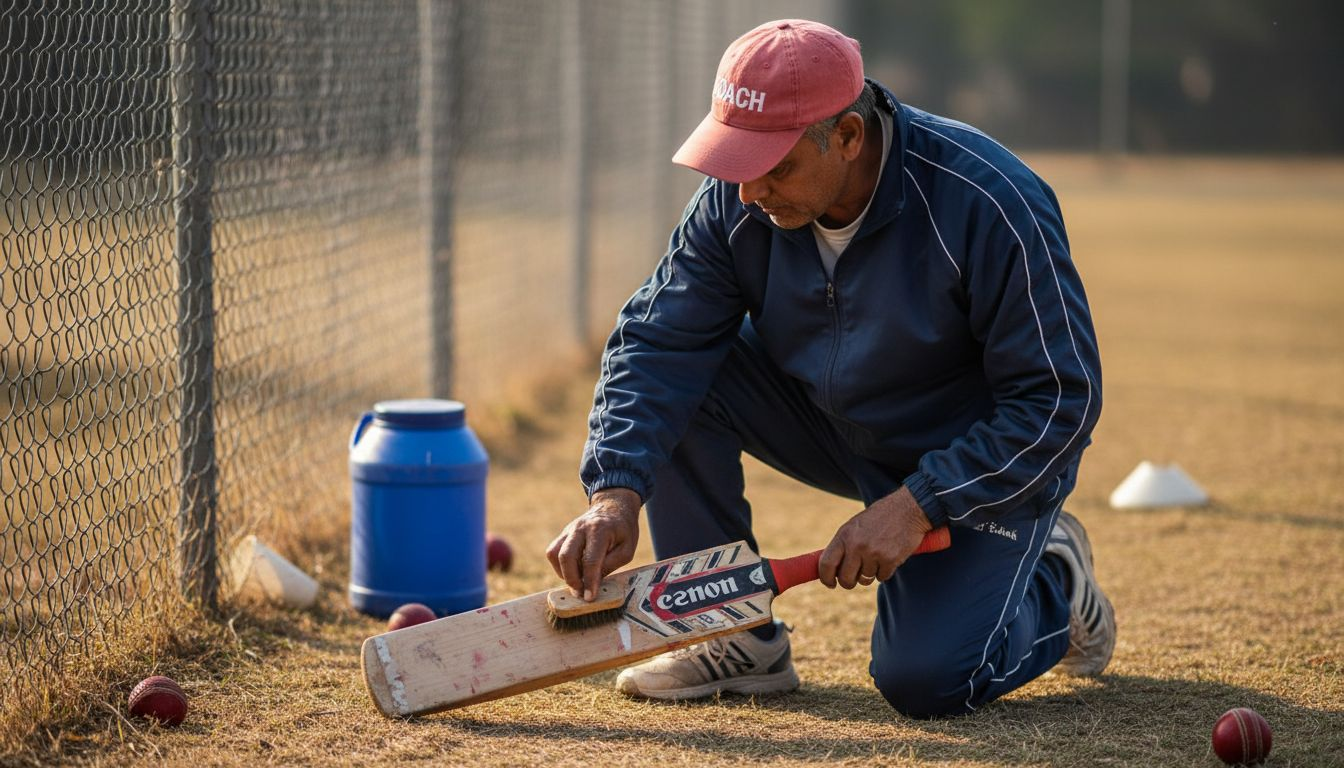
Professional cleaning guidelines recommend carefully removing surface contaminants using gentle techniques. Begin by using your soft bristled brush to lightly sweep away loose dirt and dust particles. Work in smooth strokes following the grain of the wood to prevent scratching. For more stubborn dirt patches, slightly dampen your microfibre cloth with your specialised cleaning solution and gently wipe the surface using minimal pressure.
Pay special attention to areas like the edges and handle where dirt tends to accumulate. Rotate the bat regularly to ensure you clean all surfaces evenly. Avoid saturating the wood with liquid and always use a light touch. After removing visible debris, use a dry section of your microfibre cloth to absorb any remaining moisture and prevent potential water damage to the bat.
Professional Advice Always clean your bat in a well-lit area so you can clearly see and remove every speck of dirt without applying excessive force.
Step 3: Apply Gentle Cleaning Solution
Now that you have removed surface debris, it is time to apply a specialised cleaning solution that will help restore your cricket bat’s pristine condition without causing damage. This delicate process requires precision and careful technique.
Professional cleaning guidelines recommend using a carefully diluted cleaning solution to minimise potential wood damage. Start by selecting a pH neutral cleaner specifically designed for wooden sports equipment. Pour a small amount of the solution onto your microfibre cloth rather than directly onto the bat to control moisture levels. Work in gentle circular motions, following the natural wood grain to prevent scratching or creating uneven patches.
Apply minimal pressure during cleaning and ensure the cloth remains damp but not saturated. Focus on one section of the bat at a time, rotating the bat to maintain consistent treatment across all surfaces. Pay extra attention to areas with accumulated grime or slight discolouration, but always maintain a light touch. After cleaning each section, immediately use a dry part of your microfibre cloth to absorb any remaining moisture and prevent potential water damage to the wood.
Professional Advice Mix your cleaning solution in a small container beforehand so you can control the exact dilution and prevent accidental over application.
Step 4: Dry and Inspect Bat Thoroughly
After cleaning your cricket bat, the drying and inspection process becomes critical to maintaining its long-term performance and structural integrity. This final stage ensures your bat remains in optimal condition for your next match.
Professional cleaning guidelines emphasise thorough surface inspection after moisture exposure to prevent potential damage. Begin by using a clean dry microfibre cloth to gently pat and absorb any remaining moisture. Allow the bat to air dry naturally in a well-ventilated area away from direct sunlight or heat sources that could cause wood warping. Rotate the bat periodically to ensure even drying across all surfaces.
Once completely dry, conduct a meticulous visual inspection of the entire bat surface. Look for any signs of wear such as small cracks, splinters, or areas where the protective coating might have been compromised during cleaning. Pay special attention to the edges, handle, and middle sections where stress and impact are most frequent. Run your fingers gently along the surface to detect any irregularities that might not be immediately visible. If you notice any significant damage, consult a professional cricket equipment specialist for proper repair or advice.
Professional Advice Always store your bat vertically in a cool dry place after cleaning to maintain its structural integrity and prevent moisture accumulation.
Step 5: Maintain Bat for Ongoing Care
Maintaining your cricket bat requires consistent attention and careful handling to preserve its performance and extend its usable life. Your commitment to regular care will directly impact the bat’s durability and effectiveness during matches.
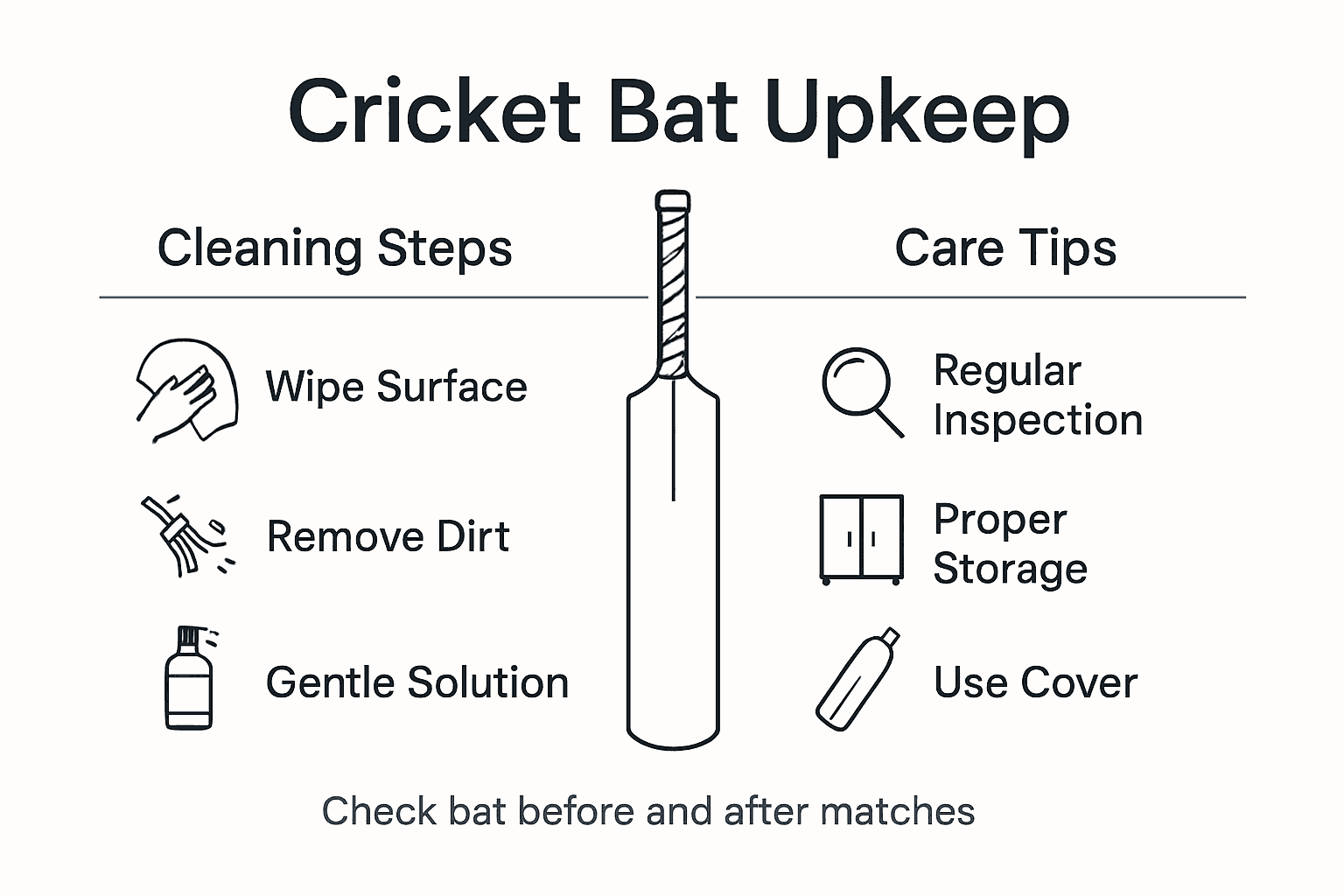
Environmental maintenance practices are crucial for preserving cricket bat integrity and preventing premature deterioration. Store your bat vertically in a dedicated cricket bag or stand that provides protection from moisture and temperature fluctuations. Keep the bat away from direct sunlight and areas with high humidity such as basements or garages. Apply a light coat of specialised bat oil every few months to maintain wood suppleness and prevent cracking. During off seasons, consider using a bat cover to shield it from dust and potential accidental damage.
Regular inspection is key to catching potential issues early. Check your bat before and after each match for signs of wear such as small cracks, loose binding, or surface irregularities. Clean the bat after each use to remove dirt and sweat that could degrade the wood. If you notice significant damage or performance changes, consult a professional cricket equipment specialist who can provide expert repair or maintenance advice. Rotating your bat during storage and avoiding extreme temperature changes will help maintain its structural integrity.
Professional Advice Invest in a quality cricket bat cover and store your bat in a climate controlled environment to maximise its performance and longevity.
Compare storage and maintenance practices for optimal bat longevity:
| Practice | Effect on Bat | Key Advantage |
|---|---|---|
| Vertical storage | Maintains structure | Prevents warping |
| Climate controlled area | Limits moisture | Reduces risk of decay |
| Bat oil application | Keeps wood supple | Prevents cracks or splitting |
| Regular inspection | Ensures performance | Early detection of damage |
Keep Your Cricket Bat in Top Condition with the Right Gear
Maintaining peak performance means more than just cleaning your cricket bat carefully. After following the essential steps to remove dirt, apply gentle cleaning solutions, and thoroughly dry your bat, you need reliable equipment that supports ongoing care and protection. At cricketbats.com, we understand how important preserving your bat’s wood integrity and structure is to your game. Whether you need a new high-quality bat to replace a worn one or the ideal accessories to protect and maintain your existing bat, we have you covered.

Discover our expertly curated selection of cricket bats including brands like Adidas Cricket Bats and New Balance Cricket Bats designed for durability and performance. Equip yourself with superior cricket bags and covers to store your bat correctly and avoid moisture damage. Don’t let small cracks or wear reduce your confidence on the pitch. Act now at cricketbats.com to find the best gear that ensures your bat remains clean, well-maintained, and match-ready all season.
Frequently Asked Questions
How often should I clean my cricket bat for peak performance?
Regularly clean your cricket bat after each match to maintain its performance and longevity. Wipe the surface to remove dirt and sweat, ensuring it remains in optimal condition for future use.
What cleaning materials are suitable for cricket bats?
Use soft microfibre cloths and a pH neutral cleaner specifically designed for wooden sports equipment. Gather these materials before you start cleaning to ensure your bat receives the best care without causing damage.
How do I properly apply cleaning solution to my cricket bat?
Pour a small amount of the cleaning solution onto a microfibre cloth instead of directly on the bat. Gently clean the surface in circular motions, following the wood grain, to avoid scratches and ensure thorough cleaning.
What should I do if I notice damage to my cricket bat after cleaning?
If you detect cracks, splinters, or damage during your inspection, consult a professional cricket equipment specialist for proper repair advice. Taking prompt action can help prevent further deterioration and maintain your bat’s performance.
How can I store my cricket bat to maximise its lifespan?
Store your cricket bat vertically in a cool, dry place, away from direct sunlight and humidity. Consider using a bat cover and applying specialised bat oil every few months to keep the wood supple and prevent cracks.
What are common signs that my cricket bat needs cleaning?
If your bat appears discoloured or has visible dirt and grime buildup, it’s time to clean it. Regularly inspect for these signs post-match, as cleanliness directly affects performance and durability.
Recommended
Most British amateur cricket players risk reducing their bat’s lifespan simply by using the wrong cleaning methods. If you want your bat performing at its peak, regular maintenance makes all the difference between reliable match days and an early retirement for your equipment. This guide breaks down the right materials and proven care steps, helping you protect your investment and enjoy precision at the crease for seasons to come.
Table of Contents
- Step 1: Gather Suitable Cleaning Materials
- Step 2: Remove Dirt and Surface Debris
- Step 3: Apply Gentle Cleaning Solution
- Step 4: Dry and Inspect Bat Thoroughly
- Step 5: Maintain Bat for Ongoing Care
Quick Summary
| Key Point | Explanation |
|---|---|
| 1. Use Appropriate Cleaning Materials | Gather soft microfibre cloths, pH neutral cleaners, and gentle brushes to avoid damage while cleaning. |
| 2. Clean with Light Touch | When removing dirt, use minimal pressure and coordinated strokes to avoid scratches on the bat’s surface. |
| 3. Thorough Drying Is Essential | Allow the bat to air dry after cleaning to prevent moisture entrapment and potential damage to wood integrity. |
| 4. Regular Inspection | Check for cracks or surface irregularities before and after each match to catch issues early for repairs. |
| 5. Proper Storage Techniques | Store the bat vertically in a climate-controlled environment to prevent warping and moisture accumulation. |
Step 1: Gather Suitable Cleaning Materials
Prepping your cricket bat cleaning arsenal requires strategic planning. You will need a few specific items to ensure your bat receives professional level maintenance without causing accidental damage.
Start by collecting soft microfibre cloths specifically designed for delicate surfaces. These cloths prevent scratching and help absorb moisture effectively. You will also want a gentle cleaning solution appropriate for wooden sports equipment. Professional cleaning guidelines recommend using specialised cleaning solutions that protect the bat’s protective coating and wood integrity. Select a pH neutral cleaner that will not strip away essential wood treatments.
Additionally, gather protective equipment like disposable gloves to prevent transferring oils or dirt from your hands onto the bat surface. A soft bristled brush can help remove loose dirt and debris without causing surface abrasions. Ensure your cleaning materials are clean and dry before starting the process to prevent introducing additional contaminants.
Professional Advice Always test any cleaning solution on a small inconspicuous area of the cricket bat first to verify it will not cause discolouration or damage.
Here’s a quick summary of essential cricket bat cleaning materials and their specific purposes:
| Material | Purpose | Benefit |
|---|---|---|
| Microfibre cloth | Clean and absorb moisture | Prevents scratching, gentle care |
| pH neutral cleaner | Remove grime without harming wood | Preserves wood integrity |
| Disposable gloves | Prevent oil/dirt transfer from hands | Maintains clean bat surface |
| Soft bristled brush | Remove loose dirt and debris | Avoids surface abrasions |
| Dry container | Hold cleaning solution for control | Prevents over application |
Step 2: Remove Dirt and Surface Debris
Removing dirt and surface debris is a critical step in maintaining your cricket bat’s performance and longevity. You will need to approach this task with precision and care to prevent potential damage to the bat’s delicate wooden surface.
Professional cleaning guidelines recommend carefully removing surface contaminants using gentle techniques. Begin by using your soft bristled brush to lightly sweep away loose dirt and dust particles. Work in smooth strokes following the grain of the wood to prevent scratching. For more stubborn dirt patches, slightly dampen your microfibre cloth with your specialised cleaning solution and gently wipe the surface using minimal pressure.
Pay special attention to areas like the edges and handle where dirt tends to accumulate. Rotate the bat regularly to ensure you clean all surfaces evenly. Avoid saturating the wood with liquid and always use a light touch. After removing visible debris, use a dry section of your microfibre cloth to absorb any remaining moisture and prevent potential water damage to the bat.
Professional Advice Always clean your bat in a well-lit area so you can clearly see and remove every speck of dirt without applying excessive force.
Step 3: Apply Gentle Cleaning Solution
Now that you have removed surface debris, it is time to apply a specialised cleaning solution that will help restore your cricket bat’s pristine condition without causing damage. This delicate process requires precision and careful technique.
Professional cleaning guidelines recommend using a carefully diluted cleaning solution to minimise potential wood damage. Start by selecting a pH neutral cleaner specifically designed for wooden sports equipment. Pour a small amount of the solution onto your microfibre cloth rather than directly onto the bat to control moisture levels. Work in gentle circular motions, following the natural wood grain to prevent scratching or creating uneven patches.
Apply minimal pressure during cleaning and ensure the cloth remains damp but not saturated. Focus on one section of the bat at a time, rotating the bat to maintain consistent treatment across all surfaces. Pay extra attention to areas with accumulated grime or slight discolouration, but always maintain a light touch. After cleaning each section, immediately use a dry part of your microfibre cloth to absorb any remaining moisture and prevent potential water damage to the wood.
Professional Advice Mix your cleaning solution in a small container beforehand so you can control the exact dilution and prevent accidental over application.
Step 4: Dry and Inspect Bat Thoroughly
After cleaning your cricket bat, the drying and inspection process becomes critical to maintaining its long-term performance and structural integrity. This final stage ensures your bat remains in optimal condition for your next match.
Professional cleaning guidelines emphasise thorough surface inspection after moisture exposure to prevent potential damage. Begin by using a clean dry microfibre cloth to gently pat and absorb any remaining moisture. Allow the bat to air dry naturally in a well-ventilated area away from direct sunlight or heat sources that could cause wood warping. Rotate the bat periodically to ensure even drying across all surfaces.
Once completely dry, conduct a meticulous visual inspection of the entire bat surface. Look for any signs of wear such as small cracks, splinters, or areas where the protective coating might have been compromised during cleaning. Pay special attention to the edges, handle, and middle sections where stress and impact are most frequent. Run your fingers gently along the surface to detect any irregularities that might not be immediately visible. If you notice any significant damage, consult a professional cricket equipment specialist for proper repair or advice.
Professional Advice Always store your bat vertically in a cool dry place after cleaning to maintain its structural integrity and prevent moisture accumulation.
Step 5: Maintain Bat for Ongoing Care
Maintaining your cricket bat requires consistent attention and careful handling to preserve its performance and extend its usable life. Your commitment to regular care will directly impact the bat’s durability and effectiveness during matches.
Environmental maintenance practices are crucial for preserving cricket bat integrity and preventing premature deterioration. Store your bat vertically in a dedicated cricket bag or stand that provides protection from moisture and temperature fluctuations. Keep the bat away from direct sunlight and areas with high humidity such as basements or garages. Apply a light coat of specialised bat oil every few months to maintain wood suppleness and prevent cracking. During off seasons, consider using a bat cover to shield it from dust and potential accidental damage.
Regular inspection is key to catching potential issues early. Check your bat before and after each match for signs of wear such as small cracks, loose binding, or surface irregularities. Clean the bat after each use to remove dirt and sweat that could degrade the wood. If you notice significant damage or performance changes, consult a professional cricket equipment specialist who can provide expert repair or maintenance advice. Rotating your bat during storage and avoiding extreme temperature changes will help maintain its structural integrity.
Professional Advice Invest in a quality cricket bat cover and store your bat in a climate controlled environment to maximise its performance and longevity.
Compare storage and maintenance practices for optimal bat longevity:
| Practice | Effect on Bat | Key Advantage |
|---|---|---|
| Vertical storage | Maintains structure | Prevents warping |
| Climate controlled area | Limits moisture | Reduces risk of decay |
| Bat oil application | Keeps wood supple | Prevents cracks or splitting |
| Regular inspection | Ensures performance | Early detection of damage |
Keep Your Cricket Bat in Top Condition with the Right Gear
Maintaining peak performance means more than just cleaning your cricket bat carefully. After following the essential steps to remove dirt, apply gentle cleaning solutions, and thoroughly dry your bat, you need reliable equipment that supports ongoing care and protection. At cricketbats.com, we understand how important preserving your bat’s wood integrity and structure is to your game. Whether you need a new high-quality bat to replace a worn one or the ideal accessories to protect and maintain your existing bat, we have you covered.
Discover our expertly curated selection of cricket bats including brands like Adidas Cricket Bats and New Balance Cricket Bats designed for durability and performance. Equip yourself with superior cricket bags and covers to store your bat correctly and avoid moisture damage. Don’t let small cracks or wear reduce your confidence on the pitch. Act now at cricketbats.com to find the best gear that ensures your bat remains clean, well-maintained, and match-ready all season.
Frequently Asked Questions
How often should I clean my cricket bat for peak performance?
Regularly clean your cricket bat after each match to maintain its performance and longevity. Wipe the surface to remove dirt and sweat, ensuring it remains in optimal condition for future use.
What cleaning materials are suitable for cricket bats?
Use soft microfibre cloths and a pH neutral cleaner specifically designed for wooden sports equipment. Gather these materials before you start cleaning to ensure your bat receives the best care without causing damage.
How do I properly apply cleaning solution to my cricket bat?
Pour a small amount of the cleaning solution onto a microfibre cloth instead of directly on the bat. Gently clean the surface in circular motions, following the wood grain, to avoid scratches and ensure thorough cleaning.
What should I do if I notice damage to my cricket bat after cleaning?
If you detect cracks, splinters, or damage during your inspection, consult a professional cricket equipment specialist for proper repair advice. Taking prompt action can help prevent further deterioration and maintain your bat’s performance.
How can I store my cricket bat to maximise its lifespan?
Store your cricket bat vertically in a cool, dry place, away from direct sunlight and humidity. Consider using a bat cover and applying specialised bat oil every few months to keep the wood supple and prevent cracks.
What are common signs that my cricket bat needs cleaning?
If your bat appears discoloured or has visible dirt and grime buildup, it’s time to clean it. Regularly inspect for these signs post-match, as cleanliness directly affects performance and durability.