
News News
What Is Bat Profile? 4 Types for 100% Better Performance What Is Bat Profile? 4 Types for 100% Better Performance
Many amateur cricketers believe a heavier bat automatically delivers more power. This widespread misconception often leads to poor purchasing decisions and frustrating performance on the field. Understanding bat profiles transforms bat selection from guesswork into informed strategy. What a cricket bat is and its fundamental components matters far less than how those components are shaped and distributed. This guide reveals how bat profile components directly influence balance, power delivery, and shot control, empowering you to choose equipment that matches your playing style and pitch conditions perfectly.
Table of Contents
- What Is A Bat Profile? Understanding Its Key Components
- How Bat Profile Affects Batting Performance: Balance, Power, And Control
- Types Of Cricket Bat Profiles And Their Best Uses
- Common Misconceptions About Bat Profiles And Performance
- How To Choose The Right Bat Profile For Your Playing Style And Conditions
- Psychological Impact And Confidence From The Right Bat Profile
- Summary And Next Steps For Buying Your Ideal Cricket Bat
- Find Your Perfect Cricket Bat At Cricket Bats Com
Key Takeaways
| Point | Details |
|---|---|
| Profile Defines Performance | Bat profile shapes weight distribution, affecting balance, pickup, and sweet spot positioning for optimal shot execution. |
| Four Main Profile Types | Low, mid, high, and full profiles each suit different playing styles, pitch conditions, and shot preferences. |
| Balance Beats Weight | Proper weight distribution matters more than total bat weight for generating power and maintaining control. |
| Sweet Spot Placement | Profile determines sweet spot location on the blade, directly influencing effectiveness of front-foot versus back-foot strokes. |
| Match Profile to Style | Selecting the correct profile based on your dominant foot and preferred shots enhances confidence and consistency. |
What Is a Bat Profile? Understanding Its Key Components
A cricket bat’s profile refers to its overall shape and wood distribution along the blade, fundamentally influencing the bat’s pickup, balance, and sweet spot position. The profile acts as a system where multiple elements work together to determine how the bat feels in your hands and performs during play.
Four primary components define any bat profile:
- Spine height: The raised ridge running down the bat’s back, determining where maximum wood thickness sits
- Edge thickness: The wood depth along the bat’s sides, affecting power potential and durability
- Bow: The curvature from handle to toe, influencing pickup feel and flexibility
- Sweet spot position: The optimal hitting zone placement, varying from low to high on the blade
These elements combine to create distinct weight distributions that dramatically affect how the bat behaves during your stroke. A bat with a high spine positions more wood near the shoulder, creating a lighter pickup despite identical overall weight to a low-spine alternative. Understanding these technical aspects helps you move beyond superficial features like stickers or brand names when selecting equipment.
The profile essentially determines where power sits within the bat structure. Front-foot dominant players benefit from profiles concentrating wood lower on the blade, while back-foot specialists need higher wood placement for quick, explosive strokes. Grasping these foundational concepts allows you to make purchasing decisions based on performance science rather than marketing claims or appearance alone.
How Bat Profile Affects Batting Performance: Balance, Power, and Control
Bat profile directly shapes three critical performance factors: swing mechanics, shot power, and stroke control. The profile influences how weight distributes through the blade, fundamentally changing how the bat responds during different shot types.
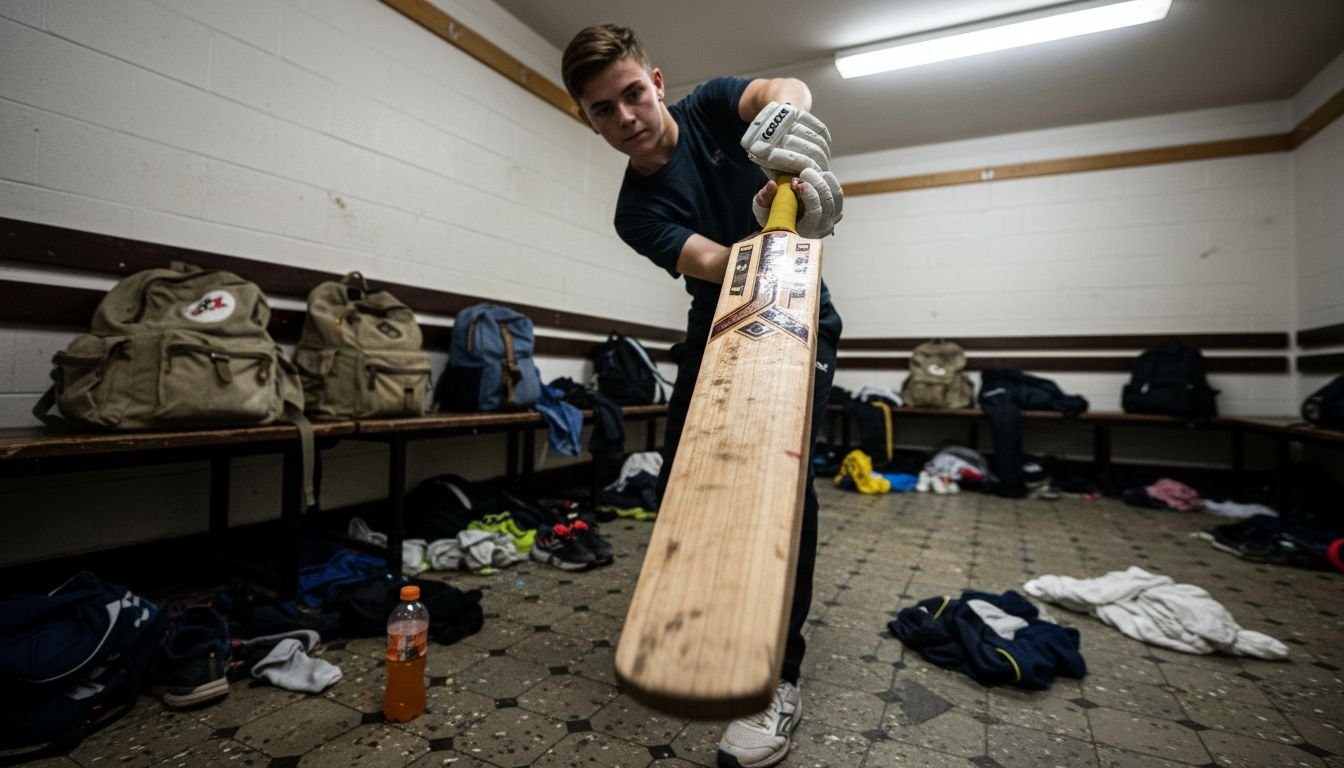
Low spine profiles concentrate wood toward the blade’s bottom, creating a bottom-heavy feel. This distribution stabilizes front-foot drives and defensive shots but slows swing speed for pulls and cuts. The added weight near the toe generates substantial power when you connect cleanly on front-foot strokes, particularly effective on slow, low-bounce pitches.
High spine profiles position maximum wood near the splice, producing a lighter pickup that accelerates swing speed. This configuration enhances back-foot control, allowing quicker reactions to short-pitched deliveries. Players using high-profile bats report better timing on cuts, pulls, and hooks because reduced bottom weight enables faster bat rotation.
Sweet spot placement proves equally critical. When positioned correctly for your natural stroke mechanics, the sweet spot maximizes energy transfer from bat to ball while minimizing vibration through the handle. Mismatched sweet spot location forces awkward adjustments mid-stroke, reducing both power and accuracy.
Balance influences endurance and timing consistency throughout extended innings. A well-balanced bat matching your strength and technique reduces fatigue, maintaining shot quality deep into your time at the crease. Poor balance forces compensatory movements that drain energy and disrupt natural timing rhythms.
The relationship between profile and cricket bat performance factors extends beyond raw power. Control, consistency, and confidence all stem from selecting a profile aligned with your biomechanics and playing conditions.
Pro Tip: Hold two bats of identical weight but different profiles. Notice how dramatically pickup and balance differ. This physical comparison reveals why profile matters more than weight specifications alone.
Types of Cricket Bat Profiles and Their Best Uses
Four distinct profile categories dominate modern cricket bat design, each optimized for specific playing styles and pitch conditions.
| Profile Type | Sweet Spot Location | Best For | Ideal Conditions |
|---|---|---|---|
| Low Profile | Lower blade (near toe) | Front-foot players, drives | Slow, low-bounce pitches |
| Mid Profile | Middle blade (balanced) | All-round players, versatile shots | Variable pitch conditions |
| High Profile | Upper blade (near splice) | Back-foot players, cuts and pulls | Fast, bouncy pitches |
| Full Profile | Large mid-to-upper zone | Aggressive power hitters | Hard, true surfaces |
Low Profile Bats feature maximum wood concentration in the bottom third of the blade. These bats excel for technically correct front-foot players who dominate with drives and defensive strokes. The low sweet spot aligns perfectly with the contact point on forward defensive shots and cover drives. Slower pitch conditions suit low profiles because the added bottom weight helps generate power when pace isn’t provided by the surface.
Mid Profile Bats distribute wood evenly throughout the blade, creating balanced pickup and a central sweet spot. This versatility makes mid profiles ideal for developing players still refining their preferred shot selection or all-rounders who play equally off both feet. The balanced feel reduces fatigue while maintaining adequate power across varied stroke types.
High Profile Bats position the spine and thickest edges near the shoulder, creating exceptional pickup lightness. Back-foot specialists benefit enormously from this configuration because reduced bottom weight enables lightning-quick bat speed for cuts, pulls, and hooks. Fast, bouncy pitches that encourage back-foot play match perfectly with high profile characteristics. Check out full profile cricket bats explained for deeper technical specifications.
Full Profile Bats feature deep edges throughout and substantial spine height, creating the largest possible sweet spot zone. Aggressive players seeking maximum boundary-hitting potential favor full profiles, though the added wood requires greater physical strength to control effectively. These bats perform best on hard, true surfaces where clean connection delivers explosive results.
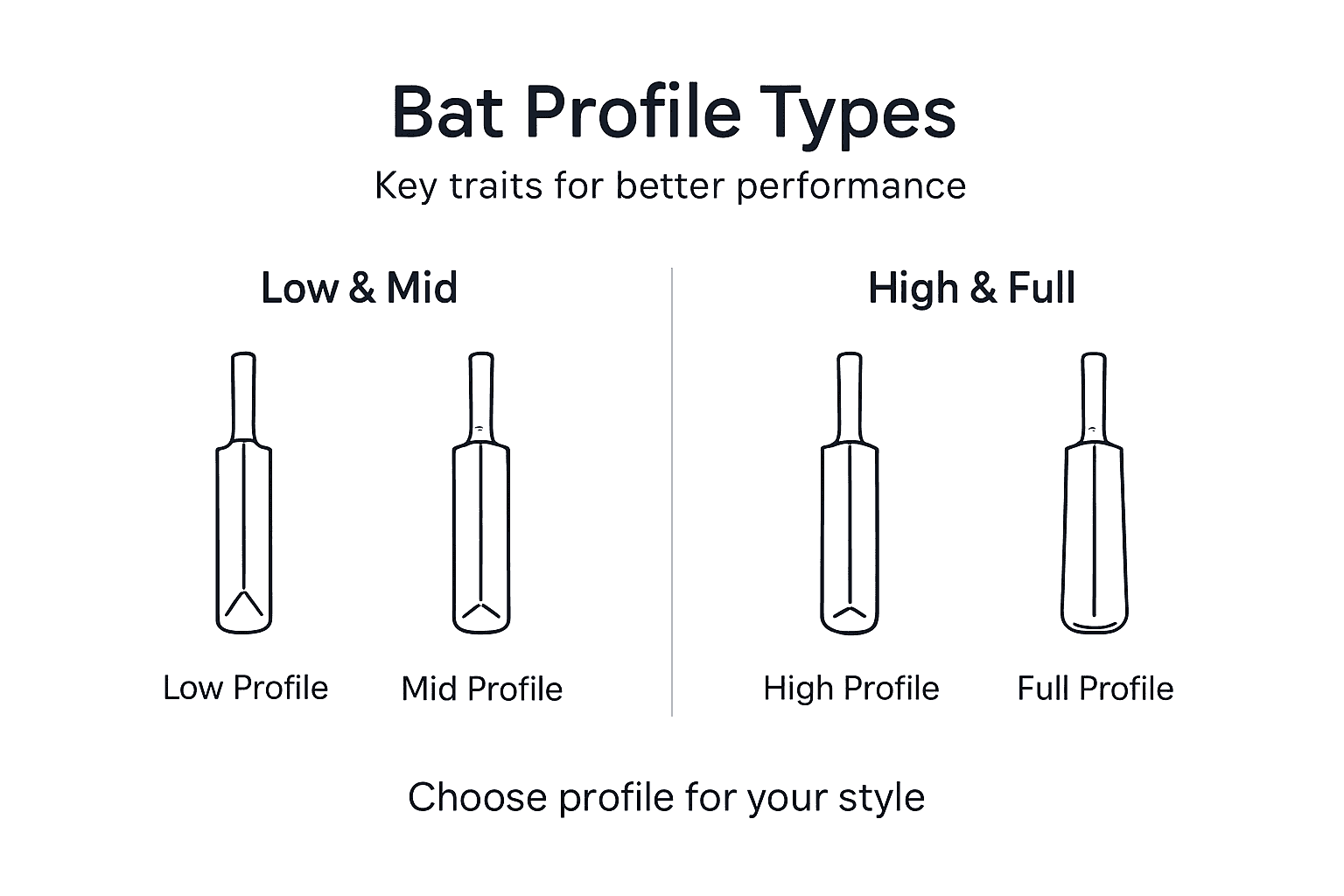
Understanding types of cricket bat profiles available helps narrow your selection before physically testing options. Match profile type to your natural game rather than forcing yourself to adapt to a bat that contradicts your instincts.
Pro Tip: Your dominant foot determines your ideal profile starting point. Front-foot players should test low to mid profiles first, while back-foot specialists gain immediate benefits from mid to high configurations.
Common Misconceptions About Bat Profiles and Performance
Several persistent myths about bat profiles lead players toward poor equipment choices. Addressing these misconceptions prevents wasted money and frustrating performance plateaus.
Myth: Heavier Bats Always Generate More Power
Reality reveals that bat balance and profile influence power delivery more significantly than weight alone. A lighter bat with optimal weight distribution for your swing mechanics produces greater bat speed and cleaner contact than a heavy bat that drags through your stroke. Power comes from timing and sweet spot connection, not brute mass.
Myth: Identical Weight Means Identical Feel
Two bats weighing precisely the same can feel dramatically different based on profile and wood distribution. A 2lb 9oz bat with a low profile feels noticeably heavier than a 2lb 9oz high-profile bat because weight concentration affects perceived pickup. Never select based on weight specifications without physically testing balance and feel.
Myth: Willow Grade Matters More Than Profile
While willow quality affects durability and performance ceiling, profile shapes how you actually use the bat. A Grade 1 willow bat with the wrong profile for your style underperforms compared to a Grade 3 bat perfectly matched to your mechanics. Prioritize profile fit, then consider willow grade within your budget constraints.
Myth: Brand Reputation Guarantees Suitable Performance
Premium manufacturers produce excellent bats, but no brand creates a universally perfect bat for all players. Your unique swing path, strength, and shot preferences determine ideal specifications. Brand loyalty should never override profile compatibility with your game. Focus on performance factors beyond weight and brand names.
“Common misconception: heavier bats always deliver more power; in reality, bat balance and profile influence power delivery more significantly than weight alone.” – Cricket Bat Profile Guide
Myth: More Edges Always Mean Better
Thick edges indicate substantial wood volume, but excessive edge thickness creates bottom-heavy feel that slows swing speed. Balance matters more than edge size alone. A bat with moderate edges and proper weight distribution outperforms an edge-heavy alternative that disrupts your natural timing.
Recognizing these myths protects you from marketing tactics that emphasize irrelevant specifications over functional performance characteristics.
How to Choose the Right Bat Profile for Your Playing Style and Conditions
Selecting your ideal bat profile requires systematic assessment of your game characteristics and typical playing environments. Follow this process to identify the perfect match:
-
Analyze your shot preference and dominant foot. Review your recent innings and identify which shots you play most frequently and successfully. Front-foot drivers need low to mid profiles, while back-foot cutters and pullers require mid to high configurations.
-
Assess typical pitch conditions you face. Slow, low pitches favor low profiles that add power to drives. Fast, bouncy surfaces suit high profiles that enable quick back-foot responses. Variable conditions call for balanced mid-profile versatility.
-
Test physical pickup and balance with multiple profiles. Visit a retailer and hold various profile types at your playing weight. Shadow your natural swing with each bat, noting which feels most natural and controlled. The right profile disappears in your hands, requiring no conscious adjustment.
-
Consider your physical strength and fitness level. Full profiles with substantial wood require greater strength to control through a full innings. If you fatigue easily or lack upper body power, lighter pickup profiles maintain performance longer.
-
Seek expert input matching your specific attributes. Coaches familiar with your technique provide valuable insights about profile compatibility. Experienced retailers can observe your grip and stance to recommend appropriate options. Learn to compare cricket bats effectively using objective criteria rather than subjective impressions.
-
Prioritize profile fit over aesthetic features or brand. Stickers, brand names, and visual appeal matter far less than functional performance. A plain bat with the correct profile vastly outperforms a visually striking alternative that contradicts your mechanics.
-
Test under match-like conditions when possible. If allowed, face throw downs or bowling machine deliveries with shortlisted options. Real stroke-making reveals balance and sweet spot compatibility that static testing cannot.
The choosing your cricket bat guide provides additional selection criteria beyond profile considerations, including handle type, grip preference, and willow grading. Profile selection forms the foundation, with other specifications fine-tuning your final choice.
Pro Tip: Record video of yourself playing shots with different profile types during testing. Reviewing footage reveals subtle timing and balance changes that you might not consciously notice during play.
Psychological Impact and Confidence from the Right Bat Profile
Equipment psychology significantly influences on-field performance, particularly regarding bat profile selection. When your bat feels perfectly balanced and responsive, confidence flows naturally through your stroke-making.
A well-matched profile improves comfort and feel in hand, boosting player performance and shot consistency. Players report striking the ball more decisively and trusting their natural game when using compatible equipment. This psychological comfort translates directly into better shot selection and execution under pressure.
Balance and pickup affect mental state throughout extended innings. Bats requiring constant compensation and adjustment create cognitive load that distracts from reading the bowler and planning shot selection. The right profile eliminates this mental burden, allowing complete focus on the tactical and technical demands of batting.
Confidence breeds consistency. When you trust your equipment implicitly, you commit fully to each stroke without hesitation or second-guessing. This decisive approach produces cleaner contact and better timing than tentative, equipment-conscious stroke-making. Semi-professional players particularly benefit from this psychological edge because mental game separates performance levels among technically similar competitors.
Physical comfort reduces fatigue and maintains performance quality deep into innings. A bat that fights your natural mechanics drains energy through compensatory movements and tension. Proper profile selection preserves physical freshness and mental sharpness when matches extend beyond planned duration.
“Bat profiles affect confidence by improving comfort and feel in hand, which can boost player performance and shot consistency.” – Cricket Bat Profile Importance
The psychological benefits of correct bat profile selection extend beyond individual shots to overall approach and mindset. Players using compatible equipment demonstrate greater patience at the crease, make smarter decisions under pressure, and recover more quickly from mistakes. These intangible benefits compound over time, accelerating skill development and competitive success.
Summary and Next Steps for Buying Your Ideal Cricket Bat
Bat profile determines weight distribution, sweet spot positioning, and balance characteristics that fundamentally shape batting performance. Understanding profile types and their effects on different playing styles transforms bat selection from random chance into strategic decision-making.
Key principles guide successful profile selection:
- Match profile sweet spot location to your dominant foot and preferred shot types
- Prioritize balance and pickup feel over total weight specifications
- Test multiple profiles physically before committing to purchase
- Consider typical pitch conditions when evaluating profile suitability
- Seek expert input to confirm profile compatibility with your mechanics
Selecting based on profile improves performance tailored specifically to your individual style and conditions. A properly matched bat enhances power, control, and consistency while building confidence that translates into better shot selection and execution.
Avoid purchasing decisions driven solely by brand reputation, visual appearance, or peer recommendations. Your unique biomechanics and playing environment require personalized equipment choices that may differ substantially from teammates or cricket idols. The choosing your cricket bat resource offers comprehensive guidance covering all specification categories beyond profile alone.
Testing remains absolutely critical before purchase. No amount of research replaces the physical experience of holding and swinging your potential bat. Visit retailers allowing hands-on comparison, and never buy based exclusively on online specifications or descriptions.
Use the knowledge gained here to confidently upgrade your equipment and unlock performance potential currently limited by profile incompatibility. Better equipment won’t compensate for technical flaws, but correct equipment allows your natural ability to shine through without artificial constraints.
Find Your Perfect Cricket Bat at Cricket Bats Com
Now that you understand how bat profiles influence performance, put your knowledge into action. Cricket Bats Com offers an extensive selection of bats across all profile types, ensuring you find equipment perfectly matched to your playing style and conditions. Our collection features trusted brands like Gunn & Moore alongside emerging manufacturers, providing options at every price point and specification level.

Expert guidance accompanies every purchase. Our team understands the technical nuances separating profile types and helps match your individual requirements with ideal bat characteristics. Browse our choosing your cricket bat guide for detailed selection advice, then explore our comprehensive range of cricket bat types to identify your perfect match. Free shipping and customer-focused service ensure your investment delivers maximum value and performance improvement.
FAQ
What Is the Sweet Spot on a Cricket Bat?
The sweet spot represents the optimal hitting zone on the blade where maximum power transfers to the ball with minimal vibration through the handle. Profile determines sweet spot position, ranging from low near the toe for front-foot players to high near the shoulder for back-foot specialists. Striking consistently within your bat’s sweet spot zone dramatically improves shot effectiveness and reduces mishit frequency.
Does Bat Weight Always Mean More Power?
Heavier bats do not automatically generate more power. Balance and weight distribution through the profile influence power delivery more significantly than total weight alone. A lighter bat with proper balance for your swing mechanics produces greater bat speed and cleaner sweet spot contact than a heavy bat that disrupts timing. Focus on how the bat feels through your natural stroke rather than weight specifications on paper.
How Can I Test a Bat’s Pickup and Balance Before Buying?
Hold the bat naturally as you would at the crease and shadow your typical shots, paying attention to how weight distributes through the swing path. Test multiple profiles at your preferred weight to compare pickup differences. The right bat feels effortless and responsive, requiring no conscious compensation or adjustment during your stroke. Visit retailers allowing hands-on testing, and compare cricket bats effectively using objective balance criteria rather than subjective first impressions. Seek expert observation of your technique with different options to confirm profile compatibility.
Which Bat Profile Suits Back-Foot Players Best?
High or full profile bats fit back-foot players due to light pickup and sweet spot positioning near the blade shoulder. This configuration facilitates quick, powerful cuts, pulls, and hooks by reducing bottom weight that slows swing rotation. Back-foot specialists playing on fast, bouncy pitches gain maximum advantage from high profile characteristics that complement aggressive stroke-making off the back foot.
Recommended
- Full Profile Cricket Bat: Power, Balance, Game Impact – Cricket Bats Com
- Cricket Bat Performance Factors: Maximising Your Game – Cricket Bats Com
- Why Choose Custom Bats – Unmatched Performance Edge – Cricket Bats Com
- Top 4 Best Cricket Bats 2025 for Performance Seekers – Cricket Bats Com
- Understanding Stroke Play Handicap Scoring for Better Golf Performance | Mulligan+ Journal
Many amateur cricketers believe a heavier bat automatically delivers more power. This widespread misconception often leads to poor purchasing decisions and frustrating performance on the field. Understanding bat profiles transforms bat selection from guesswork into informed strategy. What a cricket bat is and its fundamental components matters far less than how those components are shaped and distributed. This guide reveals how bat profile components directly influence balance, power delivery, and shot control, empowering you to choose equipment that matches your playing style and pitch conditions perfectly.
Table of Contents
- What Is A Bat Profile? Understanding Its Key Components
- How Bat Profile Affects Batting Performance: Balance, Power, And Control
- Types Of Cricket Bat Profiles And Their Best Uses
- Common Misconceptions About Bat Profiles And Performance
- How To Choose The Right Bat Profile For Your Playing Style And Conditions
- Psychological Impact And Confidence From The Right Bat Profile
- Summary And Next Steps For Buying Your Ideal Cricket Bat
- Find Your Perfect Cricket Bat At Cricket Bats Com
Key Takeaways
| Point | Details |
|---|---|
| Profile Defines Performance | Bat profile shapes weight distribution, affecting balance, pickup, and sweet spot positioning for optimal shot execution. |
| Four Main Profile Types | Low, mid, high, and full profiles each suit different playing styles, pitch conditions, and shot preferences. |
| Balance Beats Weight | Proper weight distribution matters more than total bat weight for generating power and maintaining control. |
| Sweet Spot Placement | Profile determines sweet spot location on the blade, directly influencing effectiveness of front-foot versus back-foot strokes. |
| Match Profile to Style | Selecting the correct profile based on your dominant foot and preferred shots enhances confidence and consistency. |
What Is a Bat Profile? Understanding Its Key Components
A cricket bat’s profile refers to its overall shape and wood distribution along the blade, fundamentally influencing the bat’s pickup, balance, and sweet spot position. The profile acts as a system where multiple elements work together to determine how the bat feels in your hands and performs during play.
Four primary components define any bat profile:
- Spine height: The raised ridge running down the bat’s back, determining where maximum wood thickness sits
- Edge thickness: The wood depth along the bat’s sides, affecting power potential and durability
- Bow: The curvature from handle to toe, influencing pickup feel and flexibility
- Sweet spot position: The optimal hitting zone placement, varying from low to high on the blade
These elements combine to create distinct weight distributions that dramatically affect how the bat behaves during your stroke. A bat with a high spine positions more wood near the shoulder, creating a lighter pickup despite identical overall weight to a low-spine alternative. Understanding these technical aspects helps you move beyond superficial features like stickers or brand names when selecting equipment.
The profile essentially determines where power sits within the bat structure. Front-foot dominant players benefit from profiles concentrating wood lower on the blade, while back-foot specialists need higher wood placement for quick, explosive strokes. Grasping these foundational concepts allows you to make purchasing decisions based on performance science rather than marketing claims or appearance alone.
How Bat Profile Affects Batting Performance: Balance, Power, and Control
Bat profile directly shapes three critical performance factors: swing mechanics, shot power, and stroke control. The profile influences how weight distributes through the blade, fundamentally changing how the bat responds during different shot types.
Low spine profiles concentrate wood toward the blade’s bottom, creating a bottom-heavy feel. This distribution stabilizes front-foot drives and defensive shots but slows swing speed for pulls and cuts. The added weight near the toe generates substantial power when you connect cleanly on front-foot strokes, particularly effective on slow, low-bounce pitches.
High spine profiles position maximum wood near the splice, producing a lighter pickup that accelerates swing speed. This configuration enhances back-foot control, allowing quicker reactions to short-pitched deliveries. Players using high-profile bats report better timing on cuts, pulls, and hooks because reduced bottom weight enables faster bat rotation.
Sweet spot placement proves equally critical. When positioned correctly for your natural stroke mechanics, the sweet spot maximizes energy transfer from bat to ball while minimizing vibration through the handle. Mismatched sweet spot location forces awkward adjustments mid-stroke, reducing both power and accuracy.
Balance influences endurance and timing consistency throughout extended innings. A well-balanced bat matching your strength and technique reduces fatigue, maintaining shot quality deep into your time at the crease. Poor balance forces compensatory movements that drain energy and disrupt natural timing rhythms.
The relationship between profile and cricket bat performance factors extends beyond raw power. Control, consistency, and confidence all stem from selecting a profile aligned with your biomechanics and playing conditions.
Pro Tip: Hold two bats of identical weight but different profiles. Notice how dramatically pickup and balance differ. This physical comparison reveals why profile matters more than weight specifications alone.
Types of Cricket Bat Profiles and Their Best Uses
Four distinct profile categories dominate modern cricket bat design, each optimized for specific playing styles and pitch conditions.
| Profile Type | Sweet Spot Location | Best For | Ideal Conditions |
|---|---|---|---|
| Low Profile | Lower blade (near toe) | Front-foot players, drives | Slow, low-bounce pitches |
| Mid Profile | Middle blade (balanced) | All-round players, versatile shots | Variable pitch conditions |
| High Profile | Upper blade (near splice) | Back-foot players, cuts and pulls | Fast, bouncy pitches |
| Full Profile | Large mid-to-upper zone | Aggressive power hitters | Hard, true surfaces |
Low Profile Bats feature maximum wood concentration in the bottom third of the blade. These bats excel for technically correct front-foot players who dominate with drives and defensive strokes. The low sweet spot aligns perfectly with the contact point on forward defensive shots and cover drives. Slower pitch conditions suit low profiles because the added bottom weight helps generate power when pace isn’t provided by the surface.
Mid Profile Bats distribute wood evenly throughout the blade, creating balanced pickup and a central sweet spot. This versatility makes mid profiles ideal for developing players still refining their preferred shot selection or all-rounders who play equally off both feet. The balanced feel reduces fatigue while maintaining adequate power across varied stroke types.
High Profile Bats position the spine and thickest edges near the shoulder, creating exceptional pickup lightness. Back-foot specialists benefit enormously from this configuration because reduced bottom weight enables lightning-quick bat speed for cuts, pulls, and hooks. Fast, bouncy pitches that encourage back-foot play match perfectly with high profile characteristics. Check out full profile cricket bats explained for deeper technical specifications.
Full Profile Bats feature deep edges throughout and substantial spine height, creating the largest possible sweet spot zone. Aggressive players seeking maximum boundary-hitting potential favor full profiles, though the added wood requires greater physical strength to control effectively. These bats perform best on hard, true surfaces where clean connection delivers explosive results.
Understanding types of cricket bat profiles available helps narrow your selection before physically testing options. Match profile type to your natural game rather than forcing yourself to adapt to a bat that contradicts your instincts.
Pro Tip: Your dominant foot determines your ideal profile starting point. Front-foot players should test low to mid profiles first, while back-foot specialists gain immediate benefits from mid to high configurations.
Common Misconceptions About Bat Profiles and Performance
Several persistent myths about bat profiles lead players toward poor equipment choices. Addressing these misconceptions prevents wasted money and frustrating performance plateaus.
Myth: Heavier Bats Always Generate More Power
Reality reveals that bat balance and profile influence power delivery more significantly than weight alone. A lighter bat with optimal weight distribution for your swing mechanics produces greater bat speed and cleaner contact than a heavy bat that drags through your stroke. Power comes from timing and sweet spot connection, not brute mass.
Myth: Identical Weight Means Identical Feel
Two bats weighing precisely the same can feel dramatically different based on profile and wood distribution. A 2lb 9oz bat with a low profile feels noticeably heavier than a 2lb 9oz high-profile bat because weight concentration affects perceived pickup. Never select based on weight specifications without physically testing balance and feel.
Myth: Willow Grade Matters More Than Profile
While willow quality affects durability and performance ceiling, profile shapes how you actually use the bat. A Grade 1 willow bat with the wrong profile for your style underperforms compared to a Grade 3 bat perfectly matched to your mechanics. Prioritize profile fit, then consider willow grade within your budget constraints.
Myth: Brand Reputation Guarantees Suitable Performance
Premium manufacturers produce excellent bats, but no brand creates a universally perfect bat for all players. Your unique swing path, strength, and shot preferences determine ideal specifications. Brand loyalty should never override profile compatibility with your game. Focus on performance factors beyond weight and brand names.
“Common misconception: heavier bats always deliver more power; in reality, bat balance and profile influence power delivery more significantly than weight alone.” – Cricket Bat Profile Guide
Myth: More Edges Always Mean Better
Thick edges indicate substantial wood volume, but excessive edge thickness creates bottom-heavy feel that slows swing speed. Balance matters more than edge size alone. A bat with moderate edges and proper weight distribution outperforms an edge-heavy alternative that disrupts your natural timing.
Recognizing these myths protects you from marketing tactics that emphasize irrelevant specifications over functional performance characteristics.
How to Choose the Right Bat Profile for Your Playing Style and Conditions
Selecting your ideal bat profile requires systematic assessment of your game characteristics and typical playing environments. Follow this process to identify the perfect match:
-
Analyze your shot preference and dominant foot. Review your recent innings and identify which shots you play most frequently and successfully. Front-foot drivers need low to mid profiles, while back-foot cutters and pullers require mid to high configurations.
-
Assess typical pitch conditions you face. Slow, low pitches favor low profiles that add power to drives. Fast, bouncy surfaces suit high profiles that enable quick back-foot responses. Variable conditions call for balanced mid-profile versatility.
-
Test physical pickup and balance with multiple profiles. Visit a retailer and hold various profile types at your playing weight. Shadow your natural swing with each bat, noting which feels most natural and controlled. The right profile disappears in your hands, requiring no conscious adjustment.
-
Consider your physical strength and fitness level. Full profiles with substantial wood require greater strength to control through a full innings. If you fatigue easily or lack upper body power, lighter pickup profiles maintain performance longer.
-
Seek expert input matching your specific attributes. Coaches familiar with your technique provide valuable insights about profile compatibility. Experienced retailers can observe your grip and stance to recommend appropriate options. Learn to compare cricket bats effectively using objective criteria rather than subjective impressions.
-
Prioritize profile fit over aesthetic features or brand. Stickers, brand names, and visual appeal matter far less than functional performance. A plain bat with the correct profile vastly outperforms a visually striking alternative that contradicts your mechanics.
-
Test under match-like conditions when possible. If allowed, face throw downs or bowling machine deliveries with shortlisted options. Real stroke-making reveals balance and sweet spot compatibility that static testing cannot.
The choosing your cricket bat guide provides additional selection criteria beyond profile considerations, including handle type, grip preference, and willow grading. Profile selection forms the foundation, with other specifications fine-tuning your final choice.
Pro Tip: Record video of yourself playing shots with different profile types during testing. Reviewing footage reveals subtle timing and balance changes that you might not consciously notice during play.
Psychological Impact and Confidence from the Right Bat Profile
Equipment psychology significantly influences on-field performance, particularly regarding bat profile selection. When your bat feels perfectly balanced and responsive, confidence flows naturally through your stroke-making.
A well-matched profile improves comfort and feel in hand, boosting player performance and shot consistency. Players report striking the ball more decisively and trusting their natural game when using compatible equipment. This psychological comfort translates directly into better shot selection and execution under pressure.
Balance and pickup affect mental state throughout extended innings. Bats requiring constant compensation and adjustment create cognitive load that distracts from reading the bowler and planning shot selection. The right profile eliminates this mental burden, allowing complete focus on the tactical and technical demands of batting.
Confidence breeds consistency. When you trust your equipment implicitly, you commit fully to each stroke without hesitation or second-guessing. This decisive approach produces cleaner contact and better timing than tentative, equipment-conscious stroke-making. Semi-professional players particularly benefit from this psychological edge because mental game separates performance levels among technically similar competitors.
Physical comfort reduces fatigue and maintains performance quality deep into innings. A bat that fights your natural mechanics drains energy through compensatory movements and tension. Proper profile selection preserves physical freshness and mental sharpness when matches extend beyond planned duration.
“Bat profiles affect confidence by improving comfort and feel in hand, which can boost player performance and shot consistency.” – Cricket Bat Profile Importance
The psychological benefits of correct bat profile selection extend beyond individual shots to overall approach and mindset. Players using compatible equipment demonstrate greater patience at the crease, make smarter decisions under pressure, and recover more quickly from mistakes. These intangible benefits compound over time, accelerating skill development and competitive success.
Summary and Next Steps for Buying Your Ideal Cricket Bat
Bat profile determines weight distribution, sweet spot positioning, and balance characteristics that fundamentally shape batting performance. Understanding profile types and their effects on different playing styles transforms bat selection from random chance into strategic decision-making.
Key principles guide successful profile selection:
- Match profile sweet spot location to your dominant foot and preferred shot types
- Prioritize balance and pickup feel over total weight specifications
- Test multiple profiles physically before committing to purchase
- Consider typical pitch conditions when evaluating profile suitability
- Seek expert input to confirm profile compatibility with your mechanics
Selecting based on profile improves performance tailored specifically to your individual style and conditions. A properly matched bat enhances power, control, and consistency while building confidence that translates into better shot selection and execution.
Avoid purchasing decisions driven solely by brand reputation, visual appearance, or peer recommendations. Your unique biomechanics and playing environment require personalized equipment choices that may differ substantially from teammates or cricket idols. The choosing your cricket bat resource offers comprehensive guidance covering all specification categories beyond profile alone.
Testing remains absolutely critical before purchase. No amount of research replaces the physical experience of holding and swinging your potential bat. Visit retailers allowing hands-on comparison, and never buy based exclusively on online specifications or descriptions.
Use the knowledge gained here to confidently upgrade your equipment and unlock performance potential currently limited by profile incompatibility. Better equipment won’t compensate for technical flaws, but correct equipment allows your natural ability to shine through without artificial constraints.
Find Your Perfect Cricket Bat at Cricket Bats Com
Now that you understand how bat profiles influence performance, put your knowledge into action. Cricket Bats Com offers an extensive selection of bats across all profile types, ensuring you find equipment perfectly matched to your playing style and conditions. Our collection features trusted brands like Gunn & Moore alongside emerging manufacturers, providing options at every price point and specification level.
Expert guidance accompanies every purchase. Our team understands the technical nuances separating profile types and helps match your individual requirements with ideal bat characteristics. Browse our choosing your cricket bat guide for detailed selection advice, then explore our comprehensive range of cricket bat types to identify your perfect match. Free shipping and customer-focused service ensure your investment delivers maximum value and performance improvement.
FAQ
What Is the Sweet Spot on a Cricket Bat?
The sweet spot represents the optimal hitting zone on the blade where maximum power transfers to the ball with minimal vibration through the handle. Profile determines sweet spot position, ranging from low near the toe for front-foot players to high near the shoulder for back-foot specialists. Striking consistently within your bat’s sweet spot zone dramatically improves shot effectiveness and reduces mishit frequency.
Does Bat Weight Always Mean More Power?
Heavier bats do not automatically generate more power. Balance and weight distribution through the profile influence power delivery more significantly than total weight alone. A lighter bat with proper balance for your swing mechanics produces greater bat speed and cleaner sweet spot contact than a heavy bat that disrupts timing. Focus on how the bat feels through your natural stroke rather than weight specifications on paper.
How Can I Test a Bat’s Pickup and Balance Before Buying?
Hold the bat naturally as you would at the crease and shadow your typical shots, paying attention to how weight distributes through the swing path. Test multiple profiles at your preferred weight to compare pickup differences. The right bat feels effortless and responsive, requiring no conscious compensation or adjustment during your stroke. Visit retailers allowing hands-on testing, and compare cricket bats effectively using objective balance criteria rather than subjective first impressions. Seek expert observation of your technique with different options to confirm profile compatibility.
Which Bat Profile Suits Back-Foot Players Best?
High or full profile bats fit back-foot players due to light pickup and sweet spot positioning near the blade shoulder. This configuration facilitates quick, powerful cuts, pulls, and hooks by reducing bottom weight that slows swing rotation. Back-foot specialists playing on fast, bouncy pitches gain maximum advantage from high profile characteristics that complement aggressive stroke-making off the back foot.
Recommended
- Full Profile Cricket Bat: Power, Balance, Game Impact – Cricket Bats Com
- Cricket Bat Performance Factors: Maximising Your Game – Cricket Bats Com
- Why Choose Custom Bats – Unmatched Performance Edge – Cricket Bats Com
- Top 4 Best Cricket Bats 2025 for Performance Seekers – Cricket Bats Com
- Understanding Stroke Play Handicap Scoring for Better Golf Performance | Mulligan+ Journal