
News News
Cricket Bat Customisation Guide for Optimal Performance Cricket Bat Customisation Guide for Optimal Performance
Choosing the right cricket bat can feel like the difference between a confident drive through cover and a frustrating inside edge. For many British amateur players, tweaking your bat opens possibilities to match its feel and performance exactly to your game, but it also means checking every change fits with club rules. From inspecting the blade and handle to experimenting with grips and decals, this guide shows how a comprehensive bat assessment can unlock a better on-field experience.
Table of Contents
- Step 1: Assess Your Cricket Bat For Customisation Potential
- Step 2: Select Materials And Tools For Your Modifications
- Step 3: Apply Custom Grip, Tape, Or Decals To The Bat
- Step 4: Adjust Weight And Balance Through Professional Techniques
- Step 5: Test And Validate Your Customised Cricket Bat
Summary of Key Insights
| Main Insight | Detailed Explanation |
|---|---|
| 1. Assess Bat Condition Before Customisation | Evaluate the blade, handle, and wood quality to determine modification potential. This ensures customisations enhance performance effectively. |
| 2. Select Quality Materials and Tools | Use high-quality grip materials and precise tools for bat modifications, as they significantly impact performance and comfort during play. |
| 3. Implement Precise Application Techniques | When adding grips or decals, follow meticulous steps to ensure optimal adhesion and a professional finish that enhances performance. |
| 4. Make Incremental Adjustments to Weight | Adjust weight and balance methodically, testing after each modification to create a bat that is tailored to your playing style. |
| 5. Validate Modifications with Performance Testing | Use controlled practices and record metrics to objectively assess the impact of customisations, ensuring only beneficial changes are retained. |
Step 1: Assess your cricket bat for customisation potential
Understanding the potential for customising your cricket bat requires a comprehensive evaluation of its current condition and performance characteristics. Comprehensive bat assessment involves examining multiple critical aspects that determine whether modifications can enhance your playing experience.
Start by thoroughly inspecting your bat’s fundamental components. Check the blade condition carefully, looking for existing cracks, uneven surfaces, or signs of structural weakness. Pay particular attention to the wood’s quality - English willow bats offer superior customisation potential compared to less resilient materials. You’ll want to evaluate several key attributes:
- Wood integrity and overall structural soundness
- Handle flexibility and connection to the blade
- Weight distribution and balance
- Surface texture and potential for refinement
The bat’s performance potential depends on matching its characteristics to your unique batting technique. Professional cricketers understand that bat characteristics directly influence player performance, making a meticulous assessment crucial before undertaking any customisation work.
Here is a summary of how different bat characteristics affect playing style:
| Bat Characteristic | Impact on Play | Ideal for Batting Style |
|---|---|---|
| Weight Distribution | Affects bat speed | Balanced for all-rounders |
| Handle Flexibility | Improves shot control | Flexible for technical players |
| Blade Surface Texture | Increases grip effect | Smooth for power hitters |
| Wood Quality | Enhances durability | High-grade for frequent players |
Expert Advice: Conduct your initial assessment under good lighting and use a magnifying glass to detect subtle imperfections that might impact customisation potential.
Step 2: Select materials and tools for your modifications
Customising your cricket bat requires strategic selection of specialised materials and precise tools that can transform your equipment’s performance. Cricket bat modification techniques demand careful consideration of each component to ensure optimal results.
Your modification toolkit should include essential items that enable precise adjustments. Key materials and tools for bat customisation typically encompass:
- Sanding paper with varying grits for surface refinement
- High-quality adhesive compounds for grip attachment
- Protective grip materials like rubber or synthetic compounds
- Precision cutting tools
- Measurement instruments
- Specialised application tools for tape and decals
When selecting grip materials, consider advanced batting technology research that highlights how specific materials impact shot execution. The right combination of grip texture, shock absorption, and comfort can significantly enhance your batting performance.
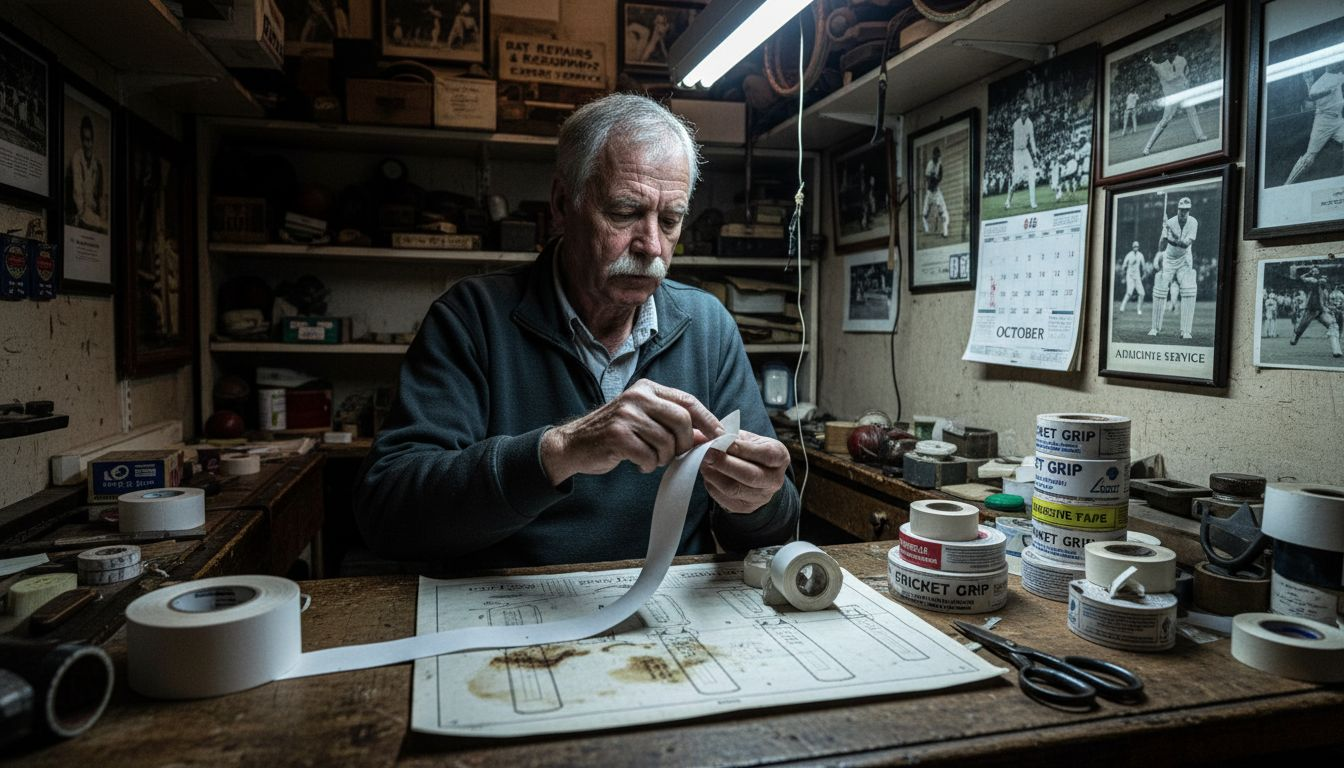
The following table compares popular grip materials for cricket bats:
| Grip Material | Comfort Level | Shock Absorption | Typical Lifespan |
|---|---|---|---|
| Rubber | High | Good | Up to 1 season |
| Synthetic | Medium | Moderate | Several months |
| Fabric Blend | Variable | Excellent | Varies by usage |
Professional cricketers understand that equipment modifications are as much about personal feel as technical precision.
Expert Suggestion: Invest in professional-grade tools and high-quality materials to ensure precise and lasting cricket bat modifications.
Step 3: Apply custom grip, tape, or decals to the bat
Customising your cricket bat’s exterior requires precision and careful technique to ensure a professional finish that enhances both aesthetics and performance. Decal application techniques demand meticulous preparation and execution to achieve a seamless result.
The process of applying custom elements to your bat involves several critical steps:
- Clean the bat surface thoroughly before any application
- Remove existing grips or residue completely
- Use precise measuring tools to align decorative elements
- Apply decal setting solutions for optimal adhesion
- Ensure smooth, bubble-free application
When working with water-slide decals or grip materials, proper layering techniques are crucial. Carefully soak decals, position them precisely, and use soft tools like brushes or toothpicks to eliminate air bubbles and ensure perfect placement.
Professional customisation is about creating a personalised tool that feels like an extension of your playing style.
Expert Suggestion: Allow each layer of grip or decal to dry completely before applying additional customisations to prevent potential damage or misalignment.
Step 4: Adjust weight and balance through professional techniques
Customising your cricket bat’s weight and balance requires scientific precision and an understanding of how minute adjustments can dramatically improve your playing performance. Biomechanical bat modifications involve careful analysis of how weight distribution impacts your stroke mechanics.
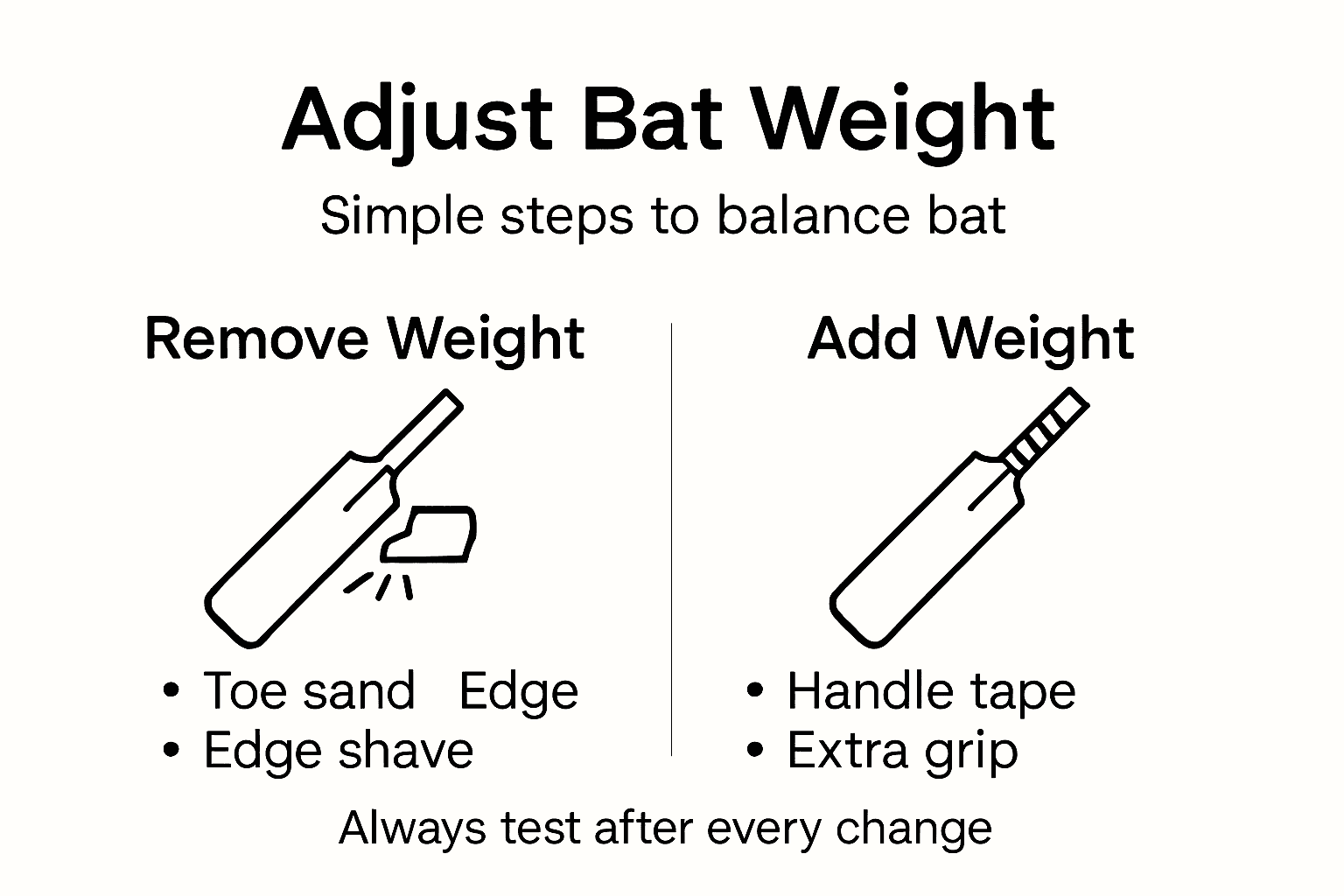
Professional weight and balance adjustments involve several critical techniques:
- Remove material strategically from specific bat regions
- Use precision measuring tools for exact adjustments
- Understand your individual playing style
- Incorporate incremental weight modifications
- Test balance after each minor adjustment
Performance factor analysis demonstrates that bat customisation is not a one-size-fits-all process. Each modification must be tailored to your unique physical characteristics, stroke technique, and personal comfort. Professional players often work with equipment specialists to achieve the most nuanced adjustments.
Perfecting your bat’s weight and balance is about creating a personalised extension of your cricketing technique.
Expert Suggestion: Always make small, measured adjustments and test your bat’s performance thoroughly after each modification to ensure optimal results.
Step 5: Test and validate your customised cricket bat
Validating your customised cricket bat requires a systematic approach that goes beyond subjective impressions. Batting skills performance testing involves comprehensive evaluation of your equipment’s impact on your playing technique.
Your validation process should include multiple assessment methods:
- Conduct controlled batting practice sessions
- Record video analysis of your stroke mechanics
- Measure shot consistency and power output
- Track performance metrics across different game scenarios
- Gather subjective feedback on comfort and feel
Advanced machine learning analysis offers sophisticated methods for quantifying equipment modifications. By collecting detailed data on run-scoring effectiveness and player control, you can objectively assess whether your bat customisation genuinely improves your performance.
True equipment mastery comes from understanding the subtle interactions between your technique and your bat’s characteristics.
Expert Suggestion: Document your test results meticulously, comparing performance before and after customisation to validate the actual impact of your modifications.
Boost Your Performance with Expertly Customised Cricket Bats
Understanding the importance of weight, balance and grip customisation can transform your game and elevate your confidence at the crease. If the article’s insights on assessing your bat’s potential and fine-tuning every detail resonate with you, then finding the perfect bat tailored to your style is the next step. Avoid common frustrations like improper weight distribution or discomfort that hinder your stroke control by exploring specialised equipment designed for optimal performance.

Discover a carefully curated selection of cricket bats at New Balance Cricket Bats – Cricket Bats Com and browse trusted brands that prioritise quality and customisation potential. Whether you seek a bat ready for advanced grip applications or one balanced for technical play styles, cricketbats.com is your gateway to mastering your ideal setup. Begin your upgrade today by visiting our Home page – Cricket Bats Com and take advantage of expert support and swift delivery designed to get you playing at your best as soon as possible.
Frequently Asked Questions
How do I assess my cricket bat for customisation potential?
To assess your cricket bat for customisation potential, carefully examine its blade condition, handle flexibility, weight distribution, and surface texture. Inspect for any cracks or structural weaknesses in good lighting, and make notes on attributes that may need improvement.
What materials do I need for cricket bat customisation?
You will need a variety of materials for cricket bat customisation, including sanding paper, high-quality adhesive compounds, protective grip materials, and precision cutting tools. Gather these items to ensure precise adjustments and a professional finish on your bat.
How do I apply custom grips or decals to my cricket bat?
To apply custom grips or decals, first clean the bat surface and remove any existing grips. Then use precise measuring tools to position the elements correctly before applying them smoothly to avoid air bubbles, ensuring a professional appearance.
What techniques are used to adjust my cricket bat’s weight and balance?
Adjusting your cricket bat’s weight and balance involves strategically removing material from specific sections of the bat and using precision measuring tools for exact changes. Make small adjustments incrementally and test the bat’s performance after each modification to find the optimal balance for your playing style.
How can I test and validate my customised cricket bat?
To test and validate your customised cricket bat, conduct controlled batting practice sessions while recording video analysis of your stroke mechanics. Measure shot consistency and power output, and compare your performance metrics before and after customisation to assess improvements clearly.
Recommended
- The Essentials of Making a Cricket Bat With Artistry – Cricket Bats Com
- What Is a Custom Cricket Bat and Its Value – Cricket Bats Com
- Cricket Bat Performance Factors: Maximising Your Game – Cricket Bats Com
- How to Make a Cricket Bat – Cricket Bats Com
- Guide to Sports Nutrition Basics for Optimal Results – MyGymSupplements
Choosing the right cricket bat can feel like the difference between a confident drive through cover and a frustrating inside edge. For many British amateur players, tweaking your bat opens possibilities to match its feel and performance exactly to your game, but it also means checking every change fits with club rules. From inspecting the blade and handle to experimenting with grips and decals, this guide shows how a comprehensive bat assessment can unlock a better on-field experience.
Table of Contents
- Step 1: Assess Your Cricket Bat For Customisation Potential
- Step 2: Select Materials And Tools For Your Modifications
- Step 3: Apply Custom Grip, Tape, Or Decals To The Bat
- Step 4: Adjust Weight And Balance Through Professional Techniques
- Step 5: Test And Validate Your Customised Cricket Bat
Summary of Key Insights
| Main Insight | Detailed Explanation |
|---|---|
| 1. Assess Bat Condition Before Customisation | Evaluate the blade, handle, and wood quality to determine modification potential. This ensures customisations enhance performance effectively. |
| 2. Select Quality Materials and Tools | Use high-quality grip materials and precise tools for bat modifications, as they significantly impact performance and comfort during play. |
| 3. Implement Precise Application Techniques | When adding grips or decals, follow meticulous steps to ensure optimal adhesion and a professional finish that enhances performance. |
| 4. Make Incremental Adjustments to Weight | Adjust weight and balance methodically, testing after each modification to create a bat that is tailored to your playing style. |
| 5. Validate Modifications with Performance Testing | Use controlled practices and record metrics to objectively assess the impact of customisations, ensuring only beneficial changes are retained. |
Step 1: Assess your cricket bat for customisation potential
Understanding the potential for customising your cricket bat requires a comprehensive evaluation of its current condition and performance characteristics. Comprehensive bat assessment involves examining multiple critical aspects that determine whether modifications can enhance your playing experience.
Start by thoroughly inspecting your bat’s fundamental components. Check the blade condition carefully, looking for existing cracks, uneven surfaces, or signs of structural weakness. Pay particular attention to the wood’s quality - English willow bats offer superior customisation potential compared to less resilient materials. You’ll want to evaluate several key attributes:
- Wood integrity and overall structural soundness
- Handle flexibility and connection to the blade
- Weight distribution and balance
- Surface texture and potential for refinement
The bat’s performance potential depends on matching its characteristics to your unique batting technique. Professional cricketers understand that bat characteristics directly influence player performance, making a meticulous assessment crucial before undertaking any customisation work.
Here is a summary of how different bat characteristics affect playing style:
| Bat Characteristic | Impact on Play | Ideal for Batting Style |
|---|---|---|
| Weight Distribution | Affects bat speed | Balanced for all-rounders |
| Handle Flexibility | Improves shot control | Flexible for technical players |
| Blade Surface Texture | Increases grip effect | Smooth for power hitters |
| Wood Quality | Enhances durability | High-grade for frequent players |
Expert Advice: Conduct your initial assessment under good lighting and use a magnifying glass to detect subtle imperfections that might impact customisation potential.
Step 2: Select materials and tools for your modifications
Customising your cricket bat requires strategic selection of specialised materials and precise tools that can transform your equipment’s performance. Cricket bat modification techniques demand careful consideration of each component to ensure optimal results.
Your modification toolkit should include essential items that enable precise adjustments. Key materials and tools for bat customisation typically encompass:
- Sanding paper with varying grits for surface refinement
- High-quality adhesive compounds for grip attachment
- Protective grip materials like rubber or synthetic compounds
- Precision cutting tools
- Measurement instruments
- Specialised application tools for tape and decals
When selecting grip materials, consider advanced batting technology research that highlights how specific materials impact shot execution. The right combination of grip texture, shock absorption, and comfort can significantly enhance your batting performance.
The following table compares popular grip materials for cricket bats:
| Grip Material | Comfort Level | Shock Absorption | Typical Lifespan |
|---|---|---|---|
| Rubber | High | Good | Up to 1 season |
| Synthetic | Medium | Moderate | Several months |
| Fabric Blend | Variable | Excellent | Varies by usage |
Professional cricketers understand that equipment modifications are as much about personal feel as technical precision.
Expert Suggestion: Invest in professional-grade tools and high-quality materials to ensure precise and lasting cricket bat modifications.
Step 3: Apply custom grip, tape, or decals to the bat
Customising your cricket bat’s exterior requires precision and careful technique to ensure a professional finish that enhances both aesthetics and performance. Decal application techniques demand meticulous preparation and execution to achieve a seamless result.
The process of applying custom elements to your bat involves several critical steps:
- Clean the bat surface thoroughly before any application
- Remove existing grips or residue completely
- Use precise measuring tools to align decorative elements
- Apply decal setting solutions for optimal adhesion
- Ensure smooth, bubble-free application
When working with water-slide decals or grip materials, proper layering techniques are crucial. Carefully soak decals, position them precisely, and use soft tools like brushes or toothpicks to eliminate air bubbles and ensure perfect placement.
Professional customisation is about creating a personalised tool that feels like an extension of your playing style.
Expert Suggestion: Allow each layer of grip or decal to dry completely before applying additional customisations to prevent potential damage or misalignment.
Step 4: Adjust weight and balance through professional techniques
Customising your cricket bat’s weight and balance requires scientific precision and an understanding of how minute adjustments can dramatically improve your playing performance. Biomechanical bat modifications involve careful analysis of how weight distribution impacts your stroke mechanics.
Professional weight and balance adjustments involve several critical techniques:
- Remove material strategically from specific bat regions
- Use precision measuring tools for exact adjustments
- Understand your individual playing style
- Incorporate incremental weight modifications
- Test balance after each minor adjustment
Performance factor analysis demonstrates that bat customisation is not a one-size-fits-all process. Each modification must be tailored to your unique physical characteristics, stroke technique, and personal comfort. Professional players often work with equipment specialists to achieve the most nuanced adjustments.
Perfecting your bat’s weight and balance is about creating a personalised extension of your cricketing technique.
Expert Suggestion: Always make small, measured adjustments and test your bat’s performance thoroughly after each modification to ensure optimal results.
Step 5: Test and validate your customised cricket bat
Validating your customised cricket bat requires a systematic approach that goes beyond subjective impressions. Batting skills performance testing involves comprehensive evaluation of your equipment’s impact on your playing technique.
Your validation process should include multiple assessment methods:
- Conduct controlled batting practice sessions
- Record video analysis of your stroke mechanics
- Measure shot consistency and power output
- Track performance metrics across different game scenarios
- Gather subjective feedback on comfort and feel
Advanced machine learning analysis offers sophisticated methods for quantifying equipment modifications. By collecting detailed data on run-scoring effectiveness and player control, you can objectively assess whether your bat customisation genuinely improves your performance.
True equipment mastery comes from understanding the subtle interactions between your technique and your bat’s characteristics.
Expert Suggestion: Document your test results meticulously, comparing performance before and after customisation to validate the actual impact of your modifications.
Boost Your Performance with Expertly Customised Cricket Bats
Understanding the importance of weight, balance and grip customisation can transform your game and elevate your confidence at the crease. If the article’s insights on assessing your bat’s potential and fine-tuning every detail resonate with you, then finding the perfect bat tailored to your style is the next step. Avoid common frustrations like improper weight distribution or discomfort that hinder your stroke control by exploring specialised equipment designed for optimal performance.
Discover a carefully curated selection of cricket bats at New Balance Cricket Bats – Cricket Bats Com and browse trusted brands that prioritise quality and customisation potential. Whether you seek a bat ready for advanced grip applications or one balanced for technical play styles, cricketbats.com is your gateway to mastering your ideal setup. Begin your upgrade today by visiting our Home page – Cricket Bats Com and take advantage of expert support and swift delivery designed to get you playing at your best as soon as possible.
Frequently Asked Questions
How do I assess my cricket bat for customisation potential?
To assess your cricket bat for customisation potential, carefully examine its blade condition, handle flexibility, weight distribution, and surface texture. Inspect for any cracks or structural weaknesses in good lighting, and make notes on attributes that may need improvement.
What materials do I need for cricket bat customisation?
You will need a variety of materials for cricket bat customisation, including sanding paper, high-quality adhesive compounds, protective grip materials, and precision cutting tools. Gather these items to ensure precise adjustments and a professional finish on your bat.
How do I apply custom grips or decals to my cricket bat?
To apply custom grips or decals, first clean the bat surface and remove any existing grips. Then use precise measuring tools to position the elements correctly before applying them smoothly to avoid air bubbles, ensuring a professional appearance.
What techniques are used to adjust my cricket bat’s weight and balance?
Adjusting your cricket bat’s weight and balance involves strategically removing material from specific sections of the bat and using precision measuring tools for exact changes. Make small adjustments incrementally and test the bat’s performance after each modification to find the optimal balance for your playing style.
How can I test and validate my customised cricket bat?
To test and validate your customised cricket bat, conduct controlled batting practice sessions while recording video analysis of your stroke mechanics. Measure shot consistency and power output, and compare your performance metrics before and after customisation to assess improvements clearly.
Recommended
- The Essentials of Making a Cricket Bat With Artistry – Cricket Bats Com
- What Is a Custom Cricket Bat and Its Value – Cricket Bats Com
- Cricket Bat Performance Factors: Maximising Your Game – Cricket Bats Com
- How to Make a Cricket Bat – Cricket Bats Com
- Guide to Sports Nutrition Basics for Optimal Results – MyGymSupplements