
News News
Cricket Bat Edges Explained: Power, Rules, Performance Cricket Bat Edges Explained: Power, Rules, Performance
Every amateur batsman knows that a split-second edge can decide a match or lead to disappointment. For players shaping their skills or making that next purchase, understanding the role of cricket bat edges is essential. These narrow vertical sides are carefully engineered, with their thickness and design having a direct impact on shot control, power, and ball trajectory. This guide highlights cricket bat edge characteristics so you can confidently enhance your technique and choose the bat that truly suits your game.
Table of Contents
- What Are Cricket Bat Edges? Core Concepts
- Types Of Bat Edges And Their Functions
- Edge Thickness, Shape And Bat Power
- ICC Regulations For Bat Edge Dimensions
- Choosing The Right Edge For Your Game
- Common Mistakes With Bat Edges
Key Takeaways
| Point | Details |
|---|---|
| Cricket Bat Edges Are Crucial | The edges of a cricket bat significantly influence batting performance and ball control, impacting how effectively players strike the ball. |
| Types of Edges Matter | Understanding the different edge types—standard, reinforced, and performance—is essential for selecting a bat tailored to individual playing styles. |
| Edge Thickness Affects Power | The thickness and shape of the bat edges determine energy transfer during impact, which affects the overall power and precision of shots. |
| Compliance with Regulations is Key | Adhering to ICC regulations regarding edge dimensions is necessary to ensure sportsmanship and equipment compliance during competitive play. |
What Are Cricket Bat Edges? Core Concepts
Cricket bat edges represent the critical lateral sides of a cricket bat that play a pivotal role in batting performance and ball interaction. A cricket bat’s structural design includes specific edge characteristics that influence how effectively a batsman can strike and control the ball during gameplay.
The cricket bat edge is essentially the narrow side portion of the bat running vertically between the flat striking face and the back of the blade. These edges are engineered to be strong yet lightweight, allowing players to manage ball contact with precision. An inside edge) occurs when the ball makes unintended contact with the side of the bat, which can result in unpredictable ball trajectories and potential dismissals.
Bat edges serve multiple critical functions beyond mere structural support. They help distribute wood density, manage shock absorption, and provide additional surface area for potential ball contact. Professional cricketers pay meticulous attention to edge width, thickness, and profile, understanding that these subtle design elements can dramatically influence batting performance and shot execution.
Pro tip: When selecting a cricket bat, carefully inspect the edges for uniform thickness and smooth contours, as these details can significantly impact your batting control and shot precision.
Types Of Bat Edges And Their Functions
Cricket bat edges are not uniform in design, but rather comprise several distinctive types that serve unique purposes in batting performance. Bat blade structural elements reveal that edges near the handle, known as shoulders, and the toe at the bottom, have specific design considerations that enhance a bat’s overall functionality.
The primary types of cricket bat edges include the standard edge, reinforced edge, and performance edge. Standard edges provide basic structural integrity, while reinforced edges feature additional wood density at critical impact zones. Performance edges are engineered with advanced techniques to optimise wood distribution, allowing batsmen to generate maximum power and control during shots.
Interestingly, inside edges can produce unique shot variations), such as the French or Chinese cut, where unintentional edge contact creates unexpected ball trajectories. Professional cricketers understand these edge characteristics intimately, recognising that slight variations in edge design can dramatically influence shot precision, power transmission, and potential dismissal scenarios.
Pro tip: When examining cricket bat edges, look for consistent wood density, smooth transitions between edge and face, and minimal imperfections that could compromise structural integrity during high-impact shots.
Here’s a comparison of main cricket bat edge types and their unique benefits:
| Edge Type | Key Feature | Impact on Batting | Typical User Profile |
|---|---|---|---|
| Standard Edge | Balanced design | General shot consistency | All-round or amateur players |
| Reinforced Edge | Extra wood at contact zone | Enhanced durability | Aggressive hitters |
| Performance Edge | Precision wood distribution | Maximised power and control | Professional players |
Edge Thickness, Shape And Bat Power
Cricket bat performance dynamics reveal that edge thickness and shape are critical determinants of a bat’s power potential. The structural geometry of bat edges directly influences energy transfer, with thicker edges typically providing greater mass and momentum during ball impact.
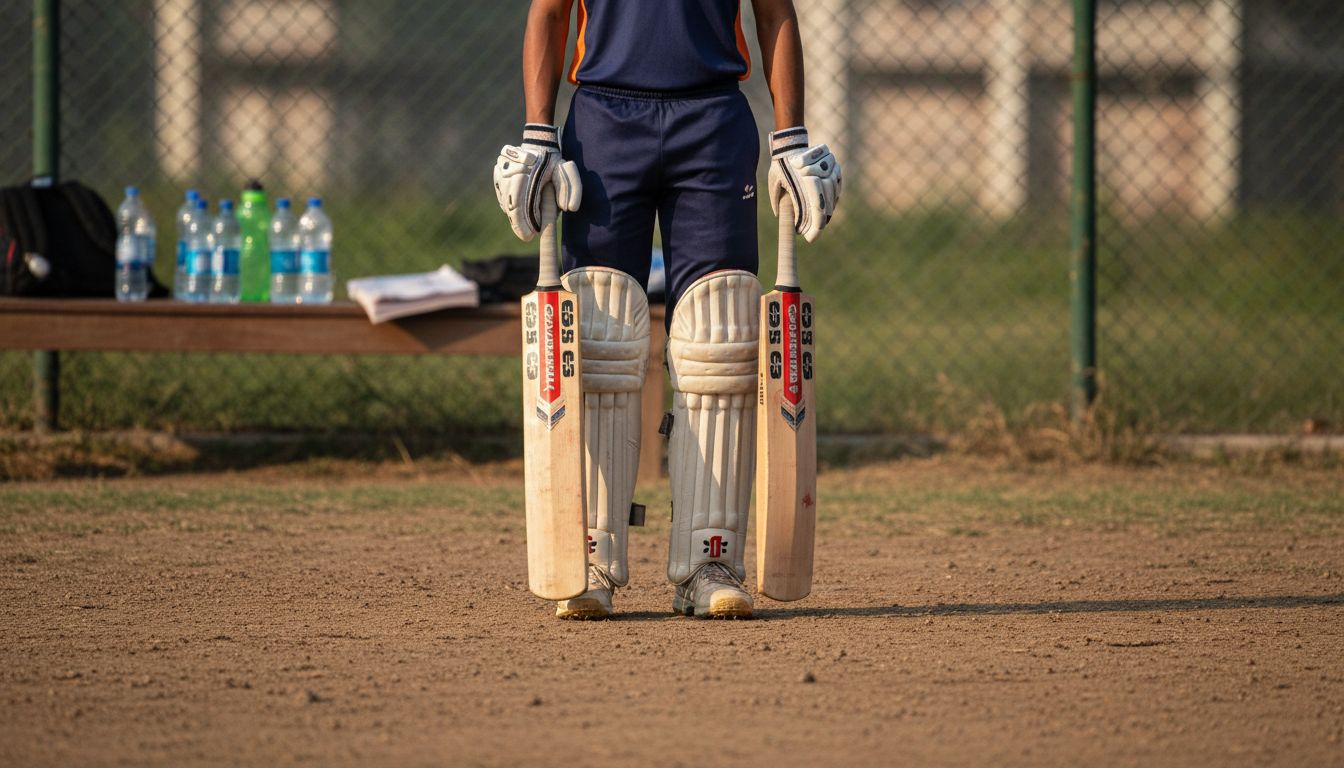
The edge profile plays a crucial role in bat performance. Thicker edges concentrate wood mass in strategic areas, creating a more substantial sweet spot that enhances power transmission. Tapered edges, which gradually reduce in thickness from the centre, allow for more nuanced energy distribution, enabling batsmen to generate powerful shots while maintaining manoeuvrability.
Bat structural characteristics demonstrate that edge design is not simply about maximising thickness, but creating a balanced approach to wood distribution. Different edge shapes accommodate various playing styles - some optimised for power hitting, others for precision and control. Professional cricketers often select bats with edge profiles that complement their specific batting techniques and match conditions.
Pro tip: When assessing cricket bat edges, focus on finding a balance between edge thickness and overall bat weight, as excessive mass can compromise your swing speed and shot execution.
ICC Regulations For Bat Edge Dimensions
Laws of Cricket regulations establish precise specifications for cricket bat dimensions, with strict guidelines governing edge measurements. The International Cricket Council (ICC) mandates that bat edges must not exceed 4.25 inches in width, ensuring a standardised approach to equipment design across professional and competitive cricket.
The regulatory framework for bat edges is comprehensive, addressing multiple aspects of bat construction. These regulations aim to maintain a balance between batting and bowling performances by preventing excessive technological advantages. Key specifications include limitations on edge thickness, with rules designed to prevent manufacturers from creating edges that might provide unfair batting advantages through excessive wood concentration or unconventional shaping.
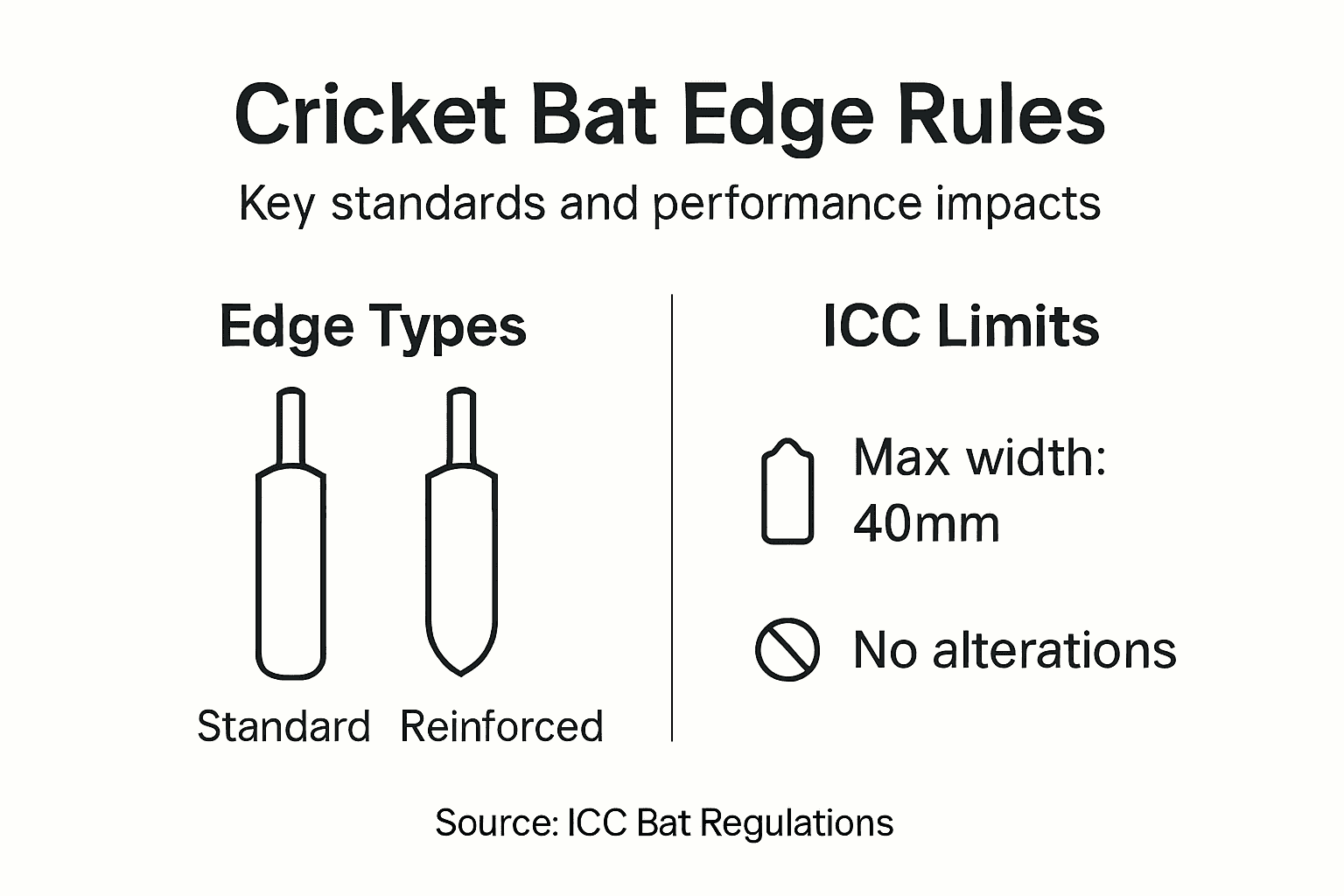
ICC Playing Conditions emphasise that any modification to bat edges that potentially enhances performance beyond standard specifications is strictly prohibited. Professional cricketers must ensure their equipment meets these exact dimensional requirements, with even minor deviations potentially resulting in equipment being declared non-compliant and unsuitable for official matches.
Pro tip: Always have your cricket bat professionally measured and certified to ensure complete compliance with ICC edge dimension regulations before participating in competitive matches.
Choosing The Right Edge For Your Game
Cricket bat selection strategies reveal that choosing the right edge is a nuanced process directly tied to individual batting style and performance objectives. Different edge profiles cater to specific playing techniques, with variations in thickness, width, and wood distribution dramatically influencing a batsman’s capability to generate power and maintain control.
The edge selection spectrum ranges from power-oriented to precision-focused designs. Thick edges favour aggressive batsmen who prioritise hitting boundaries, concentrating wood mass to maximise momentum during ball contact. Conversely, thinner edges offer enhanced manoeuvrability and technical control, ideal for players emphasising placement and finesse over pure power hitting. Professional cricketers often select edges that complement their unique batting approach and match conditions.
Mental preparation techniques suggest that beyond physical edge characteristics, a player’s mental conditioning plays a crucial role in maximising bat performance. Understanding one’s strengths, practicing specific batting techniques, and developing mental focus can significantly enhance the effectiveness of even the most meticulously chosen bat edge.
Pro tip: Test multiple bat edges during practice sessions to discover the profile that most naturally aligns with your batting technique and feels most comfortable in your hands.
Common Mistakes With Bat Edges
Bat edge performance research highlights critical errors players frequently make when managing their cricket bat’s edges. Neglecting proper maintenance, selecting inappropriate edge profiles, and failing to understand edge characteristics can significantly compromise batting performance and equipment longevity.
One fundamental mistake is overlooking the crucial knocking-in process, which prepares the bat’s surface for optimal performance. Improper edge preparation can lead to premature wood damage, reduced shock absorption, and decreased overall bat responsiveness. Players often choose edge thickness without considering their specific batting technique, resulting in suboptimal control and power transmission.
Inside edge challenges) represent another significant technical error. Unintentional edge contacts frequently occur when batsmen misjudge ball trajectory, leading to unpredictable deflections, potential dismissals, and increased injury risk. Professional cricketers understand that mastering edge control requires continuous technical refinement and precise timing awareness.
Below is a summary of common bat edge mistakes and best practice solutions:
| Common Mistake | Potential Problem | Best Practice Solution |
|---|---|---|
| Skipping “knocking-in” | Early edge damage | Gradually knock bat edges before use |
| Choosing wrong edge profile | Reduced shot control or power | Match edge profile to playing style |
| Ignoring edge maintenance | Decreased bat lifespan | Inspect and repair edges regularly |
Pro tip: Regularly inspect your bat’s edges for signs of wear, and invest time in understanding how different edge profiles interact with your personal batting technique.
Discover the Perfect Cricket Bat Edge for Your Game
Understanding the nuances of cricket bat edges can transform your batting experience. Whether you seek the power of thick edges or the precision of a thinner profile, selecting the right bat is crucial to enhance control and shot execution. At cricketbats.com, you can explore a carefully curated range of high-quality cricket bats designed with optimal edge thickness and profiles tailored to your playing style.

Choose from top-tier collections like adidas Cricket Bats – Cricket Bats Com and New Balance Cricket Bats – Cricket Bats Com where craftsmanship meets performance. Act now to secure your ideal bat with expertly engineered edges that comply with ICC regulations. Visit cricketbats.com today and elevate your game with gear that gives you power, control, and confidence.
Frequently Asked Questions
What are cricket bat edges?
Cricket bat edges are the lateral sides of the bat that affect how the bat interacts with the ball. They are vital for batting performance and control during gameplay.
How do the different types of cricket bat edges impact performance?
Cricket bat edges vary in thickness and design, with standard edges providing basic support, reinforced edges enhancing durability, and performance edges optimising wood distribution for maximum power and control.
Why is edge thickness important in cricket bats?
Edge thickness directly influences the bat’s power potential, with thicker edges providing more mass for better energy transfer during ball contact, creating a larger sweet spot for effective shots.
What regulations does the ICC have regarding bat edges?
The ICC specifies that cricket bat edges must not exceed 4.25 inches in width to ensure standardisation across equipment, preventing any unfair advantages that excessively thick edges might provide.
Recommended
Every amateur batsman knows that a split-second edge can decide a match or lead to disappointment. For players shaping their skills or making that next purchase, understanding the role of cricket bat edges is essential. These narrow vertical sides are carefully engineered, with their thickness and design having a direct impact on shot control, power, and ball trajectory. This guide highlights cricket bat edge characteristics so you can confidently enhance your technique and choose the bat that truly suits your game.
Table of Contents
- What Are Cricket Bat Edges? Core Concepts
- Types Of Bat Edges And Their Functions
- Edge Thickness, Shape And Bat Power
- ICC Regulations For Bat Edge Dimensions
- Choosing The Right Edge For Your Game
- Common Mistakes With Bat Edges
Key Takeaways
| Point | Details |
|---|---|
| Cricket Bat Edges Are Crucial | The edges of a cricket bat significantly influence batting performance and ball control, impacting how effectively players strike the ball. |
| Types of Edges Matter | Understanding the different edge types—standard, reinforced, and performance—is essential for selecting a bat tailored to individual playing styles. |
| Edge Thickness Affects Power | The thickness and shape of the bat edges determine energy transfer during impact, which affects the overall power and precision of shots. |
| Compliance with Regulations is Key | Adhering to ICC regulations regarding edge dimensions is necessary to ensure sportsmanship and equipment compliance during competitive play. |
What Are Cricket Bat Edges? Core Concepts
Cricket bat edges represent the critical lateral sides of a cricket bat that play a pivotal role in batting performance and ball interaction. A cricket bat’s structural design includes specific edge characteristics that influence how effectively a batsman can strike and control the ball during gameplay.
The cricket bat edge is essentially the narrow side portion of the bat running vertically between the flat striking face and the back of the blade. These edges are engineered to be strong yet lightweight, allowing players to manage ball contact with precision. An inside edge) occurs when the ball makes unintended contact with the side of the bat, which can result in unpredictable ball trajectories and potential dismissals.
Bat edges serve multiple critical functions beyond mere structural support. They help distribute wood density, manage shock absorption, and provide additional surface area for potential ball contact. Professional cricketers pay meticulous attention to edge width, thickness, and profile, understanding that these subtle design elements can dramatically influence batting performance and shot execution.
Pro tip: When selecting a cricket bat, carefully inspect the edges for uniform thickness and smooth contours, as these details can significantly impact your batting control and shot precision.
Types Of Bat Edges And Their Functions
Cricket bat edges are not uniform in design, but rather comprise several distinctive types that serve unique purposes in batting performance. Bat blade structural elements reveal that edges near the handle, known as shoulders, and the toe at the bottom, have specific design considerations that enhance a bat’s overall functionality.
The primary types of cricket bat edges include the standard edge, reinforced edge, and performance edge. Standard edges provide basic structural integrity, while reinforced edges feature additional wood density at critical impact zones. Performance edges are engineered with advanced techniques to optimise wood distribution, allowing batsmen to generate maximum power and control during shots.
Interestingly, inside edges can produce unique shot variations), such as the French or Chinese cut, where unintentional edge contact creates unexpected ball trajectories. Professional cricketers understand these edge characteristics intimately, recognising that slight variations in edge design can dramatically influence shot precision, power transmission, and potential dismissal scenarios.
Pro tip: When examining cricket bat edges, look for consistent wood density, smooth transitions between edge and face, and minimal imperfections that could compromise structural integrity during high-impact shots.
Here’s a comparison of main cricket bat edge types and their unique benefits:
| Edge Type | Key Feature | Impact on Batting | Typical User Profile |
|---|---|---|---|
| Standard Edge | Balanced design | General shot consistency | All-round or amateur players |
| Reinforced Edge | Extra wood at contact zone | Enhanced durability | Aggressive hitters |
| Performance Edge | Precision wood distribution | Maximised power and control | Professional players |
Edge Thickness, Shape And Bat Power
Cricket bat performance dynamics reveal that edge thickness and shape are critical determinants of a bat’s power potential. The structural geometry of bat edges directly influences energy transfer, with thicker edges typically providing greater mass and momentum during ball impact.
The edge profile plays a crucial role in bat performance. Thicker edges concentrate wood mass in strategic areas, creating a more substantial sweet spot that enhances power transmission. Tapered edges, which gradually reduce in thickness from the centre, allow for more nuanced energy distribution, enabling batsmen to generate powerful shots while maintaining manoeuvrability.
Bat structural characteristics demonstrate that edge design is not simply about maximising thickness, but creating a balanced approach to wood distribution. Different edge shapes accommodate various playing styles - some optimised for power hitting, others for precision and control. Professional cricketers often select bats with edge profiles that complement their specific batting techniques and match conditions.
Pro tip: When assessing cricket bat edges, focus on finding a balance between edge thickness and overall bat weight, as excessive mass can compromise your swing speed and shot execution.
ICC Regulations For Bat Edge Dimensions
Laws of Cricket regulations establish precise specifications for cricket bat dimensions, with strict guidelines governing edge measurements. The International Cricket Council (ICC) mandates that bat edges must not exceed 4.25 inches in width, ensuring a standardised approach to equipment design across professional and competitive cricket.
The regulatory framework for bat edges is comprehensive, addressing multiple aspects of bat construction. These regulations aim to maintain a balance between batting and bowling performances by preventing excessive technological advantages. Key specifications include limitations on edge thickness, with rules designed to prevent manufacturers from creating edges that might provide unfair batting advantages through excessive wood concentration or unconventional shaping.
ICC Playing Conditions emphasise that any modification to bat edges that potentially enhances performance beyond standard specifications is strictly prohibited. Professional cricketers must ensure their equipment meets these exact dimensional requirements, with even minor deviations potentially resulting in equipment being declared non-compliant and unsuitable for official matches.
Pro tip: Always have your cricket bat professionally measured and certified to ensure complete compliance with ICC edge dimension regulations before participating in competitive matches.
Choosing The Right Edge For Your Game
Cricket bat selection strategies reveal that choosing the right edge is a nuanced process directly tied to individual batting style and performance objectives. Different edge profiles cater to specific playing techniques, with variations in thickness, width, and wood distribution dramatically influencing a batsman’s capability to generate power and maintain control.
The edge selection spectrum ranges from power-oriented to precision-focused designs. Thick edges favour aggressive batsmen who prioritise hitting boundaries, concentrating wood mass to maximise momentum during ball contact. Conversely, thinner edges offer enhanced manoeuvrability and technical control, ideal for players emphasising placement and finesse over pure power hitting. Professional cricketers often select edges that complement their unique batting approach and match conditions.
Mental preparation techniques suggest that beyond physical edge characteristics, a player’s mental conditioning plays a crucial role in maximising bat performance. Understanding one’s strengths, practicing specific batting techniques, and developing mental focus can significantly enhance the effectiveness of even the most meticulously chosen bat edge.
Pro tip: Test multiple bat edges during practice sessions to discover the profile that most naturally aligns with your batting technique and feels most comfortable in your hands.
Common Mistakes With Bat Edges
Bat edge performance research highlights critical errors players frequently make when managing their cricket bat’s edges. Neglecting proper maintenance, selecting inappropriate edge profiles, and failing to understand edge characteristics can significantly compromise batting performance and equipment longevity.
One fundamental mistake is overlooking the crucial knocking-in process, which prepares the bat’s surface for optimal performance. Improper edge preparation can lead to premature wood damage, reduced shock absorption, and decreased overall bat responsiveness. Players often choose edge thickness without considering their specific batting technique, resulting in suboptimal control and power transmission.
Inside edge challenges) represent another significant technical error. Unintentional edge contacts frequently occur when batsmen misjudge ball trajectory, leading to unpredictable deflections, potential dismissals, and increased injury risk. Professional cricketers understand that mastering edge control requires continuous technical refinement and precise timing awareness.
Below is a summary of common bat edge mistakes and best practice solutions:
| Common Mistake | Potential Problem | Best Practice Solution |
|---|---|---|
| Skipping “knocking-in” | Early edge damage | Gradually knock bat edges before use |
| Choosing wrong edge profile | Reduced shot control or power | Match edge profile to playing style |
| Ignoring edge maintenance | Decreased bat lifespan | Inspect and repair edges regularly |
Pro tip: Regularly inspect your bat’s edges for signs of wear, and invest time in understanding how different edge profiles interact with your personal batting technique.
Discover the Perfect Cricket Bat Edge for Your Game
Understanding the nuances of cricket bat edges can transform your batting experience. Whether you seek the power of thick edges or the precision of a thinner profile, selecting the right bat is crucial to enhance control and shot execution. At cricketbats.com, you can explore a carefully curated range of high-quality cricket bats designed with optimal edge thickness and profiles tailored to your playing style.
Choose from top-tier collections like adidas Cricket Bats – Cricket Bats Com and New Balance Cricket Bats – Cricket Bats Com where craftsmanship meets performance. Act now to secure your ideal bat with expertly engineered edges that comply with ICC regulations. Visit cricketbats.com today and elevate your game with gear that gives you power, control, and confidence.
Frequently Asked Questions
What are cricket bat edges?
Cricket bat edges are the lateral sides of the bat that affect how the bat interacts with the ball. They are vital for batting performance and control during gameplay.
How do the different types of cricket bat edges impact performance?
Cricket bat edges vary in thickness and design, with standard edges providing basic support, reinforced edges enhancing durability, and performance edges optimising wood distribution for maximum power and control.
Why is edge thickness important in cricket bats?
Edge thickness directly influences the bat’s power potential, with thicker edges providing more mass for better energy transfer during ball contact, creating a larger sweet spot for effective shots.
What regulations does the ICC have regarding bat edges?
The ICC specifies that cricket bat edges must not exceed 4.25 inches in width to ensure standardisation across equipment, preventing any unfair advantages that excessively thick edges might provide.