
News News
Cricket Bat Weight Guides: Boost Comfort and Play Cricket Bat Weight Guides: Boost Comfort and Play
Choosing a cricket bat that feels just right can make every training session in Australia feel more enjoyable and rewarding. For young and amateur players, finding the ideal weight of a cricket bat is key to improving comfort and boosting confidence at the crease. Selecting the right balance helps you swing freely, develop good technique, and avoid fatigue, making sure you play your best from the first ball to the final shot.
Table of Contents
- Cricket Bat Weight Fundamentals Explained
- Bat Weight Types and Recommended Ranges
- How Bat Weight Influences Performance
- Selecting Ideal Bat Weight by Age, Size and Style
- Common Mistakes and What to Avoid
- Comparison of Popular Bat Weight Choices
Key Takeaways
| Point | Details |
|---|---|
| Understanding Bat Weight | The weight of a cricket bat directly influences performance, with lighter bats offering speed and control, while heavier bats provide power. |
| Player-Specific Selection | Choosing the right bat weight requires consideration of individual factors such as age, physique, and playing style for optimal performance. |
| Common Selection Mistakes | Amateur players often select bats based on aesthetics rather than personal fit, which can hinder technique and increase injury risk. |
| Performance Implications | A bat that feels properly balanced enhances shot execution and comfort, reinforcing the importance of testing different weights. |
Cricket Bat Weight Fundamentals Explained
Understanding cricket bat weight is crucial for amateur players seeking performance and comfort on the pitch. Weight plays a pivotal role in determining how effectively you swing, connect with the ball, and maintain control during gameplay. Most cricket bats range between 2.4 and 2.7 pounds, but the ideal weight depends on individual player physique, strength, and playing style.
The weight of a cricket bat significantly influences a player’s batting technique and power generation. Lighter bats around 2.4 pounds offer quicker bat speed and enhanced manoeuvrability, which benefits younger players or those with less upper body strength. Conversely, heavier bats around 2.7 pounds provide more momentum and potential power, allowing experienced players to generate substantial force when striking the ball. Cricket bat performance factors demonstrate how these subtle weight variations can dramatically impact gameplay.
When selecting a bat, players must consider several critical weight-related factors. Body weight, height, and muscle strength all contribute to determining the most suitable bat weight. Junior players typically require lighter bats to maintain proper technique, while senior players can manage slightly heavier options. Professional cricket coaches recommend testing multiple bat weights to find the most comfortable and natural-feeling option that complements your specific playing style.
Pro tip: Always test multiple bat weights at a sports store or during practice sessions to find the weight that feels most comfortable and allows you to swing with maximum control and confidence.
Bat Weight Types and Recommended Ranges
Cricket bat weights are strategically categorised to accommodate different player capabilities and performance requirements. Weight ranges in cricket bats typically span from 1.1 kg to 1.4 kg (2.4 to 3 pounds), with distinct classifications tailored for junior, intermediate, and professional players. These weight categories are not arbitrary but carefully designed to match players’ physical development, skill levels, and batting techniques.
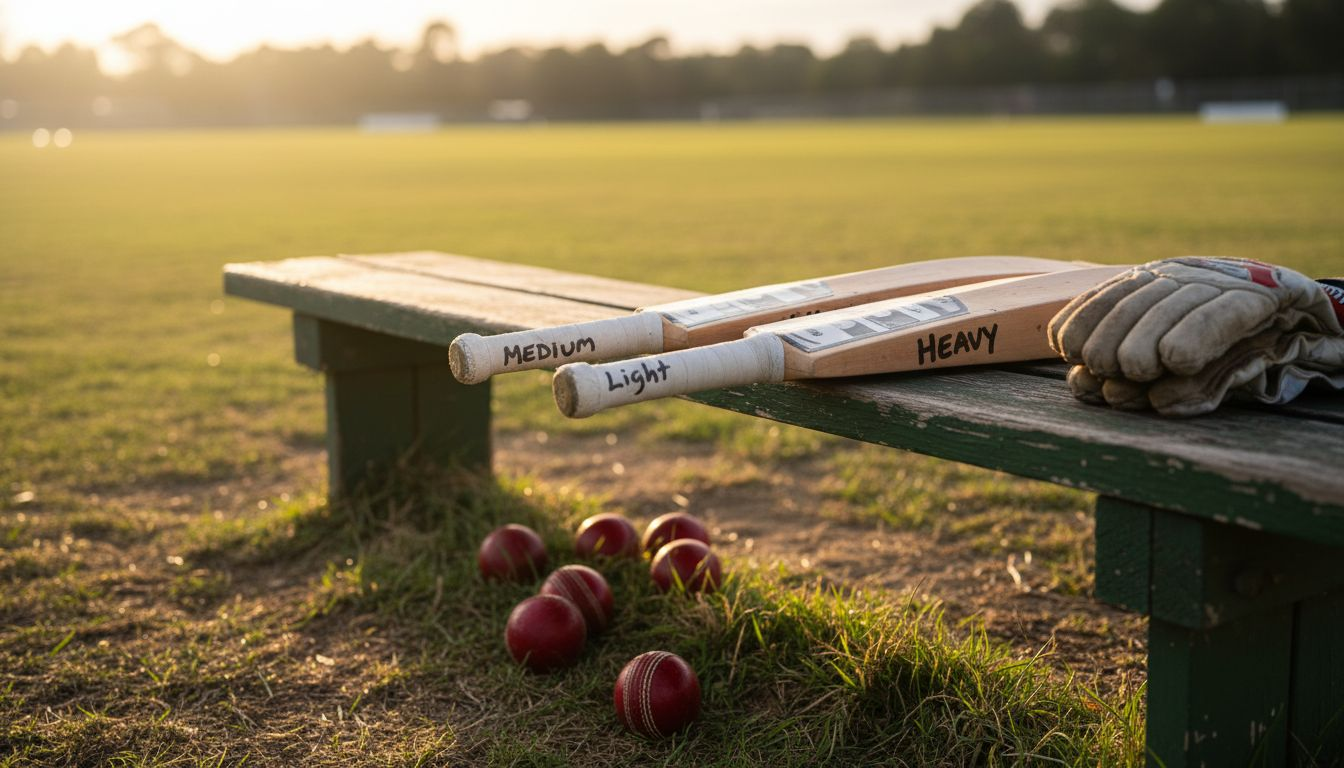
The standard weight classifications for cricket bats include lightweight (2.4 to 2.5 pounds), medium-weight (2.5 to 2.6 pounds), and heavyweight (2.6 to 2.7 pounds). Lightweight bats are predominantly recommended for junior players, teenagers, and those with smaller physical frames. These bats enable quicker bat swing and improved control, essential for developing proper batting techniques. Medium-weight bats represent the most versatile category, suitable for players transitioning between junior and senior levels, offering a balanced combination of manoeuvrability and power.
Professional players typically prefer heavyweight bats, which provide enhanced momentum and striking power. International cricket bat regulations strictly limit bat weight to a maximum of 1.22 kg (2.7 pounds), ensuring fair competitive conditions. The selection process involves considering individual factors such as physical strength, batting style, and personal comfort. Players must remember that while weight is crucial, bat balance and pick-up sensation are equally important in determining optimal performance.
Pro tip: Consult with experienced cricket coaches or professional equipment specialists to get personalised recommendations on selecting the most appropriate bat weight for your specific playing characteristics and skill level.
How Bat Weight Influences Performance
Cricket bat weight plays a fundamental role in determining a player’s performance across multiple dimensions of batting technique. Bat weight dynamics significantly impact timing, power generation, and overall stroke execution. A bat that is too heavy can dramatically reduce bat speed and compromise a player’s ability to respond quickly to different bowling styles, while a bat that is too light may limit power and stability during shots.
The intricate relationship between bat weight and player performance involves complex biomechanical considerations. Heavier bats provide greater momentum when striking the ball, potentially increasing shot power and distance. However, this additional weight comes with trade-offs in manoeuvrability and reaction time. Players must find a delicate balance that allows them to generate sufficient power without sacrificing the ability to adjust and respond to varying ball trajectories and bowling techniques.
Professional players understand that optimal bat weight management extends beyond simple weight measurements. Factors such as bat balance, pick-up sensation, and individual physical strength play crucial roles in determining the most effective bat weight. Younger players and those with developing muscle groups typically benefit from lighter bats that promote proper technique, while more experienced players can leverage slightly heavier bats to maximise power and control.
Pro tip: Conduct regular batting practice with bats of varying weights to develop a nuanced understanding of how weight impacts your personal batting performance and technique.
Selecting Ideal Bat Weight by Age, Size and Style
Selecting the perfect cricket bat weight requires a nuanced understanding of individual physical characteristics and playing dynamics. Cricket bat weight selection involves careful consideration of age, body composition, strength, and personal batting technique. Young players and those with developing muscle groups must prioritise lighter bats that facilitate proper technique development and reduce injury risk.
The relationship between player physique and bat weight follows a structured progression. Junior players aged 8-12 typically require bats weighing between 2.4 and 2.5 pounds, which provide sufficient manoeuvrability and control. Teenage players transitioning into more competitive levels might choose bats in the 2.5 to 2.6-pound range, offering a balanced combination of speed and emerging power. Adult players with established strength can comfortably manage bats weighing 2.6 to 2.7 pounds, maximising momentum and shot potential.
Batting style plays an equally critical role in bat weight selection. Aggressive power hitters benefit from slightly heavier bats that generate additional striking force, while technically oriented players might prefer lighter options that enhance precision and quick reaction times. Different playing styles demand unique bat weight considerations, making personalised assessment crucial for optimising performance. Professional coaches recommend conducting comprehensive batting assessments to determine the most suitable bat weight that complements individual physical capabilities and technical preferences.
Here is a summary of player types and their ideal bat weight choices:
| Player Category | Recommended Weight Range | Key Benefit |
|---|---|---|
| Junior (8-12 years) | 2.4–2.5 pounds | Enhanced control and safety |
| Teenage (13-17 years) | 2.5–2.6 pounds | Balance of speed and power |
| Adult/Senior | 2.6–2.7 pounds | Maximum momentum and power |
| Technical Batsman | 2.4–2.5 pounds | Improved manoeuvrability |
| Power Hitter | 2.6–2.7 pounds | Extra force for striking |
Pro tip: Consult with professional cricket equipment specialists and undergo a personalised bat weight assessment to identify the most suitable bat that matches your unique physical characteristics and playing style.
Common Mistakes and What to Avoid
Bat weight misconceptions can significantly undermine a player’s performance and potentially lead to long-term technical challenges. Many amateur cricketers mistakenly believe that heavier bats automatically translate to more powerful shots, overlooking the critical importance of proper weight management and individual physical capabilities. This misunderstanding often results in players selecting bats that are too heavy, compromising their natural batting technique and increasing injury risk.
One of the most prevalent errors is choosing a bat based on aesthetic appeal or brand reputation rather than personal physical characteristics. Players frequently select bats that are too heavy, hoping to generate more power, but instead experience reduced bat speed, compromised timing, and increased fatigue. Selecting inappropriate bat weights can lead to compensatory movements that distort fundamental batting techniques, causing long-term performance limitations and potential muscle strain.
Another critical mistake involves neglecting the importance of bat balance and individual playing style. Young players and enthusiasts often focus exclusively on weight, ignoring how the bat’s centre of gravity and overall feel contribute to effective stroke play. Professional coaches emphasise that the ideal bat should feel like a natural extension of the player’s body, allowing seamless movement and consistent shot execution. Inexperienced players might also make the error of using the same bat weight throughout their playing career, failing to adjust as their physical strength and technique evolve.
Pro tip: Regularly reassess your bat weight by conducting periodic performance reviews with experienced coaches who can provide objective insights into your equipment suitability and technical development.
Comparison of Popular Bat Weight Choices
Understanding the nuanced landscape of cricket bat weights requires a comprehensive examination of popular choices across different player categories. Cricket bat size variations reveal distinct weight profiles that cater to specific playing styles and physical capabilities. Professional and amateur players alike must navigate these options strategically to optimise their performance and comfort on the cricket pitch.
The contemporary cricket bat market offers three primary weight categories that serve diverse player needs. Lightweight bats, ranging from 2.4 to 2.5 pounds, are ideal for junior players, those with developing muscle groups, and technical batsmen prioritising manoeuvrability. Medium-weight bats between 2.5 and 2.6 pounds represent the most versatile option, providing a balanced combination of speed and power suitable for players transitioning between skill levels. Heavyweight bats weighing 2.6 to 2.7 pounds are typically favoured by experienced players with substantial upper body strength, offering enhanced momentum and potential for powerful striking.
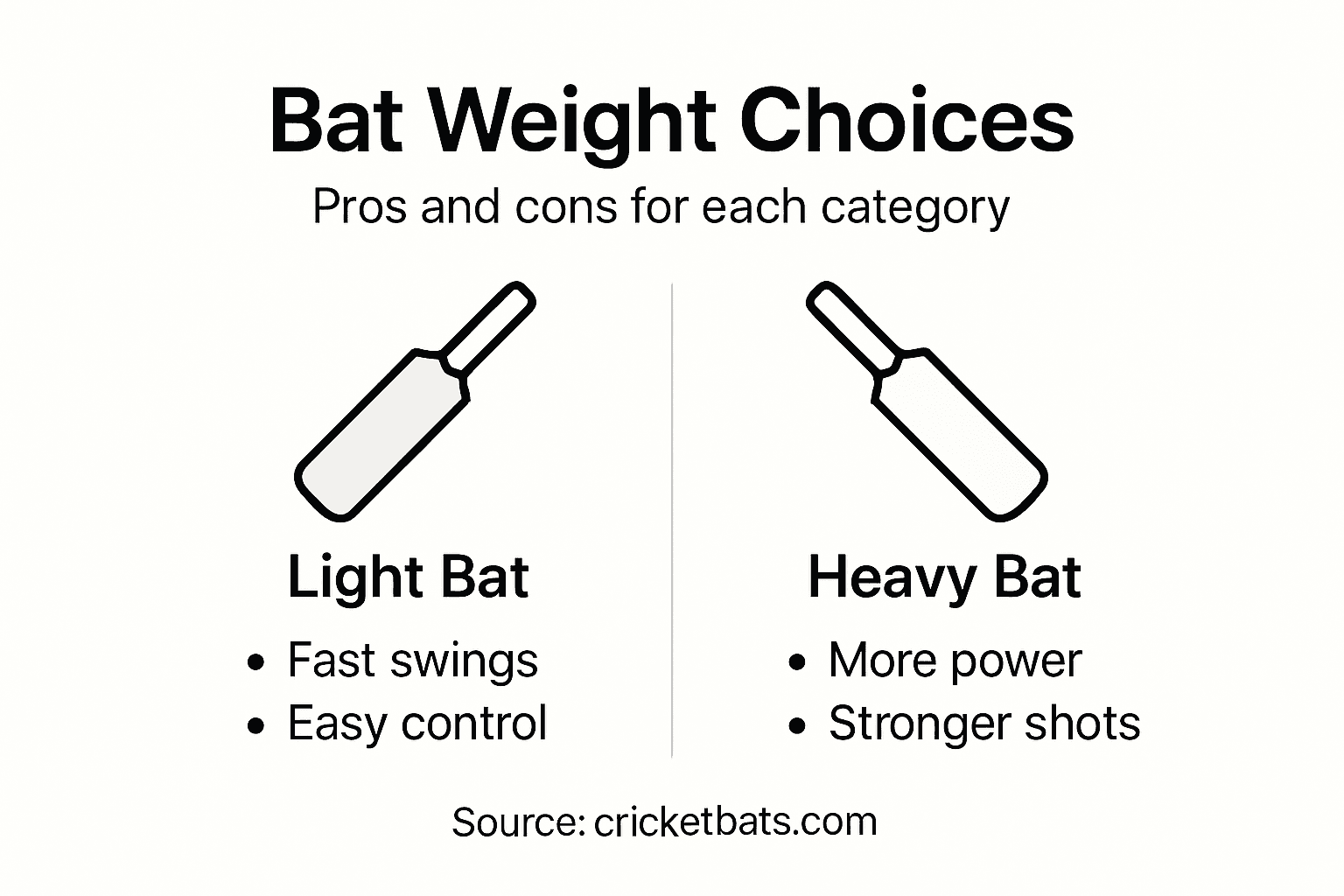
Compare how different bat weights affect play:
| Bat Weight Type | Bat Speed | Shot Power | Suitable For |
|---|---|---|---|
| Lightweight | Very fast | Moderate | Juniors, technical players |
| Medium-weight | Balanced | Balanced | Transitioning or versatile players |
| Heavyweight | Slower | Very high | Strong, experienced players |
Beyond standard weight classifications, players must consider additional factors that influence bat selection. The bat’s pick-up sensation, balance, and individual biomechanics play crucial roles in determining the most suitable weight. Professional coaches recommend testing multiple bat weights to understand how subtle variations impact shot precision, bat speed, and overall comfort. Some players might find that a slightly lighter or heavier bat than the standard recommendations provides them with optimal performance, underscoring the importance of personalised equipment selection.
Pro tip: Conduct comprehensive batting practice with bats of varying weights to develop a nuanced understanding of how different weight profiles affect your individual playing technique and performance.
Find Your Perfect Cricket Bat Weight for Maximum Comfort and Performance
Choosing the right cricket bat weight is essential to enhance your swing, control, and power without compromising comfort or technique. Many players struggle with selecting a bat that complements their physique and batting style, often leading to reduced bat speed, fatigue, or poor shot execution. By understanding weight ranges tailored for juniors, teenagers, and adult players—as well as balancing speed with power—you can truly boost your confidence on the pitch.
Discover our extensive collection of high-quality cricket bats that cater to every player type, whether you need lightweight options like those in our Junior Cricket Bats selection or more powerful designs featured in the New Balance Cricket Bats range.

Take control today by exploring cricketbats.com to select a bat that fits your unique needs and style. Browse our curated collection now for expert-crafted bats with optimal balance and performance. Don’t wait to upgrade your game with the perfect weight and feel matched to you. Your ideal cricket bat is just a click away at cricketbats.com.
Frequently Asked Questions
What factors should I consider when choosing a cricket bat weight?
When selecting a cricket bat weight, consider your age, body composition, strength, and playing style. Junior players should opt for lighter bats for better control, while adult players can handle heavier options for maximum power.
How does bat weight affect batting performance?
Bat weight influences bat speed, power generation, and overall stroke execution. Lighter bats allow for quicker swings, while heavier bats provide more momentum for powerful shots. Finding the right balance is key to optimising performance.
What are the recommended weight ranges for different player categories?
Recommended weight ranges are as follows: Junior players (2.4-2.5 pounds), Teenage players (2.5-2.6 pounds), and Adult/Senior players (2.6-2.7 pounds). Technical batsmen may prefer lighter bats, while power hitters benefit from heavier options.
Why is bat balance as important as weight?
Bat balance affects how a bat feels during play and contributes to effective stroke execution. A well-balanced bat will feel like a natural extension of the player’s body, enhancing control and precision during batting.
Recommended
Choosing a cricket bat that feels just right can make every training session in Australia feel more enjoyable and rewarding. For young and amateur players, finding the ideal weight of a cricket bat is key to improving comfort and boosting confidence at the crease. Selecting the right balance helps you swing freely, develop good technique, and avoid fatigue, making sure you play your best from the first ball to the final shot.
Table of Contents
- Cricket Bat Weight Fundamentals Explained
- Bat Weight Types and Recommended Ranges
- How Bat Weight Influences Performance
- Selecting Ideal Bat Weight by Age, Size and Style
- Common Mistakes and What to Avoid
- Comparison of Popular Bat Weight Choices
Key Takeaways
| Point | Details |
|---|---|
| Understanding Bat Weight | The weight of a cricket bat directly influences performance, with lighter bats offering speed and control, while heavier bats provide power. |
| Player-Specific Selection | Choosing the right bat weight requires consideration of individual factors such as age, physique, and playing style for optimal performance. |
| Common Selection Mistakes | Amateur players often select bats based on aesthetics rather than personal fit, which can hinder technique and increase injury risk. |
| Performance Implications | A bat that feels properly balanced enhances shot execution and comfort, reinforcing the importance of testing different weights. |
Cricket Bat Weight Fundamentals Explained
Understanding cricket bat weight is crucial for amateur players seeking performance and comfort on the pitch. Weight plays a pivotal role in determining how effectively you swing, connect with the ball, and maintain control during gameplay. Most cricket bats range between 2.4 and 2.7 pounds, but the ideal weight depends on individual player physique, strength, and playing style.
The weight of a cricket bat significantly influences a player’s batting technique and power generation. Lighter bats around 2.4 pounds offer quicker bat speed and enhanced manoeuvrability, which benefits younger players or those with less upper body strength. Conversely, heavier bats around 2.7 pounds provide more momentum and potential power, allowing experienced players to generate substantial force when striking the ball. Cricket bat performance factors demonstrate how these subtle weight variations can dramatically impact gameplay.
When selecting a bat, players must consider several critical weight-related factors. Body weight, height, and muscle strength all contribute to determining the most suitable bat weight. Junior players typically require lighter bats to maintain proper technique, while senior players can manage slightly heavier options. Professional cricket coaches recommend testing multiple bat weights to find the most comfortable and natural-feeling option that complements your specific playing style.
Pro tip: Always test multiple bat weights at a sports store or during practice sessions to find the weight that feels most comfortable and allows you to swing with maximum control and confidence.
Bat Weight Types and Recommended Ranges
Cricket bat weights are strategically categorised to accommodate different player capabilities and performance requirements. Weight ranges in cricket bats typically span from 1.1 kg to 1.4 kg (2.4 to 3 pounds), with distinct classifications tailored for junior, intermediate, and professional players. These weight categories are not arbitrary but carefully designed to match players’ physical development, skill levels, and batting techniques.
The standard weight classifications for cricket bats include lightweight (2.4 to 2.5 pounds), medium-weight (2.5 to 2.6 pounds), and heavyweight (2.6 to 2.7 pounds). Lightweight bats are predominantly recommended for junior players, teenagers, and those with smaller physical frames. These bats enable quicker bat swing and improved control, essential for developing proper batting techniques. Medium-weight bats represent the most versatile category, suitable for players transitioning between junior and senior levels, offering a balanced combination of manoeuvrability and power.
Professional players typically prefer heavyweight bats, which provide enhanced momentum and striking power. International cricket bat regulations strictly limit bat weight to a maximum of 1.22 kg (2.7 pounds), ensuring fair competitive conditions. The selection process involves considering individual factors such as physical strength, batting style, and personal comfort. Players must remember that while weight is crucial, bat balance and pick-up sensation are equally important in determining optimal performance.
Pro tip: Consult with experienced cricket coaches or professional equipment specialists to get personalised recommendations on selecting the most appropriate bat weight for your specific playing characteristics and skill level.
How Bat Weight Influences Performance
Cricket bat weight plays a fundamental role in determining a player’s performance across multiple dimensions of batting technique. Bat weight dynamics significantly impact timing, power generation, and overall stroke execution. A bat that is too heavy can dramatically reduce bat speed and compromise a player’s ability to respond quickly to different bowling styles, while a bat that is too light may limit power and stability during shots.
The intricate relationship between bat weight and player performance involves complex biomechanical considerations. Heavier bats provide greater momentum when striking the ball, potentially increasing shot power and distance. However, this additional weight comes with trade-offs in manoeuvrability and reaction time. Players must find a delicate balance that allows them to generate sufficient power without sacrificing the ability to adjust and respond to varying ball trajectories and bowling techniques.
Professional players understand that optimal bat weight management extends beyond simple weight measurements. Factors such as bat balance, pick-up sensation, and individual physical strength play crucial roles in determining the most effective bat weight. Younger players and those with developing muscle groups typically benefit from lighter bats that promote proper technique, while more experienced players can leverage slightly heavier bats to maximise power and control.
Pro tip: Conduct regular batting practice with bats of varying weights to develop a nuanced understanding of how weight impacts your personal batting performance and technique.
Selecting Ideal Bat Weight by Age, Size and Style
Selecting the perfect cricket bat weight requires a nuanced understanding of individual physical characteristics and playing dynamics. Cricket bat weight selection involves careful consideration of age, body composition, strength, and personal batting technique. Young players and those with developing muscle groups must prioritise lighter bats that facilitate proper technique development and reduce injury risk.
The relationship between player physique and bat weight follows a structured progression. Junior players aged 8-12 typically require bats weighing between 2.4 and 2.5 pounds, which provide sufficient manoeuvrability and control. Teenage players transitioning into more competitive levels might choose bats in the 2.5 to 2.6-pound range, offering a balanced combination of speed and emerging power. Adult players with established strength can comfortably manage bats weighing 2.6 to 2.7 pounds, maximising momentum and shot potential.
Batting style plays an equally critical role in bat weight selection. Aggressive power hitters benefit from slightly heavier bats that generate additional striking force, while technically oriented players might prefer lighter options that enhance precision and quick reaction times. Different playing styles demand unique bat weight considerations, making personalised assessment crucial for optimising performance. Professional coaches recommend conducting comprehensive batting assessments to determine the most suitable bat weight that complements individual physical capabilities and technical preferences.
Here is a summary of player types and their ideal bat weight choices:
| Player Category | Recommended Weight Range | Key Benefit |
|---|---|---|
| Junior (8-12 years) | 2.4–2.5 pounds | Enhanced control and safety |
| Teenage (13-17 years) | 2.5–2.6 pounds | Balance of speed and power |
| Adult/Senior | 2.6–2.7 pounds | Maximum momentum and power |
| Technical Batsman | 2.4–2.5 pounds | Improved manoeuvrability |
| Power Hitter | 2.6–2.7 pounds | Extra force for striking |
Pro tip: Consult with professional cricket equipment specialists and undergo a personalised bat weight assessment to identify the most suitable bat that matches your unique physical characteristics and playing style.
Common Mistakes and What to Avoid
Bat weight misconceptions can significantly undermine a player’s performance and potentially lead to long-term technical challenges. Many amateur cricketers mistakenly believe that heavier bats automatically translate to more powerful shots, overlooking the critical importance of proper weight management and individual physical capabilities. This misunderstanding often results in players selecting bats that are too heavy, compromising their natural batting technique and increasing injury risk.
One of the most prevalent errors is choosing a bat based on aesthetic appeal or brand reputation rather than personal physical characteristics. Players frequently select bats that are too heavy, hoping to generate more power, but instead experience reduced bat speed, compromised timing, and increased fatigue. Selecting inappropriate bat weights can lead to compensatory movements that distort fundamental batting techniques, causing long-term performance limitations and potential muscle strain.
Another critical mistake involves neglecting the importance of bat balance and individual playing style. Young players and enthusiasts often focus exclusively on weight, ignoring how the bat’s centre of gravity and overall feel contribute to effective stroke play. Professional coaches emphasise that the ideal bat should feel like a natural extension of the player’s body, allowing seamless movement and consistent shot execution. Inexperienced players might also make the error of using the same bat weight throughout their playing career, failing to adjust as their physical strength and technique evolve.
Pro tip: Regularly reassess your bat weight by conducting periodic performance reviews with experienced coaches who can provide objective insights into your equipment suitability and technical development.
Comparison of Popular Bat Weight Choices
Understanding the nuanced landscape of cricket bat weights requires a comprehensive examination of popular choices across different player categories. Cricket bat size variations reveal distinct weight profiles that cater to specific playing styles and physical capabilities. Professional and amateur players alike must navigate these options strategically to optimise their performance and comfort on the cricket pitch.
The contemporary cricket bat market offers three primary weight categories that serve diverse player needs. Lightweight bats, ranging from 2.4 to 2.5 pounds, are ideal for junior players, those with developing muscle groups, and technical batsmen prioritising manoeuvrability. Medium-weight bats between 2.5 and 2.6 pounds represent the most versatile option, providing a balanced combination of speed and power suitable for players transitioning between skill levels. Heavyweight bats weighing 2.6 to 2.7 pounds are typically favoured by experienced players with substantial upper body strength, offering enhanced momentum and potential for powerful striking.
Compare how different bat weights affect play:
| Bat Weight Type | Bat Speed | Shot Power | Suitable For |
|---|---|---|---|
| Lightweight | Very fast | Moderate | Juniors, technical players |
| Medium-weight | Balanced | Balanced | Transitioning or versatile players |
| Heavyweight | Slower | Very high | Strong, experienced players |
Beyond standard weight classifications, players must consider additional factors that influence bat selection. The bat’s pick-up sensation, balance, and individual biomechanics play crucial roles in determining the most suitable weight. Professional coaches recommend testing multiple bat weights to understand how subtle variations impact shot precision, bat speed, and overall comfort. Some players might find that a slightly lighter or heavier bat than the standard recommendations provides them with optimal performance, underscoring the importance of personalised equipment selection.
Pro tip: Conduct comprehensive batting practice with bats of varying weights to develop a nuanced understanding of how different weight profiles affect your individual playing technique and performance.
Find Your Perfect Cricket Bat Weight for Maximum Comfort and Performance
Choosing the right cricket bat weight is essential to enhance your swing, control, and power without compromising comfort or technique. Many players struggle with selecting a bat that complements their physique and batting style, often leading to reduced bat speed, fatigue, or poor shot execution. By understanding weight ranges tailored for juniors, teenagers, and adult players—as well as balancing speed with power—you can truly boost your confidence on the pitch.
Discover our extensive collection of high-quality cricket bats that cater to every player type, whether you need lightweight options like those in our Junior Cricket Bats selection or more powerful designs featured in the New Balance Cricket Bats range.
Take control today by exploring cricketbats.com to select a bat that fits your unique needs and style. Browse our curated collection now for expert-crafted bats with optimal balance and performance. Don’t wait to upgrade your game with the perfect weight and feel matched to you. Your ideal cricket bat is just a click away at cricketbats.com.
Frequently Asked Questions
What factors should I consider when choosing a cricket bat weight?
When selecting a cricket bat weight, consider your age, body composition, strength, and playing style. Junior players should opt for lighter bats for better control, while adult players can handle heavier options for maximum power.
How does bat weight affect batting performance?
Bat weight influences bat speed, power generation, and overall stroke execution. Lighter bats allow for quicker swings, while heavier bats provide more momentum for powerful shots. Finding the right balance is key to optimising performance.
What are the recommended weight ranges for different player categories?
Recommended weight ranges are as follows: Junior players (2.4-2.5 pounds), Teenage players (2.5-2.6 pounds), and Adult/Senior players (2.6-2.7 pounds). Technical batsmen may prefer lighter bats, while power hitters benefit from heavier options.
Why is bat balance as important as weight?
Bat balance affects how a bat feels during play and contributes to effective stroke execution. A well-balanced bat will feel like a natural extension of the player’s body, enhancing control and precision during batting.