
News News
Cricket Bat Grading Explained: Choosing Your Perfect Bat Cricket Bat Grading Explained: Choosing Your Perfect Bat
Choosing your first personal cricket bat can feel confusing when you’re faced with racks of options in every shop. Whether you’re ready to upgrade from borrowed club kit or simply want to know what sets a premium bat apart, understanding cricket bat grading is the key to investing wisely. UK amateur players aiming for better results need to know how grain structure, craftsmanship, and grade directly influence power, control, and bat durability over a full season.
Table of Contents
- How Cricket Bat Grading Works
- Grades Of Cricket Bats Compared
- Key Indicators Of Bat Quality
- Common Misconceptions About Grading
- Choosing The Right Grade For You
Key Takeaways
| Point | Details |
|---|---|
| Cricket Bat Grading | The grading system assesses wood quality and craftsmanship, impacting performance and durability. Higher grades indicate better wood grain structure and manufacturing precision. |
| Choosing the Right Bat | Select a bat grade based on your skill level and playing frequency, not just budget. Grade 2 bats offer exceptional value for most amateur players transitioning from borrowed equipment. |
| Importance of Grain Structure | Wood grain patterns are crucial; fewer, straighter grains indicate superior quality. Quality bats have 6-12 even grains, essential for effective energy transfer. |
| Proper Knocking-In | Knocking-in is vital for enhancing bat resilience and performance. It should not be skipped to ensure your bat lasts longer and performs well from the outset. |
How Cricket Bat Grading Works
Cricket bat grading is fundamentally about assessing wood quality and craftsmanship. When manufacturers grade bats, they’re evaluating whether each one will perform consistently and last through multiple seasons of club cricket. The grading system exists because not every piece of willow produces the same result, even when cut from the same tree. A bat graded higher than another isn’t just slightly better—it’s engineered differently from the ground up.
The grading process starts with the raw material itself. Manufacturers inspect the willow wood grain, looking for specific characteristics that predict performance and durability. Grain structure is the most telling indicator. Higher grade bats feature straight, tightly packed grain lines with minimal irregularities. Lower grade bats might have grain that’s slightly irregular, more widely spaced, or containing minor imperfections. These visual differences matter because grain density directly affects how the bat absorbs impact and transfers energy to the ball. When you hit a delivery with a premium grade bat, that energy transfer feels noticeably crisper than with a lower grade equivalent. The wood’s ability to compress and recover from the ball’s impact depends entirely on this grain consistency. Additionally, grading considers the bat’s physical integrity, ensuring bats conform to the specifications for size and material defined by the Marylebone Cricket Club.
Beyond the wood itself, grading reflects manufacturing precision. A higher grade bat means the maker invested more time in producing a flat face, true edges, and a consistent sweet spot. It means the handle was shaped with greater care, and the overall craftsmanship meets stricter tolerances. This is why you’ll notice higher grade bats feel more balanced in your hands—the weight distribution isn’t accidental. Lower grade bats still function perfectly well for club cricket, but they’re more forgiving in terms of manufacturing variance. They might have slightly asymmetrical edges or a sweet spot that’s a touch smaller. For most amateur players, this difference becomes noticeable only after sustained use. The grading system essentially tells you how much time and precision went into each bat’s construction. The quality of willow and craftsmanship directly influences how the bat performs and lasts under competitive conditions.
Understanding these factors helps you match your investment to your playing level. A Grade 1 or Grade 1 Lite bat offers exceptional performance from day one, but costs considerably more than Grade 2 or Grade 3 alternatives. For a player making the move from borrowed club equipment to personal ownership, a Grade 2 bat delivers genuine performance improvements without the premium price. As your game develops and you accumulate more match hours, upgrading to Grade 1 becomes a natural next step. The grading system gives you a transparent way to make this investment decision based on what you’ll actually use and benefit from.
Pro tip: If you’re buying your first serious bat, start with Grade 2 or Grade 2 Lite—you’ll experience genuine performance gains without overspending, and you’ll know exactly what to look for when you upgrade later.
Grades Of Cricket Bats Compared
Cricket bat grading runs on a scale that starts at Grade 1 and descends through Grade 5 and below, with each tier reflecting real differences in performance, durability, and price. Understanding where each grade sits helps you avoid overpaying for features you won’t use or undershooting your investment when your game demands better equipment. The gap between grades isn’t just cosmetic—it fundamentally affects how your bat performs during matches and training.
Grade 1 bats represent the pinnacle of bat manufacturing. These bats feature straight, close grain patterns with minimal visible knots or blemishes, meaning the willow wood is at its absolute best. When you handle a Grade 1 bat, you’ll immediately notice the quality of craftsmanship. The face feels completely flat, the edges are symmetrical, and the sweet spot is precisely defined. These bats transfer energy to the ball with maximum efficiency, which translates to cleaner connections and better performance under pressure. Grade 1 bats command premium prices because manufacturers have selected the finest timber available and invested heavily in precision manufacturing. They’re designed for serious club players and competitive fixtures where performance margins matter. A Grade 1 bat will last you multiple seasons with proper care, making the initial cost more justifiable over time.
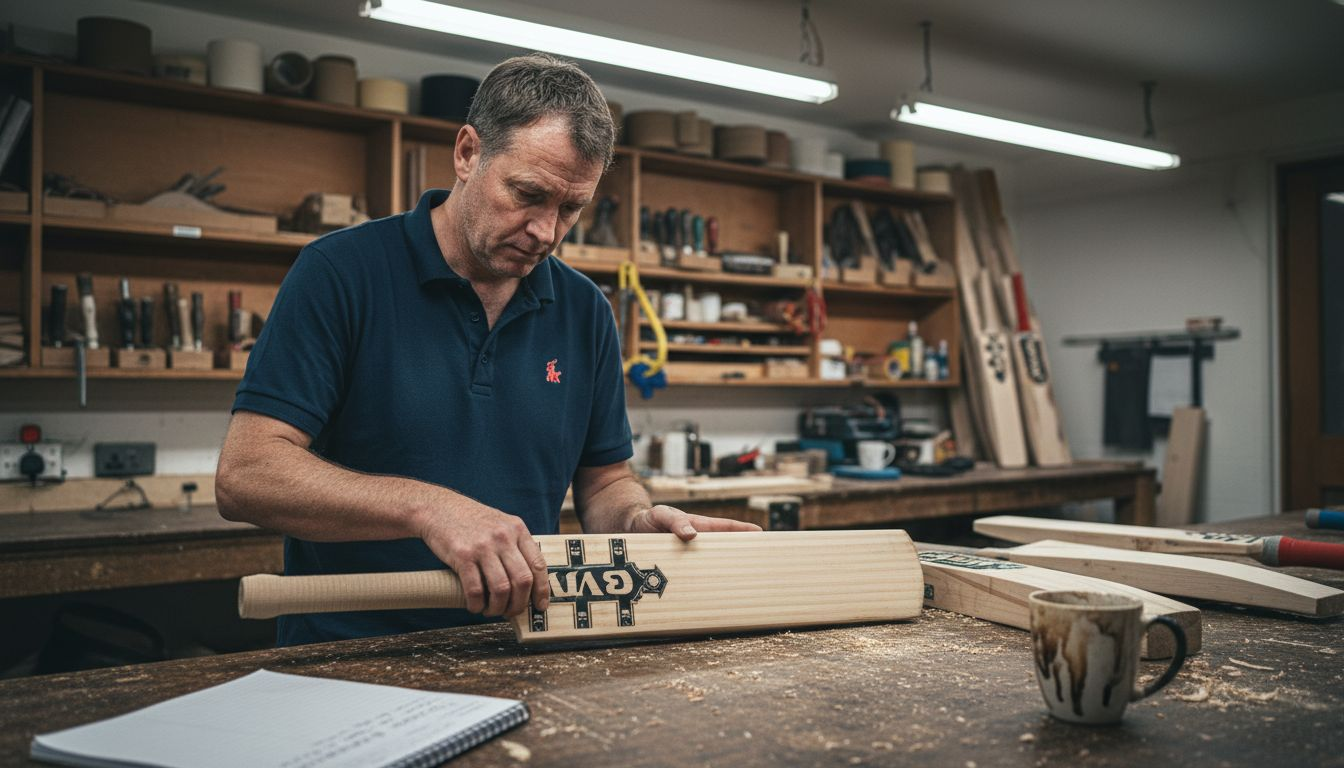
Grade 2 and Grade 3 bats occupy the middle ground that suits most amateur players aged 18-35 playing regular club cricket. Grade 2 bats have slightly more visible grain irregularities and minor cosmetic imperfections, but they still perform excellently for competitive cricket. You’ll experience solid energy transfer and reliable consistency, with no meaningful performance penalty compared to Grade 1 in most playing situations. Grade 3 bats introduce noticeably more knots and grain variations, creating a smaller sweet spot and slightly less responsive feedback through the bat handle. These grades remain entirely functional for match play, but they’re often targeted at players new to bat ownership or those transitioning from lower quality equipment. The price difference between Grade 2 and Grade 3 is usually substantial enough to justify choosing Grade 2 if you’re playing regularly.
Lower grade bats (Grade 4 and 5) serve specific purposes rather than general club cricket. These bats exhibit pronounced knots, irregular grain patterns, and visible cosmetic issues. Many lower grade bats work perfectly well for practice sessions, coaching nets, or casual social cricket where performance pressures are lower. They’re also more forgiving for learners still developing technique, since the slightly reduced performance characteristics aren’t yet a limiting factor. However, once you’re playing regular competitive club cricket, stepping up from lower grades genuinely improves your game because you’re no longer fighting against equipment limitations.
The practical reality is this: higher grade bats transfer more energy and offer better resilience, meaning you’ll achieve better results with cleaner shots and more durable performance. For your first serious personal bat as an amateur player building a cricket investment, Grade 2 offers exceptional value. You’ll get genuine quality improvements over lower grades without paying Grade 1 premiums. If your budget stretches to Grade 1 and you’re committed to competitive cricket, the performance investment pays dividends through the season. If you’re still establishing your commitment level or joining a club for the first time, Grade 3 represents a sensible entry point before upgrading as your playing frequency increases.
Here’s how cricket bat grades differ across key attributes:
| Bat Grade | Grain Quality | Manufacturing Precision | Target User |
|---|---|---|---|
| Grade 1 | Straight, close grains | Finest finish, exact sweet spot | Committed club cricketer |
| Grade 2 | Minor irregularities | Reliable, slight imperfections | Regular amateur, club player |
| Grade 3 | Noticeable variations | Functional, visible knots | New club player or learner |
| Grade 4/5 | Pronounced flaws | Mostly for practice or nets | Casual/social cricketer |
Pro tip: Inspect the willow grain in person before purchasing if possible, as photos can mask cosmetic imperfections that might bother you aesthetically, even if they don’t affect performance.
Key Indicators Of Bat Quality
When you’re standing in front of a shelf of cricket bats, knowing what separates a genuinely quality bat from an average one makes all the difference. Quality isn’t subjective in cricket equipment—it’s measurable and observable. The indicators exist because they directly affect performance, longevity, and how satisfying the bat feels in your hands during match situations. Learning to spot these markers takes just a few minutes, and it’ll save you from making costly mistakes when investing in your equipment.
Start with the wood grain pattern, which is the single most revealing indicator of bat quality. Run your hand along the blade and look at the grain lines running from handle to toe. Quality bats display straight, close grain patterns that are consistent across the face. Ideally, you want between 6 to 12 grains—not too sparse, not too dense. Wide, irregular grain spacing suggests the willow came from a tree that grew too quickly, which typically compromises performance. When grains are tightly packed and perfectly straight, you’re looking at timber that will transfer energy efficiently and absorb impact predictably. Count the visible grain lines across the blade face. If they’re uneven or wavy, the bat will have inconsistent performance zones and a smaller sweet spot. This is one of the most important visual checks you can do without needing specialist knowledge.
The second critical indicator is the absence of defects, though minor cosmetic blemishes don’t affect performance. Look for knots, cracks, or dark discolourations. Small knots near the edges are acceptable and common in Grade 2 and Grade 3 bats, but they shouldn’t run through the middle of the blade where you make contact. Cracks are a dealbreaker entirely—they’ll spread once you start playing and render the bat unusable. Surface discolourations from staining or minor knocks are cosmetic only, but deep indentations or dents suggest the willow has been compromised structurally. A quality bat should feel smooth across the face with no rough patches or protruding grain.
Beyond the visual, weight distribution and balance reveal manufacturing quality immediately. Pick up the bat and hold it at the handle. Does it feel balanced, or does the toe drag downward? A well-manufactured bat has its weight distributed so it feels lively in your hands without being tail-heavy. The bat should come up quickly and feel controlled during your swing. Poor balance is often a sign of uneven timber density or cutting errors during manufacturing. Additionally, inspect the protective coatings and finish. Quality bats feature even finishing with protective coatings that protect the willow from moisture and damage. Uneven varnish or rough patches suggest rushed manufacturing.
The final check involves understanding the willow species. English willow is the premium choice for quality bats, offering superior grain structure and resilience compared to alternatives. Check the bat’s branding or description to confirm English willow rather than cheaper variants. This single specification often correlates with price jumps, but it’s justified because English willow simply outperforms other timber in terms of power, durability, and consistency.
Summary of main quality indicators for cricket bats:
| Indicator | Why It Matters | What to Look For |
|---|---|---|
| Grain pattern | Predicts performance and durability | 6-12 straight, even grains |
| Defect absence | Ensures blade integrity | Few knots, no cracks |
| Weight distribution | Affects bat balance and swing | Feels lively, not tail-heavy |
| Wood species | Impacts power and responsiveness | English willow preferred |
Pro tip: Handle multiple bats from different grades in the shop before purchasing—your hands will quickly learn to spot the difference between a quality bat and a lesser one through feel alone, which is far more reliable than photographs.
Common Misconceptions About Grading
Bat grading generates surprising amounts of confusion among amateur players, largely because the marketing around cricket equipment often contradicts what actually matters for performance. These misconceptions cost players money and lead to poor purchasing decisions that result in buyer’s remorse. Understanding what’s genuinely true about grading versus what’s marketing spin puts you in a much stronger position to invest wisely.
The most pervasive misconception is that more grains always equals better quality. This is backwards. Fewer grains, typically between 6 to 12 straight lines running through the blade, actually indicate superior quality because they represent older, denser willow wood that performs better over extended use. When you see a bat with 15, 20, or even 30 visible grains, you’re looking at wood from a younger tree that grew more quickly. Younger willow is less dense and therefore less responsive. Players often count grains and assume higher numbers mean premium quality, but the opposite is true. What matters is grain straightness and consistency, not quantity. A Grade 1 bat with 8 perfectly straight grains outperforms a lower grade bat with 25 irregular ones every time.
Another widespread myth is that knots always signify poor quality. Small, tight knots positioned near the edges don’t meaningfully affect performance or durability. Grade 2 and Grade 3 bats commonly contain these minor knots without any performance penalty. What matters is knot location and size. A knot running through the centre of the blade where you strike the ball is problematic. An edge knot that’s well integrated into the wood structure? Not a concern at all. Many players reject perfectly functional Grade 2 bats because they spot a small knot and assume it’s defective. In reality, Grade 1 bats sometimes contain small knots too—they’re just strategically positioned where they don’t affect play.
Price creates another source of confusion. Players assume higher price always correlates with higher grade, but price is influenced by brand reputation and marketing rather than just grading alone. A premium brand might charge more for a Grade 2 bat than a lesser-known manufacturer charges for their Grade 1. Marketing budgets, retail mark-ups, and brand positioning all affect price independently of actual wood quality. You can find genuinely excellent Grade 2 bats at reasonable prices from less famous brands that perform identically to premium-priced equivalents. Shopping purely by price without checking actual grading specifications is a false economy.
Perhaps the most damaging misconception involves bat weight and hitting power. Many players believe heavier bats hit harder, so they chase weight without considering balance. The reality is that bat pick-up and balance matter far more than sheer weight for effective batting. A well-balanced bat at 2 pounds 8 ounces will outperform a poorly balanced bat at 2 pounds 10 ounces because you can swing it faster and more consistently. A bat that feels tail-heavy drags through your shot and reduces your ability to time the ball. Many amateur players abandon bats they should be using because they feel “too light,” when the real issue is their misconception about weight rather than any genuine equipment problem.
Finally, players underestimate bat knocking-in as just a break-in process rather than recognising it as critical maintenance. Proper knocking-in actually improves bat resilience and extends lifespan significantly. Some players skip this step entirely and then wonder why their bat performs poorly or fails prematurely. Knocking-in compacts the wood fibres, making the bat more responsive and durable. This isn’t optional nicety—it’s essential preparation that directly affects how your bat performs in actual matches.
Pro tip: When comparing bats, ignore marketing claims and focus on grain count, grain straightness, knot location, and balance instead—these objective features reveal genuine quality far more reliably than price tags or brand names.
Choosing The Right Grade For You
Selecting the right bat grade isn’t about picking the highest number or the most expensive option. It’s about matching your actual playing situation, investment capacity, and commitment level to a grade that delivers genuine value. The wrong choice wastes money, but the right choice transforms your cricket experience and confidence at the crease.
Start by honestly assessing your playing frequency and skill level. If you’re just starting club cricket or joining for the first time, you’re not yet ready for a Grade 1 investment. You’ll benefit far more from a Grade 2 or Grade 3 bat because you’re still developing technique and learning what you prefer in terms of bat feel and weight distribution. Grade 3 bats are perfectly adequate for regular club cricket and training, and they’re significantly more affordable. Many Grade 3 bats will outlast your learning phase without performance limitations that actually hold back your game. The sweet spot for most amateur players aged 18-35 playing weekly or fortnightly is Grade 2. This grade delivers substantial performance improvements over Grade 3, the grain quality is noticeably better, and you still avoid premium Grade 1 pricing. Grade 2 bats feel responsive and reliable through a full season without the performance compromises of Grade 3.
Your budget shouldn’t be ignored, but it also shouldn’t be the only deciding factor. Instead, think about choosing the right grade based on your skill level and playing frequency rather than purely what you can afford. A well-made Grade 2 bat at £150-200 will serve you better for twelve months than a lower quality Grade 3 at £80 that you’ll regret after six weeks. However, if your budget genuinely only stretches to £80, a Grade 3 bat isn’t a waste. Use it, develop your game, and upgrade to Grade 2 once you’ve confirmed your commitment to regular cricket. This staged investment approach works better than stretching too far for Grade 1 immediately and resenting the cost.
Grade 1 makes sense when you’ve established yourself as a committed club player. If you’re playing weekly, taking your cricket seriously, and want the best possible equipment to match your improving technique, Grade 1 delivers genuine performance advantages. The superior grain structure translates to better energy transfer and a more responsive feel during important matches. Professional players and ambitious amateurs choose Grade 1 because the performance margins matter when you’re playing competitive cricket. If you’re not yet at this level, Grade 1 feels like overkill and represents unnecessary spending.
Beyond grading, the physical feel matters enormously. Test multiple bats by swing weight and feel before purchasing, because the right bat for you is one that feels balanced and comfortable in your hands during your actual swing. Two Grade 2 bats from different manufacturers might grade identically but feel completely different. One might suit your swing mechanics perfectly whilst the other feels awkward. Visit a specialist cricket shop if possible and handle several options across different grades. The bat should come up easily during your practice swing, not feel tail-heavy or head-light. Trust your hands here—they’ll tell you immediately if a bat is right for you, regardless of what the spec sheet says.
Finally, commit to proper knocking-in regardless of which grade you select. Proper knocking-in before use increases longevity and makes your bat perform better from day one. This step is often skipped by amateur players, but it’s genuinely important. Spend an hour knocking in your new bat before your first match, and you’ll extend its lifespan whilst improving its performance. This applies equally to Grade 1 and Grade 3 bats—the maintenance pays off across all grades.
Pro tip: If you’re uncertain between Grade 2 and Grade 3, choose Grade 2 and budget for it over three months rather than settling for Grade 3 immediately—the performance and satisfaction difference justifies the modest additional investment for committed club players.
Find Your Perfect Cricket Bat Grade Today
Choosing the right cricket bat grade can feel overwhelming. The challenge lies in matching your skill level, playing frequency, and budget to a bat that truly enhances your game rather than holding you back. Whether you are stepping up from training gear or investing in a Grade 1 bat for competitive matches, understanding grain quality and craftsmanship is key. At cricketbats.com, we help you make this crucial decision simpler by offering a carefully curated range of cricket bats suited for every player.

Explore our selection of Cricket Bats to experience the difference that high-grade willow and expert manufacturing bring. Beginner or seasoned player, we have bats tailored to your unique needs—from Grade 3 options that offer great value to premium Grade 1 bats designed for peak performance. Start your journey confidently with access to trusted brands like New Balance Cricket Bats and exceptional service at cricketbats.com. Make your investment count by choosing the bat that aligns perfectly with your cricket aspirations.
Frequently Asked Questions
What does cricket bat grading mean?
Cricket bat grading is the process of assessing the quality of the willow wood used in making a bat, based on factors like grain structure, manufacturing precision, and physical integrity. Higher grade bats offer better performance and durability.
How do I choose the right grade of cricket bat for my playing level?
Select a bat grade that matches your playing frequency and skill level. Beginners should consider Grade 2 or Grade 3 bats for adequate performance while learning. More committed players who regularly play competitive cricket may benefit from investing in a Grade 1 bat.
Why does the grain pattern of the willow affect bat quality?
The grain pattern indicates the density and age of the willow. Bats with straight, tightly packed grains usually perform better, as they absorb impact efficiently and deliver superior energy transfer to the ball compared to those with irregular grains.
Is knocking-in necessary for all grades of cricket bats?
Yes, knocking-in is essential for all grades of cricket bats. This process compacts the wood fibres, enhancing the bat’s durability and performance. Properly knocked-in bats can perform better and last longer, regardless of their grade.
Recommended
Choosing your first personal cricket bat can feel confusing when you’re faced with racks of options in every shop. Whether you’re ready to upgrade from borrowed club kit or simply want to know what sets a premium bat apart, understanding cricket bat grading is the key to investing wisely. UK amateur players aiming for better results need to know how grain structure, craftsmanship, and grade directly influence power, control, and bat durability over a full season.
Table of Contents
- How Cricket Bat Grading Works
- Grades Of Cricket Bats Compared
- Key Indicators Of Bat Quality
- Common Misconceptions About Grading
- Choosing The Right Grade For You
Key Takeaways
| Point | Details |
|---|---|
| Cricket Bat Grading | The grading system assesses wood quality and craftsmanship, impacting performance and durability. Higher grades indicate better wood grain structure and manufacturing precision. |
| Choosing the Right Bat | Select a bat grade based on your skill level and playing frequency, not just budget. Grade 2 bats offer exceptional value for most amateur players transitioning from borrowed equipment. |
| Importance of Grain Structure | Wood grain patterns are crucial; fewer, straighter grains indicate superior quality. Quality bats have 6-12 even grains, essential for effective energy transfer. |
| Proper Knocking-In | Knocking-in is vital for enhancing bat resilience and performance. It should not be skipped to ensure your bat lasts longer and performs well from the outset. |
How Cricket Bat Grading Works
Cricket bat grading is fundamentally about assessing wood quality and craftsmanship. When manufacturers grade bats, they’re evaluating whether each one will perform consistently and last through multiple seasons of club cricket. The grading system exists because not every piece of willow produces the same result, even when cut from the same tree. A bat graded higher than another isn’t just slightly better—it’s engineered differently from the ground up.
The grading process starts with the raw material itself. Manufacturers inspect the willow wood grain, looking for specific characteristics that predict performance and durability. Grain structure is the most telling indicator. Higher grade bats feature straight, tightly packed grain lines with minimal irregularities. Lower grade bats might have grain that’s slightly irregular, more widely spaced, or containing minor imperfections. These visual differences matter because grain density directly affects how the bat absorbs impact and transfers energy to the ball. When you hit a delivery with a premium grade bat, that energy transfer feels noticeably crisper than with a lower grade equivalent. The wood’s ability to compress and recover from the ball’s impact depends entirely on this grain consistency. Additionally, grading considers the bat’s physical integrity, ensuring bats conform to the specifications for size and material defined by the Marylebone Cricket Club.
Beyond the wood itself, grading reflects manufacturing precision. A higher grade bat means the maker invested more time in producing a flat face, true edges, and a consistent sweet spot. It means the handle was shaped with greater care, and the overall craftsmanship meets stricter tolerances. This is why you’ll notice higher grade bats feel more balanced in your hands—the weight distribution isn’t accidental. Lower grade bats still function perfectly well for club cricket, but they’re more forgiving in terms of manufacturing variance. They might have slightly asymmetrical edges or a sweet spot that’s a touch smaller. For most amateur players, this difference becomes noticeable only after sustained use. The grading system essentially tells you how much time and precision went into each bat’s construction. The quality of willow and craftsmanship directly influences how the bat performs and lasts under competitive conditions.
Understanding these factors helps you match your investment to your playing level. A Grade 1 or Grade 1 Lite bat offers exceptional performance from day one, but costs considerably more than Grade 2 or Grade 3 alternatives. For a player making the move from borrowed club equipment to personal ownership, a Grade 2 bat delivers genuine performance improvements without the premium price. As your game develops and you accumulate more match hours, upgrading to Grade 1 becomes a natural next step. The grading system gives you a transparent way to make this investment decision based on what you’ll actually use and benefit from.
Pro tip: If you’re buying your first serious bat, start with Grade 2 or Grade 2 Lite—you’ll experience genuine performance gains without overspending, and you’ll know exactly what to look for when you upgrade later.
Grades Of Cricket Bats Compared
Cricket bat grading runs on a scale that starts at Grade 1 and descends through Grade 5 and below, with each tier reflecting real differences in performance, durability, and price. Understanding where each grade sits helps you avoid overpaying for features you won’t use or undershooting your investment when your game demands better equipment. The gap between grades isn’t just cosmetic—it fundamentally affects how your bat performs during matches and training.
Grade 1 bats represent the pinnacle of bat manufacturing. These bats feature straight, close grain patterns with minimal visible knots or blemishes, meaning the willow wood is at its absolute best. When you handle a Grade 1 bat, you’ll immediately notice the quality of craftsmanship. The face feels completely flat, the edges are symmetrical, and the sweet spot is precisely defined. These bats transfer energy to the ball with maximum efficiency, which translates to cleaner connections and better performance under pressure. Grade 1 bats command premium prices because manufacturers have selected the finest timber available and invested heavily in precision manufacturing. They’re designed for serious club players and competitive fixtures where performance margins matter. A Grade 1 bat will last you multiple seasons with proper care, making the initial cost more justifiable over time.
Grade 2 and Grade 3 bats occupy the middle ground that suits most amateur players aged 18-35 playing regular club cricket. Grade 2 bats have slightly more visible grain irregularities and minor cosmetic imperfections, but they still perform excellently for competitive cricket. You’ll experience solid energy transfer and reliable consistency, with no meaningful performance penalty compared to Grade 1 in most playing situations. Grade 3 bats introduce noticeably more knots and grain variations, creating a smaller sweet spot and slightly less responsive feedback through the bat handle. These grades remain entirely functional for match play, but they’re often targeted at players new to bat ownership or those transitioning from lower quality equipment. The price difference between Grade 2 and Grade 3 is usually substantial enough to justify choosing Grade 2 if you’re playing regularly.
Lower grade bats (Grade 4 and 5) serve specific purposes rather than general club cricket. These bats exhibit pronounced knots, irregular grain patterns, and visible cosmetic issues. Many lower grade bats work perfectly well for practice sessions, coaching nets, or casual social cricket where performance pressures are lower. They’re also more forgiving for learners still developing technique, since the slightly reduced performance characteristics aren’t yet a limiting factor. However, once you’re playing regular competitive club cricket, stepping up from lower grades genuinely improves your game because you’re no longer fighting against equipment limitations.
The practical reality is this: higher grade bats transfer more energy and offer better resilience, meaning you’ll achieve better results with cleaner shots and more durable performance. For your first serious personal bat as an amateur player building a cricket investment, Grade 2 offers exceptional value. You’ll get genuine quality improvements over lower grades without paying Grade 1 premiums. If your budget stretches to Grade 1 and you’re committed to competitive cricket, the performance investment pays dividends through the season. If you’re still establishing your commitment level or joining a club for the first time, Grade 3 represents a sensible entry point before upgrading as your playing frequency increases.
Here’s how cricket bat grades differ across key attributes:
| Bat Grade | Grain Quality | Manufacturing Precision | Target User |
|---|---|---|---|
| Grade 1 | Straight, close grains | Finest finish, exact sweet spot | Committed club cricketer |
| Grade 2 | Minor irregularities | Reliable, slight imperfections | Regular amateur, club player |
| Grade 3 | Noticeable variations | Functional, visible knots | New club player or learner |
| Grade 4/5 | Pronounced flaws | Mostly for practice or nets | Casual/social cricketer |
Pro tip: Inspect the willow grain in person before purchasing if possible, as photos can mask cosmetic imperfections that might bother you aesthetically, even if they don’t affect performance.
Key Indicators Of Bat Quality
When you’re standing in front of a shelf of cricket bats, knowing what separates a genuinely quality bat from an average one makes all the difference. Quality isn’t subjective in cricket equipment—it’s measurable and observable. The indicators exist because they directly affect performance, longevity, and how satisfying the bat feels in your hands during match situations. Learning to spot these markers takes just a few minutes, and it’ll save you from making costly mistakes when investing in your equipment.
Start with the wood grain pattern, which is the single most revealing indicator of bat quality. Run your hand along the blade and look at the grain lines running from handle to toe. Quality bats display straight, close grain patterns that are consistent across the face. Ideally, you want between 6 to 12 grains—not too sparse, not too dense. Wide, irregular grain spacing suggests the willow came from a tree that grew too quickly, which typically compromises performance. When grains are tightly packed and perfectly straight, you’re looking at timber that will transfer energy efficiently and absorb impact predictably. Count the visible grain lines across the blade face. If they’re uneven or wavy, the bat will have inconsistent performance zones and a smaller sweet spot. This is one of the most important visual checks you can do without needing specialist knowledge.
The second critical indicator is the absence of defects, though minor cosmetic blemishes don’t affect performance. Look for knots, cracks, or dark discolourations. Small knots near the edges are acceptable and common in Grade 2 and Grade 3 bats, but they shouldn’t run through the middle of the blade where you make contact. Cracks are a dealbreaker entirely—they’ll spread once you start playing and render the bat unusable. Surface discolourations from staining or minor knocks are cosmetic only, but deep indentations or dents suggest the willow has been compromised structurally. A quality bat should feel smooth across the face with no rough patches or protruding grain.
Beyond the visual, weight distribution and balance reveal manufacturing quality immediately. Pick up the bat and hold it at the handle. Does it feel balanced, or does the toe drag downward? A well-manufactured bat has its weight distributed so it feels lively in your hands without being tail-heavy. The bat should come up quickly and feel controlled during your swing. Poor balance is often a sign of uneven timber density or cutting errors during manufacturing. Additionally, inspect the protective coatings and finish. Quality bats feature even finishing with protective coatings that protect the willow from moisture and damage. Uneven varnish or rough patches suggest rushed manufacturing.
The final check involves understanding the willow species. English willow is the premium choice for quality bats, offering superior grain structure and resilience compared to alternatives. Check the bat’s branding or description to confirm English willow rather than cheaper variants. This single specification often correlates with price jumps, but it’s justified because English willow simply outperforms other timber in terms of power, durability, and consistency.
Summary of main quality indicators for cricket bats:
| Indicator | Why It Matters | What to Look For |
|---|---|---|
| Grain pattern | Predicts performance and durability | 6-12 straight, even grains |
| Defect absence | Ensures blade integrity | Few knots, no cracks |
| Weight distribution | Affects bat balance and swing | Feels lively, not tail-heavy |
| Wood species | Impacts power and responsiveness | English willow preferred |
Pro tip: Handle multiple bats from different grades in the shop before purchasing—your hands will quickly learn to spot the difference between a quality bat and a lesser one through feel alone, which is far more reliable than photographs.
Common Misconceptions About Grading
Bat grading generates surprising amounts of confusion among amateur players, largely because the marketing around cricket equipment often contradicts what actually matters for performance. These misconceptions cost players money and lead to poor purchasing decisions that result in buyer’s remorse. Understanding what’s genuinely true about grading versus what’s marketing spin puts you in a much stronger position to invest wisely.
The most pervasive misconception is that more grains always equals better quality. This is backwards. Fewer grains, typically between 6 to 12 straight lines running through the blade, actually indicate superior quality because they represent older, denser willow wood that performs better over extended use. When you see a bat with 15, 20, or even 30 visible grains, you’re looking at wood from a younger tree that grew more quickly. Younger willow is less dense and therefore less responsive. Players often count grains and assume higher numbers mean premium quality, but the opposite is true. What matters is grain straightness and consistency, not quantity. A Grade 1 bat with 8 perfectly straight grains outperforms a lower grade bat with 25 irregular ones every time.
Another widespread myth is that knots always signify poor quality. Small, tight knots positioned near the edges don’t meaningfully affect performance or durability. Grade 2 and Grade 3 bats commonly contain these minor knots without any performance penalty. What matters is knot location and size. A knot running through the centre of the blade where you strike the ball is problematic. An edge knot that’s well integrated into the wood structure? Not a concern at all. Many players reject perfectly functional Grade 2 bats because they spot a small knot and assume it’s defective. In reality, Grade 1 bats sometimes contain small knots too—they’re just strategically positioned where they don’t affect play.
Price creates another source of confusion. Players assume higher price always correlates with higher grade, but price is influenced by brand reputation and marketing rather than just grading alone. A premium brand might charge more for a Grade 2 bat than a lesser-known manufacturer charges for their Grade 1. Marketing budgets, retail mark-ups, and brand positioning all affect price independently of actual wood quality. You can find genuinely excellent Grade 2 bats at reasonable prices from less famous brands that perform identically to premium-priced equivalents. Shopping purely by price without checking actual grading specifications is a false economy.
Perhaps the most damaging misconception involves bat weight and hitting power. Many players believe heavier bats hit harder, so they chase weight without considering balance. The reality is that bat pick-up and balance matter far more than sheer weight for effective batting. A well-balanced bat at 2 pounds 8 ounces will outperform a poorly balanced bat at 2 pounds 10 ounces because you can swing it faster and more consistently. A bat that feels tail-heavy drags through your shot and reduces your ability to time the ball. Many amateur players abandon bats they should be using because they feel “too light,” when the real issue is their misconception about weight rather than any genuine equipment problem.
Finally, players underestimate bat knocking-in as just a break-in process rather than recognising it as critical maintenance. Proper knocking-in actually improves bat resilience and extends lifespan significantly. Some players skip this step entirely and then wonder why their bat performs poorly or fails prematurely. Knocking-in compacts the wood fibres, making the bat more responsive and durable. This isn’t optional nicety—it’s essential preparation that directly affects how your bat performs in actual matches.
Pro tip: When comparing bats, ignore marketing claims and focus on grain count, grain straightness, knot location, and balance instead—these objective features reveal genuine quality far more reliably than price tags or brand names.
Choosing The Right Grade For You
Selecting the right bat grade isn’t about picking the highest number or the most expensive option. It’s about matching your actual playing situation, investment capacity, and commitment level to a grade that delivers genuine value. The wrong choice wastes money, but the right choice transforms your cricket experience and confidence at the crease.
Start by honestly assessing your playing frequency and skill level. If you’re just starting club cricket or joining for the first time, you’re not yet ready for a Grade 1 investment. You’ll benefit far more from a Grade 2 or Grade 3 bat because you’re still developing technique and learning what you prefer in terms of bat feel and weight distribution. Grade 3 bats are perfectly adequate for regular club cricket and training, and they’re significantly more affordable. Many Grade 3 bats will outlast your learning phase without performance limitations that actually hold back your game. The sweet spot for most amateur players aged 18-35 playing weekly or fortnightly is Grade 2. This grade delivers substantial performance improvements over Grade 3, the grain quality is noticeably better, and you still avoid premium Grade 1 pricing. Grade 2 bats feel responsive and reliable through a full season without the performance compromises of Grade 3.
Your budget shouldn’t be ignored, but it also shouldn’t be the only deciding factor. Instead, think about choosing the right grade based on your skill level and playing frequency rather than purely what you can afford. A well-made Grade 2 bat at £150-200 will serve you better for twelve months than a lower quality Grade 3 at £80 that you’ll regret after six weeks. However, if your budget genuinely only stretches to £80, a Grade 3 bat isn’t a waste. Use it, develop your game, and upgrade to Grade 2 once you’ve confirmed your commitment to regular cricket. This staged investment approach works better than stretching too far for Grade 1 immediately and resenting the cost.
Grade 1 makes sense when you’ve established yourself as a committed club player. If you’re playing weekly, taking your cricket seriously, and want the best possible equipment to match your improving technique, Grade 1 delivers genuine performance advantages. The superior grain structure translates to better energy transfer and a more responsive feel during important matches. Professional players and ambitious amateurs choose Grade 1 because the performance margins matter when you’re playing competitive cricket. If you’re not yet at this level, Grade 1 feels like overkill and represents unnecessary spending.
Beyond grading, the physical feel matters enormously. Test multiple bats by swing weight and feel before purchasing, because the right bat for you is one that feels balanced and comfortable in your hands during your actual swing. Two Grade 2 bats from different manufacturers might grade identically but feel completely different. One might suit your swing mechanics perfectly whilst the other feels awkward. Visit a specialist cricket shop if possible and handle several options across different grades. The bat should come up easily during your practice swing, not feel tail-heavy or head-light. Trust your hands here—they’ll tell you immediately if a bat is right for you, regardless of what the spec sheet says.
Finally, commit to proper knocking-in regardless of which grade you select. Proper knocking-in before use increases longevity and makes your bat perform better from day one. This step is often skipped by amateur players, but it’s genuinely important. Spend an hour knocking in your new bat before your first match, and you’ll extend its lifespan whilst improving its performance. This applies equally to Grade 1 and Grade 3 bats—the maintenance pays off across all grades.
Pro tip: If you’re uncertain between Grade 2 and Grade 3, choose Grade 2 and budget for it over three months rather than settling for Grade 3 immediately—the performance and satisfaction difference justifies the modest additional investment for committed club players.
Find Your Perfect Cricket Bat Grade Today
Choosing the right cricket bat grade can feel overwhelming. The challenge lies in matching your skill level, playing frequency, and budget to a bat that truly enhances your game rather than holding you back. Whether you are stepping up from training gear or investing in a Grade 1 bat for competitive matches, understanding grain quality and craftsmanship is key. At cricketbats.com, we help you make this crucial decision simpler by offering a carefully curated range of cricket bats suited for every player.
Explore our selection of Cricket Bats to experience the difference that high-grade willow and expert manufacturing bring. Beginner or seasoned player, we have bats tailored to your unique needs—from Grade 3 options that offer great value to premium Grade 1 bats designed for peak performance. Start your journey confidently with access to trusted brands like New Balance Cricket Bats and exceptional service at cricketbats.com. Make your investment count by choosing the bat that aligns perfectly with your cricket aspirations.
Frequently Asked Questions
What does cricket bat grading mean?
Cricket bat grading is the process of assessing the quality of the willow wood used in making a bat, based on factors like grain structure, manufacturing precision, and physical integrity. Higher grade bats offer better performance and durability.
How do I choose the right grade of cricket bat for my playing level?
Select a bat grade that matches your playing frequency and skill level. Beginners should consider Grade 2 or Grade 3 bats for adequate performance while learning. More committed players who regularly play competitive cricket may benefit from investing in a Grade 1 bat.
Why does the grain pattern of the willow affect bat quality?
The grain pattern indicates the density and age of the willow. Bats with straight, tightly packed grains usually perform better, as they absorb impact efficiently and deliver superior energy transfer to the ball compared to those with irregular grains.
Is knocking-in necessary for all grades of cricket bats?
Yes, knocking-in is essential for all grades of cricket bats. This process compacts the wood fibres, enhancing the bat’s durability and performance. Properly knocked-in bats can perform better and last longer, regardless of their grade.