
News News
How to Choose Cricket Bat for Best Performance in 2026 How to Choose Cricket Bat for Best Performance in 2026
Choosing the right cricket bat can make or break your performance on a British pitch. Nearly half of amateur players report that using the wrong bat limits their confidence and shot selection. With so many sizes, weights, and materials available, picking the perfect bat often feels confusing—especially when every match counts. This guide breaks down the essential steps, helping British players match their unique playing style and skill level to a bat that truly enhances their game.
Table of Contents
- Step 1: Assess Your Playing Style and Level
- Step 2: Measure Proper Bat Size and Weight
- Step 3: Select Suitable Willow and Grade
- Step 4: Evaluate Handle Type and Grip
- Step 5: Test Bat Feel and Performance
Quick Summary
| Key Message | Explanation |
|---|---|
| 1. Assess Your Batting Style | Understanding your playing approach helps narrow down bat specifications best suited to your style and skill level. |
| 2. Measure for Proper Size and Weight | Bat size and weight should align with your physical attributes for optimal swing speed and control. |
| 3. Choose the Right Willow Grade | Higher-grade willows offer better performance; select based on your experience and budget. |
| 4. Evaluate Handle Type for Comfort | The handle’s thickness and grip design significantly affect batting control and comfort during play. |
| 5. Test for Feel and Performance | Spend adequate time testing the bat to ensure it complements your unique playing style during real-world conditions. |
Step 1: Assess Your Playing Style and Level
Selecting the right cricket bat begins with understanding your unique playing style and skill level. Player performance depends on multiple parameters including individual technique and match conditions, making this assessment crucial for optimal equipment selection.
Cricket players typically fall into several distinct categories based on their batting approach. Are you a defensive player who focuses on protecting your wicket? A stroke player who specialises in aggressive shot-making? Or an all-rounder capable of adapting to different game situations? Recognising where you fit helps narrow down bat specifications. Consider factors like your batting position, typical match formats you play (Twenty20, One Day, Test matches), and your physical strength.
Your skill level also plays a significant role in bat selection. Amateur players might require different specifications compared to semi-professional or professional cricketers. Assess your consistency, shot range, and technical proficiency to determine the most suitable bat weight, handle shape, and willow grade that complements your playing capabilities.
Top Tip: Take time to analyse your batting videos or seek feedback from coaches to gain objective insights into your playing style and potential equipment needs.
Use this summary to match bat features to different playing styles:
| Playing Style | Key Bat Feature | Recommended Weight | Preferred Handle |
|---|---|---|---|
| Defensive | Lightweight, balanced | 2.5 - 2.7 lbs | Slim, round |
| Aggressive stroke | Thick edges, heavy | 2.8 - 3 lbs | Thick, oval |
| All-rounder | Medium balance | 2.6 - 2.9 lbs | Medium thickness |
Step 2: Measure Proper Bat Size and Weight
Choosing the right cricket bat involves precise measurements that match your physical attributes and playing style. Selecting the correct bat size and weight requires understanding your individual physical characteristics and play approach, ensuring optimal performance and comfort.
Measuring your bat starts with understanding standard specifications. A cricket bat must not exceed 38 inches in length or 4.25 inches in width. Your height and arm length are critical factors in determining the appropriate bat size. Younger or less experienced players typically benefit from lighter bats that offer greater manoeuvrability, while more advanced players might prefer heavier bats for increased power. Stand the bat vertically beside you its maximum height should reach somewhere between your hip and waist this provides a basic guideline for selecting the right length.
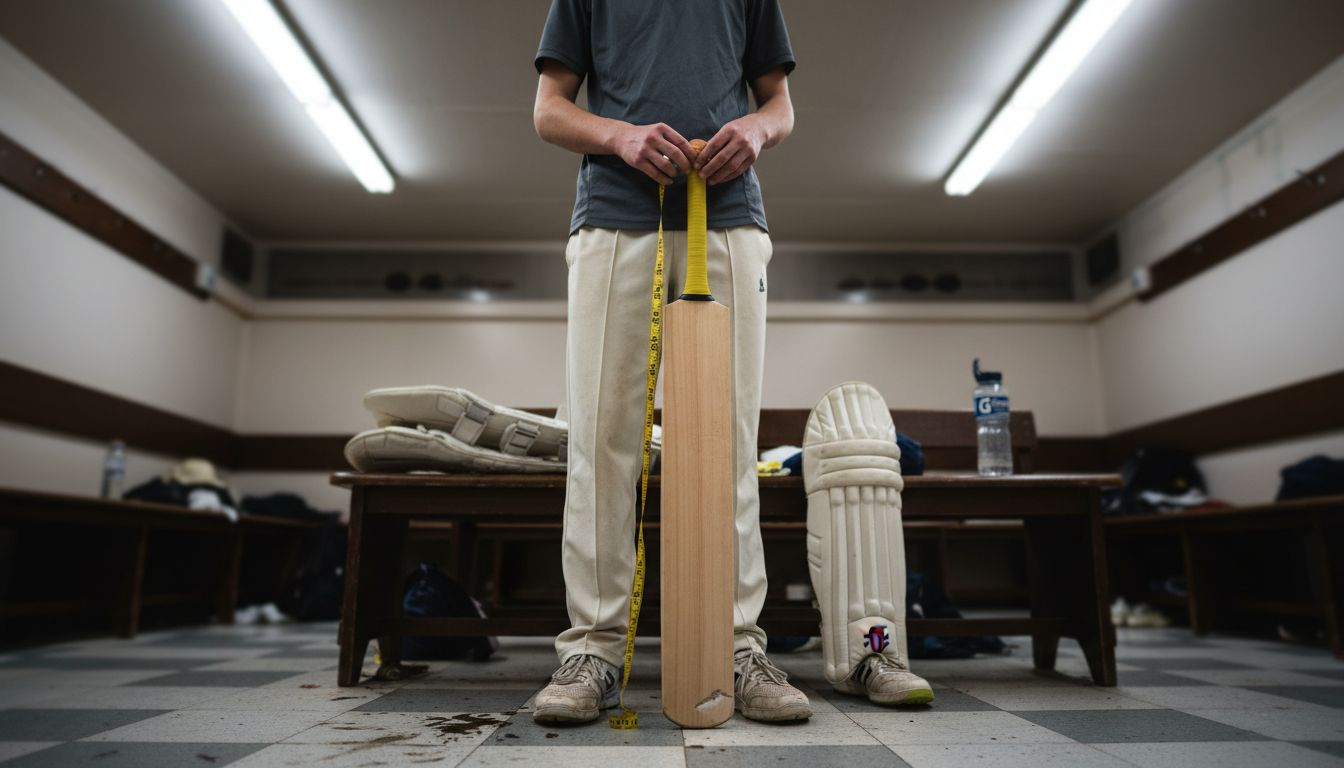
Weight selection is equally important. The bat’s weight directly influences swing speed, control, and potential shot power, making it crucial to find a balance that complements your strength and technique. A general rule suggests that bat weight should represent approximately 2.5% of your body weight. Professional players often use bats between 2.7 to 3 pounds, but amateur players should prioritise comfort and control over pure weight.
Pro Tip: Always test multiple bat sizes and weights before making a final purchase, as personal comfort and natural swing mechanics matter more than strict numerical guidelines.
Step 3: Select Suitable Willow and Grade
Choosing the right willow is fundamental to creating a high-performance cricket bat that meets your playing requirements. Cricket bat willow represents a specific variety of white willow prized for its exceptional shock-absorbing properties and performance characteristics, making the selection process critical for serious players.
Cricket bats are traditionally crafted from white willow, selected for its unique combination of toughness, lightness, and superior shock resistance. Willow grades range from Grade 1 to Grade 5, with professional players typically choosing Grade 1 or 2 for optimal performance. Grade 1 willow features straight, tight grains with minimal blemishes, offering the best potential for power and durability. Lower grades like Grade 3 to 5 might have more cosmetic imperfections but can still provide excellent performance at a more affordable price point.
When evaluating willow, look for straight grain lines, minimal colour variations, and a uniform texture. The number of grains can indicate the wood’s potential performance generally, 6 to 12 straight grains are considered ideal. Professional players often invest in premium grades, but intermediate players should balance quality with budget, selecting a grade that offers good performance without breaking the bank.
Here’s a quick comparison of cricket bat willow grades and their typical uses:
| Willow Grade | Grain Characteristics | Durability | Ideal For |
|---|---|---|---|
| Grade 1 | Straight, tight grains | Very high | Professionals |
| Grade 2 | Mostly straight, few blemishes | High | Advanced club players |
| Grade 3 | Some cosmetic marks, decent grains | Good | Intermediate players |
| Grade 4 | Mixed grain, visible marks | Moderate | Casual players |
| Grade 5 | Irregular pattern, multiple blemishes | Fair | Beginners or practice bats |
Pro Tip: Always inspect the willow’s grain structure and ask for expert advice when selecting your bat a well-chosen willow can significantly enhance your batting performance.
Step 4: Evaluate Handle Type and Grip
Selecting the right cricket bat handle is more than just a matter of comfort it directly impacts your performance, control, and injury prevention. Handle design is critical for grip, ergonomic support, and reducing player fatigue during intense matches.
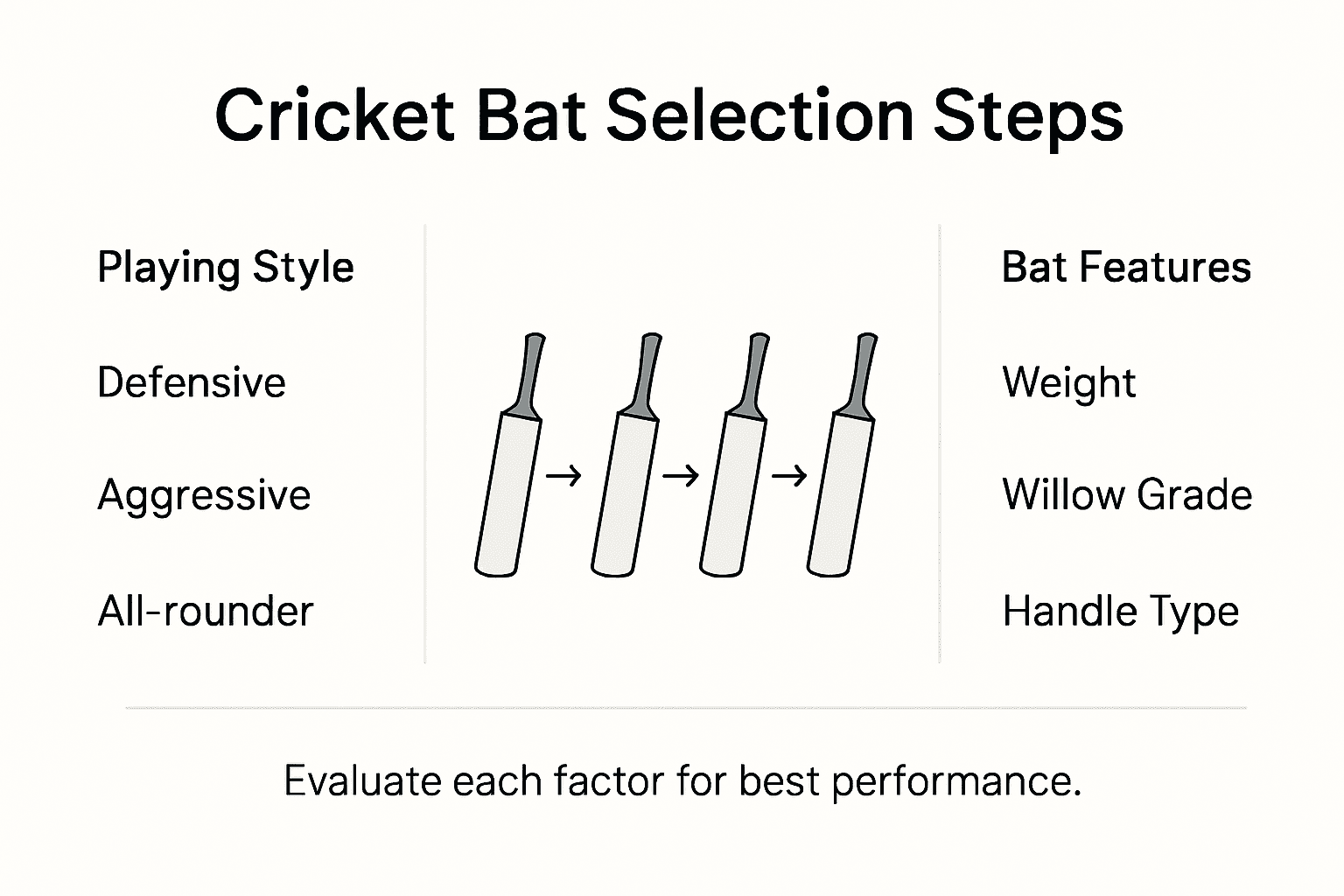
Cricket bat handles traditionally consist of cane material covered by a rubber grip, engineered to provide flexibility and shock absorption. The handle’s thickness, length, and texture play crucial roles in determining your batting comfort and control. Players with larger hands might prefer slightly thicker handles, while those with smaller hands benefit from slimmer designs. Modern handles often feature innovative design elements like reinforced connection points and spring mechanisms that minimise vibration and enhance overall bat responsiveness.
When evaluating handles, consider your typical gripping style and hand size. Different grip textures can provide varying levels of moisture management and tactile feedback. Some players prefer smoother grips for reduced friction, while others opt for more textured surfaces that offer enhanced control during sweaty or challenging weather conditions. The optimal handle should feel like a natural extension of your arm allowing seamless movement and reducing strain during extended batting sessions.
Pro Tip: Try holding multiple bat handles before purchasing the right grip should feel comfortable and allow you to maintain a relaxed yet secure grip throughout your swing.
Step 5: Test Bat Feel and Performance
The ultimate test of a cricket bat comes down to its real-world performance and how it feels in your hands during play. Testing a bat involves analysing multiple performance parameters including balance, swing speed, and impact feedback to determine its suitability for your playing style.
Bat feel is a nuanced assessment that combines subjective sensations with objective performance measurements), requiring a comprehensive approach to evaluation. During testing, focus on several key aspects how the bat responds when striking the ball, the weight distribution through your swing, and the vibration characteristics upon impact. Practice different shot types drives, cuts, pulls to understand how the bat performs across various batting techniques. Pay attention to how the bat feels during both defensive and aggressive shots a quality bat should provide consistent feedback and control.
When testing, simulate match-like conditions as closely as possible. Take multiple practice swings, hit balls across different areas of the bat face, and assess how the bat responds to different shot types and ball speeds. Listen for the sound of ball impact a crisp, solid sound often indicates good bat construction and potential performance. Consider factors like how easily you can control your shots, the bat’s responsiveness, and whether it feels like a natural extension of your batting technique.
Pro Tip: Never rush the testing process spend at least 30 minutes with the bat to truly understand its characteristics and how it complements your unique playing style.
Find the Perfect Cricket Bat for Your Style and Skill Level Today
Choosing the best cricket bat means matching your playing style, bat size, willow grade, and handle type to your unique needs. The challenge lies in selecting a bat that feels like a natural extension of your game and enhances your performance rather than holding you back. Factors such as bat weight, balance, and willow quality are crucial for control, shot power, and comfort as highlighted in the detailed guide.
Discover expertly curated options tailored to every batting style and experience level at Cricket Bats Com. Whether you need a lightweight bat for quick manoeuvrability or a heavy bat for aggressive power shots, we have the perfect fit.

Upgrade your cricket gear now with confidence. Explore our premium selection including specialised Adidas Cricket Bats that combine cutting-edge design with superior willow quality. For younger players, don’t miss out on our Junior Cricket Bats, designed to support early skill development. Visit https://cricketbats.com and start your journey to mastering the game with equipment that meets your highest expectations.
Frequently Asked Questions
How can I assess my playing style to choose the right cricket bat?
To assess your playing style, consider whether you are a defensive player, aggressive stroke player, or an all-rounder. Reflect on your typical batting position and the formats you play, then take note of how these factors can influence the specifications of the bat you need.
What should I consider when measuring for bat size and weight?
When measuring for bat size, ensure it stands between your hip and waist when placed vertically beside you. Additionally, choose a weight that is approximately 2.5% of your body weight, focusing on comfort and control, particularly if you’re an amateur player.
How do I select the appropriate willow and grade for my bat?
Choose willow that suits your level of play, with Grade 1 and 2 for professionals and Grade 3 to 5 for intermediate or casual players. Check for straight grain lines and minimal cosmetic blemishes, as these factors will enhance performance and durability.
What are the key aspects to evaluate when selecting a bat handle?
Focus on the thickness and texture of the handle, as these will directly impact your grip and control. Try different handle sizes to find one that feels comfortable and secure during swings, ensuring it complements your gripping style.
How should I test a cricket bat to determine its performance?
Test the bat by practicing various shots and assessing its balance, swing speed, and feel during play. Spend at least 30 minutes with the bat to understand how it responds to different conditions, ensuring it feels right for your batting style.
Recommended
Choosing the right cricket bat can make or break your performance on a British pitch. Nearly half of amateur players report that using the wrong bat limits their confidence and shot selection. With so many sizes, weights, and materials available, picking the perfect bat often feels confusing—especially when every match counts. This guide breaks down the essential steps, helping British players match their unique playing style and skill level to a bat that truly enhances their game.
Table of Contents
- Step 1: Assess Your Playing Style and Level
- Step 2: Measure Proper Bat Size and Weight
- Step 3: Select Suitable Willow and Grade
- Step 4: Evaluate Handle Type and Grip
- Step 5: Test Bat Feel and Performance
Quick Summary
| Key Message | Explanation |
|---|---|
| 1. Assess Your Batting Style | Understanding your playing approach helps narrow down bat specifications best suited to your style and skill level. |
| 2. Measure for Proper Size and Weight | Bat size and weight should align with your physical attributes for optimal swing speed and control. |
| 3. Choose the Right Willow Grade | Higher-grade willows offer better performance; select based on your experience and budget. |
| 4. Evaluate Handle Type for Comfort | The handle’s thickness and grip design significantly affect batting control and comfort during play. |
| 5. Test for Feel and Performance | Spend adequate time testing the bat to ensure it complements your unique playing style during real-world conditions. |
Step 1: Assess Your Playing Style and Level
Selecting the right cricket bat begins with understanding your unique playing style and skill level. Player performance depends on multiple parameters including individual technique and match conditions, making this assessment crucial for optimal equipment selection.
Cricket players typically fall into several distinct categories based on their batting approach. Are you a defensive player who focuses on protecting your wicket? A stroke player who specialises in aggressive shot-making? Or an all-rounder capable of adapting to different game situations? Recognising where you fit helps narrow down bat specifications. Consider factors like your batting position, typical match formats you play (Twenty20, One Day, Test matches), and your physical strength.
Your skill level also plays a significant role in bat selection. Amateur players might require different specifications compared to semi-professional or professional cricketers. Assess your consistency, shot range, and technical proficiency to determine the most suitable bat weight, handle shape, and willow grade that complements your playing capabilities.
Top Tip: Take time to analyse your batting videos or seek feedback from coaches to gain objective insights into your playing style and potential equipment needs.
Use this summary to match bat features to different playing styles:
| Playing Style | Key Bat Feature | Recommended Weight | Preferred Handle |
|---|---|---|---|
| Defensive | Lightweight, balanced | 2.5 - 2.7 lbs | Slim, round |
| Aggressive stroke | Thick edges, heavy | 2.8 - 3 lbs | Thick, oval |
| All-rounder | Medium balance | 2.6 - 2.9 lbs | Medium thickness |
Step 2: Measure Proper Bat Size and Weight
Choosing the right cricket bat involves precise measurements that match your physical attributes and playing style. Selecting the correct bat size and weight requires understanding your individual physical characteristics and play approach, ensuring optimal performance and comfort.
Measuring your bat starts with understanding standard specifications. A cricket bat must not exceed 38 inches in length or 4.25 inches in width. Your height and arm length are critical factors in determining the appropriate bat size. Younger or less experienced players typically benefit from lighter bats that offer greater manoeuvrability, while more advanced players might prefer heavier bats for increased power. Stand the bat vertically beside you its maximum height should reach somewhere between your hip and waist this provides a basic guideline for selecting the right length.
Weight selection is equally important. The bat’s weight directly influences swing speed, control, and potential shot power, making it crucial to find a balance that complements your strength and technique. A general rule suggests that bat weight should represent approximately 2.5% of your body weight. Professional players often use bats between 2.7 to 3 pounds, but amateur players should prioritise comfort and control over pure weight.
Pro Tip: Always test multiple bat sizes and weights before making a final purchase, as personal comfort and natural swing mechanics matter more than strict numerical guidelines.
Step 3: Select Suitable Willow and Grade
Choosing the right willow is fundamental to creating a high-performance cricket bat that meets your playing requirements. Cricket bat willow represents a specific variety of white willow prized for its exceptional shock-absorbing properties and performance characteristics, making the selection process critical for serious players.
Cricket bats are traditionally crafted from white willow, selected for its unique combination of toughness, lightness, and superior shock resistance. Willow grades range from Grade 1 to Grade 5, with professional players typically choosing Grade 1 or 2 for optimal performance. Grade 1 willow features straight, tight grains with minimal blemishes, offering the best potential for power and durability. Lower grades like Grade 3 to 5 might have more cosmetic imperfections but can still provide excellent performance at a more affordable price point.
When evaluating willow, look for straight grain lines, minimal colour variations, and a uniform texture. The number of grains can indicate the wood’s potential performance generally, 6 to 12 straight grains are considered ideal. Professional players often invest in premium grades, but intermediate players should balance quality with budget, selecting a grade that offers good performance without breaking the bank.
Here’s a quick comparison of cricket bat willow grades and their typical uses:
| Willow Grade | Grain Characteristics | Durability | Ideal For |
|---|---|---|---|
| Grade 1 | Straight, tight grains | Very high | Professionals |
| Grade 2 | Mostly straight, few blemishes | High | Advanced club players |
| Grade 3 | Some cosmetic marks, decent grains | Good | Intermediate players |
| Grade 4 | Mixed grain, visible marks | Moderate | Casual players |
| Grade 5 | Irregular pattern, multiple blemishes | Fair | Beginners or practice bats |
Pro Tip: Always inspect the willow’s grain structure and ask for expert advice when selecting your bat a well-chosen willow can significantly enhance your batting performance.
Step 4: Evaluate Handle Type and Grip
Selecting the right cricket bat handle is more than just a matter of comfort it directly impacts your performance, control, and injury prevention. Handle design is critical for grip, ergonomic support, and reducing player fatigue during intense matches.
Cricket bat handles traditionally consist of cane material covered by a rubber grip, engineered to provide flexibility and shock absorption. The handle’s thickness, length, and texture play crucial roles in determining your batting comfort and control. Players with larger hands might prefer slightly thicker handles, while those with smaller hands benefit from slimmer designs. Modern handles often feature innovative design elements like reinforced connection points and spring mechanisms that minimise vibration and enhance overall bat responsiveness.
When evaluating handles, consider your typical gripping style and hand size. Different grip textures can provide varying levels of moisture management and tactile feedback. Some players prefer smoother grips for reduced friction, while others opt for more textured surfaces that offer enhanced control during sweaty or challenging weather conditions. The optimal handle should feel like a natural extension of your arm allowing seamless movement and reducing strain during extended batting sessions.
Pro Tip: Try holding multiple bat handles before purchasing the right grip should feel comfortable and allow you to maintain a relaxed yet secure grip throughout your swing.
Step 5: Test Bat Feel and Performance
The ultimate test of a cricket bat comes down to its real-world performance and how it feels in your hands during play. Testing a bat involves analysing multiple performance parameters including balance, swing speed, and impact feedback to determine its suitability for your playing style.
Bat feel is a nuanced assessment that combines subjective sensations with objective performance measurements), requiring a comprehensive approach to evaluation. During testing, focus on several key aspects how the bat responds when striking the ball, the weight distribution through your swing, and the vibration characteristics upon impact. Practice different shot types drives, cuts, pulls to understand how the bat performs across various batting techniques. Pay attention to how the bat feels during both defensive and aggressive shots a quality bat should provide consistent feedback and control.
When testing, simulate match-like conditions as closely as possible. Take multiple practice swings, hit balls across different areas of the bat face, and assess how the bat responds to different shot types and ball speeds. Listen for the sound of ball impact a crisp, solid sound often indicates good bat construction and potential performance. Consider factors like how easily you can control your shots, the bat’s responsiveness, and whether it feels like a natural extension of your batting technique.
Pro Tip: Never rush the testing process spend at least 30 minutes with the bat to truly understand its characteristics and how it complements your unique playing style.
Find the Perfect Cricket Bat for Your Style and Skill Level Today
Choosing the best cricket bat means matching your playing style, bat size, willow grade, and handle type to your unique needs. The challenge lies in selecting a bat that feels like a natural extension of your game and enhances your performance rather than holding you back. Factors such as bat weight, balance, and willow quality are crucial for control, shot power, and comfort as highlighted in the detailed guide.
Discover expertly curated options tailored to every batting style and experience level at Cricket Bats Com. Whether you need a lightweight bat for quick manoeuvrability or a heavy bat for aggressive power shots, we have the perfect fit.
Upgrade your cricket gear now with confidence. Explore our premium selection including specialised Adidas Cricket Bats that combine cutting-edge design with superior willow quality. For younger players, don’t miss out on our Junior Cricket Bats, designed to support early skill development. Visit https://cricketbats.com and start your journey to mastering the game with equipment that meets your highest expectations.
Frequently Asked Questions
How can I assess my playing style to choose the right cricket bat?
To assess your playing style, consider whether you are a defensive player, aggressive stroke player, or an all-rounder. Reflect on your typical batting position and the formats you play, then take note of how these factors can influence the specifications of the bat you need.
What should I consider when measuring for bat size and weight?
When measuring for bat size, ensure it stands between your hip and waist when placed vertically beside you. Additionally, choose a weight that is approximately 2.5% of your body weight, focusing on comfort and control, particularly if you’re an amateur player.
How do I select the appropriate willow and grade for my bat?
Choose willow that suits your level of play, with Grade 1 and 2 for professionals and Grade 3 to 5 for intermediate or casual players. Check for straight grain lines and minimal cosmetic blemishes, as these factors will enhance performance and durability.
What are the key aspects to evaluate when selecting a bat handle?
Focus on the thickness and texture of the handle, as these will directly impact your grip and control. Try different handle sizes to find one that feels comfortable and secure during swings, ensuring it complements your gripping style.
How should I test a cricket bat to determine its performance?
Test the bat by practicing various shots and assessing its balance, swing speed, and feel during play. Spend at least 30 minutes with the bat to understand how it responds to different conditions, ensuring it feels right for your batting style.