
News News
How to select junior cricket kit for safety and performance How to select junior cricket kit for safety and performance
How to select junior cricket kit for safety and performance
Selecting the right junior cricket kit feels overwhelming for many parents and coaches. With 40% of parents purchasing oversized gear, the risk of injury increases significantly while performance suffers. This guide provides clear, actionable steps to choose well-fitting, safe, and effective junior cricket kits that protect young players and enhance their game. You’ll learn to measure accurately, verify safety standards, and avoid common pitfalls that compromise your child’s protection.
Table of Contents
- Understanding Junior Cricket Kit Basics
- Prerequisites: What You Need Before Buying
- Step-By-Step Guide To Selecting Junior Cricket Kit
- Common Mistakes And How To Avoid Them
- Expected Results And Maintenance Guidelines
- Explore Our Range Of Junior Cricket Kits
- FAQ
Key takeaways
| Point | Details |
|---|---|
| Proper fit ensures safety | Correctly sized gear reduces injury risk and allows natural movement |
| Verify safety certifications | Only purchase helmets, pads, and gloves marked with ISI or ASTM standards |
| Balance quality and budget | Invest in protective items first, then accessories based on remaining funds |
| Regular inspections matter | Check gear before each season and replace every 12-18 months |
| Avoid oversized purchases | Buying gear to grow into increases injury risk and restricts performance |
Understanding junior cricket kit basics
Junior cricket kits comprise several essential components designed specifically for young players. The helmet protects the head from fast deliveries and wild shots. Pads shield shins and knees from impact during batting and wicketkeeping. Gloves safeguard hands and fingers while batting. The bat itself must match the player’s height and strength for effective stroke play. Proper cricket shoes provide ankle support and grip on various pitch surfaces.
Junior equipment differs significantly from adult gear in critical ways. Weight distribution changes to accommodate developing muscles and coordination. Safety features receive enhanced attention, with properly fitted helmets reducing concussion risk by up to 30%. Sizing ranges account for rapid growth spurts typical in children aged 5 to 16.
Each component serves dual purposes in protection and performance:
- Helmets must absorb impact whilst maintaining visibility and ventilation
- Pads balance protection coverage with mobility for quick running between wickets
- Gloves combine finger protection with grip sensitivity for bat control
- Bats require appropriate weight for swing speed without compromising control
- Shoes need flexibility for bowling movements whilst providing stability for batting stances
Understanding these basics helps you appreciate why choosing junior-specific equipment matters more than simply buying smaller versions of adult gear. The engineering behind junior kits accounts for developing bodies, ensuring protection without hindering natural athletic development.
Prerequisites: what you need before buying
Before shopping for junior cricket kit, gather essential measurement tools. You’ll need a fabric tape measure for head circumference, height measurements, and hand sizing. A standard ruler helps measure bat length requirements. Keep a notebook to record measurements and compare them against manufacturer sizing charts.
Know your child’s current physical dimensions precisely. Record their height in centimetres, measuring from floor to top of head whilst standing straight. Measure head circumference at the widest point, typically just above the eyebrows. For glove sizing, measure hand width across the knuckles and length from wrist to tip of middle finger.
Research certified brands and applicable safety standards before visiting shops or browsing online:
- Identify manufacturers who specialise in junior cricket equipment
- Verify which safety certifications apply in your region
- Read reviews from other parents and coaches about durability and fit
- Check for adjustable features that accommodate growth
Establish a realistic budget that prioritises protection over aesthetics. Quality protective gear costs more initially but prevents injuries that could sideline your young player for weeks.
| Budget category | Recommended allocation | Priority items |
|---|---|---|
| Essential protection | 60-70% | Helmet, pads, gloves |
| Performance equipment | 20-30% | Bat, shoes |
| Accessories | 10-15% | Bag, protectors |
Understanding the correct sizing principles before purchasing saves money and ensures safety. Preparation prevents the frustration of returning ill-fitting equipment or discovering missing safety certifications after purchase.
Step-by-step guide to selecting junior cricket kit
Measuring for proper fit requires precision and patience. Start with the helmet by measuring head circumference 2cm above the eyebrows, wrapping the tape measure around the widest part. The helmet should sit level on the head, not tilted backwards or forwards. For pads, measure from the centre of the kneecap to the ground whilst standing. Glove sizing depends on hand length from wrist crease to middle fingertip.
Follow these measurement steps in order:
- Take all measurements with the child wearing their usual cricket clothing
- Record measurements in centimetres for accuracy when comparing sizing charts
- Measure at the same time of day, as feet can swell during activity
- Allow for one cricket sock thickness when measuring for shoes
- Remeasure every three months during growth spurts
Verify safety certifications by checking for clear markings on the equipment. Helmets, pads, and gloves must display recognised standards like ISI or ASTM. Reject any protective gear lacking these certifications, regardless of price savings. Certification ensures the equipment has undergone rigorous testing for impact absorption and structural integrity.
Evaluate materials for durability and protective properties:
- Helmet shells should be high-density polyethylene or ABS plastic
- Padding must be multi-density foam that doesn’t compress permanently
- Glove palms need quality leather for grip and durability
- Pad straps should be reinforced Velcro or buckle systems
- Bat handles require quality cane wrapped with proper grip
Check adjustability features that extend the kit’s usable life. Quality helmets include adjustable rear cages and padding inserts. Pads often feature multiple strap positions for leg growth. Gloves with wrist adjustment accommodate hand development.
Pro tip: Always fit protective gear over the clothing your child will wear during matches. A helmet that fits over a cap in the shop might feel too tight with a cricket jumper underneath during cold weather practice.
| Equipment | Key fit indicator | Common mistake |
|---|---|---|
| Helmet | No movement when head shakes | Buying one size too large |
| Pads | Top reaches mid-kneecap | Choosing by age not height |
| Gloves | Fingers reach glove tips | Ignoring hand width |
| Bat | Comfortable swing weight | Selecting by appearance |
Balance safety and quality within budget constraints by prioritising protective equipment. Invest in the best helmet you can afford, as head protection cannot be compromised. Pads and gloves follow in importance. You can economise on bags and accessories without affecting safety. Consider junior-specific bat designs that match your child’s current strength level rather than aspirational models.

Quality equipment from certified manufacturers might cost more initially but provides better protection and lasts longer through multiple seasons. Check selection guides specifically for junior bats to understand how weight, balance, and size interact for young players.
Common mistakes and how to avoid them
Purchasing oversized gear ranks as the most dangerous error parents make. The temptation to buy equipment your child will “grow into” creates immediate safety hazards. Loose helmets shift during play, exposing vulnerable areas to impact. Oversized pads restrict running speed and increase tripping risk. Large gloves reduce bat control and hand protection effectiveness.
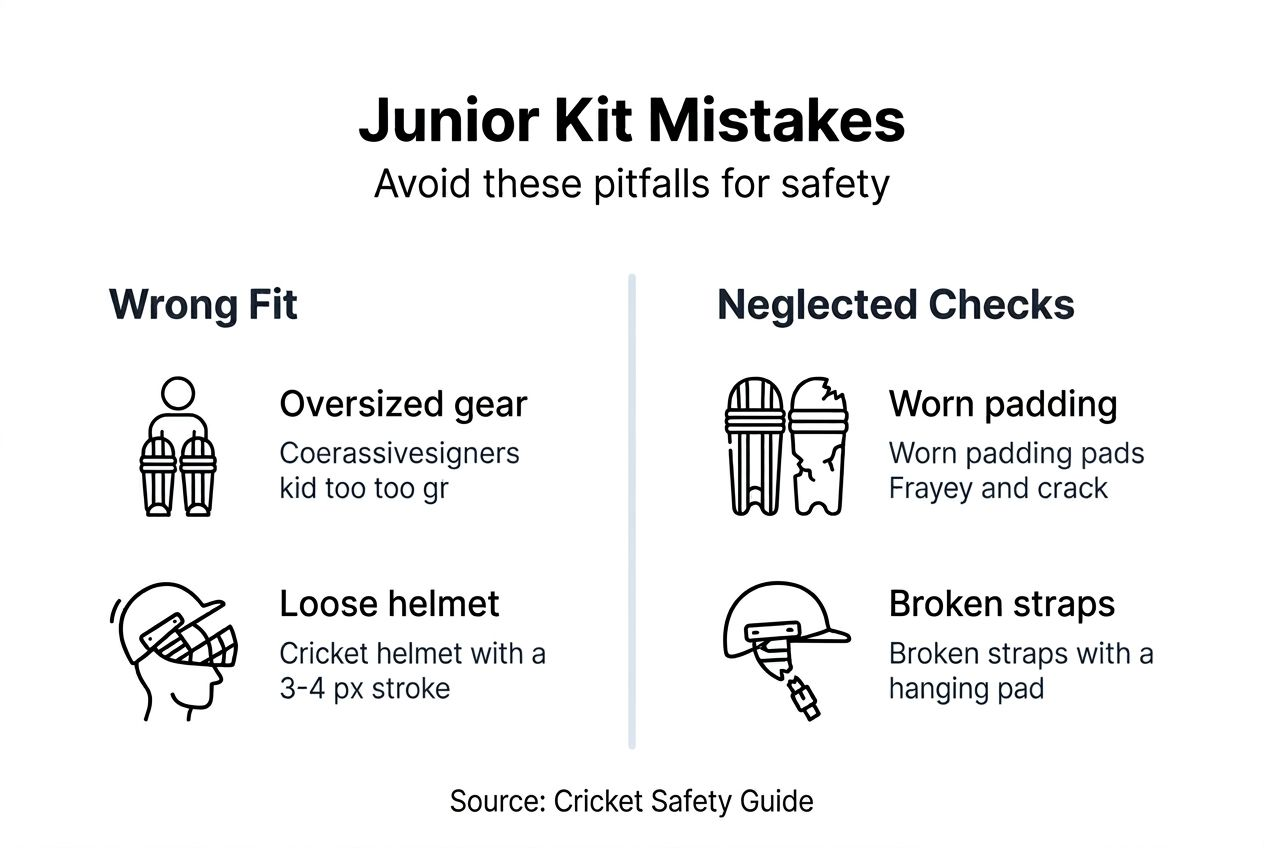
Ignoring ventilation features leads to discomfort that distracts young players. Helmets without adequate airflow cause overheating during summer sessions. This discomfort tempts children to remove protective gear prematurely or avoid wearing it altogether. Always check for ventilation ports in helmets and breathable materials in pads.
Choosing low-quality materials to save money backfires quickly:
- Cheap helmet padding compresses after minimal use, losing protective properties
- Thin pad materials crack under impact, requiring early replacement
- Poor-quality glove leather tears within weeks of regular practice
- Substandard bat willow splits or develops dead spots rapidly
Neglecting regular inspections allows compromised gear to remain in use. Check equipment before each practice session and thoroughly before seasons begin. Look for cracks in helmet shells, compressed padding that doesn’t spring back, torn straps on pads, and split seams in gloves.
Pro tip: Set a calendar reminder every three months to inspect all protective equipment. This regular check prevents the gradual deterioration that goes unnoticed during daily use.
Overlooking safety certification verification puts young players at serious risk. Some retailers stock uncertified equipment that looks professional but fails to meet protective standards. As one experienced coach notes:
“I’ve seen beautiful-looking helmets fail basic impact tests because they lacked proper certification. The price seemed reasonable, but the protection was worthless. Always verify those certification marks before purchasing.”
Avoid these pitfalls by following proper selection procedures and refusing to compromise on safety features. The same attention to detail that prevents common coaching errors in other sports applies to equipment selection in cricket.
Expected results and maintenance guidelines
Properly selected junior cricket kit delivers measurable safety and performance benefits. Your child should move confidently without gear-related restrictions. Helmets stay securely positioned during quick head movements. Pads allow full running speed between wickets. Gloves provide sensitive bat control whilst protecting fingers from fast deliveries.
Identify wear and compromised protection through regular inspections. Check for these warning signs:
- Helmet shells showing cracks, deep scratches, or deformation
- Padding that remains compressed after pressure, losing shock absorption
- Pad straps fraying or Velcro losing grip strength
- Glove palms developing holes or leather becoming stiff and inflexible
- Bat edges showing splits, cracks in the blade, or loose handle binding
Replace protective equipment every 12 to 18 months regardless of visible wear. Materials degrade over time even without obvious damage. Impact protection diminishes as foam compresses and plastics become brittle. Growing children outgrow equipment quickly, making this replacement schedule align with sizing needs.
Maintain gear properly to extend its protective life and ensure reliability:
- Store helmets away from direct sunlight and extreme temperatures
- Air out pads and gloves after each use to prevent moisture damage
- Clean leather components with appropriate conditioners monthly
- Keep bats in protective covers when not in use
- Never leave equipment in hot cars or damp sheds
Good maintenance provides psychological benefits alongside physical protection. Children develop confidence knowing their equipment functions reliably. This confidence translates into better performance as they focus on technique rather than worrying about gear failure. Regular care also teaches responsibility and respect for equipment, valuable lessons that extend beyond cricket.
The investment in quality gear and proper maintenance pays dividends through reduced injury risk and enhanced skill development. Just as systematic player development requires proper equipment in other sports, cricket success builds on the foundation of reliable, well-maintained protective gear.
Explore our range of junior cricket kits
Now that you understand how to select safe, effective junior cricket equipment, explore our carefully curated collection designed specifically for young players. Cricket Bats Com offers an extensive selection of certified cricket bats and protective gear meeting the highest safety standards you’ve learned about in this guide.

Our range includes options for every budget, from affordable starter kits for beginners to premium equipment for advancing junior players. Each product in our junior collection has been vetted for proper certification and age-appropriate design. You’ll find helmets with verified ISI and ASTM markings, professionally fitted pads in multiple junior sizes, and quality gloves engineered for developing hands.
Complete your young cricketer’s kit with essential accessories like the Gray-Nicolls ball bag, perfect for organising equipment and teaching responsibility. Browse our selection with confidence, knowing every item meets the safety and quality criteria outlined in this guide.
FAQ
What is the best age to start buying a junior cricket kit?
Junior cricket kits become necessary when children begin regular cricket participation, typically around ages 5 to 6. The exact timing depends on the child’s interest level and physical development rather than a specific age milestone. Properly sized equipment matters even at these early stages, as ill-fitting gear can discourage continued participation or cause injury.
How often should junior cricket kits be replaced?
Replace junior cricket kits approximately every 12 to 18 months to maintain optimal protection and accommodate growth. Inspect all equipment before each season begins, looking for wear indicators like compressed padding or cracked shells. Replace protective gear immediately if you notice damage, regardless of how recently it was purchased.
Are all junior cricket helmets the same size?
Junior cricket helmets come in multiple sizes to fit different head circumferences and ages. Manufacturers typically offer small, medium, and large junior sizes, with some brands providing even more specific sizing options. Proper measurement and trying on helmets before purchase ensures the critical safety fit that generic sizing cannot guarantee.
Can I buy a junior kit that my child will grow into?
Buying oversized cricket kit hoping your child grows into it significantly increases injury risk and hampers skill development. Loose helmets fail to protect properly during impacts, oversized pads restrict natural movement, and large gloves reduce bat control. Select equipment that fits correctly now, choosing models with adjustable features to accommodate minor growth between replacements.
Recommended
How to select junior cricket kit for safety and performance
Selecting the right junior cricket kit feels overwhelming for many parents and coaches. With 40% of parents purchasing oversized gear, the risk of injury increases significantly while performance suffers. This guide provides clear, actionable steps to choose well-fitting, safe, and effective junior cricket kits that protect young players and enhance their game. You’ll learn to measure accurately, verify safety standards, and avoid common pitfalls that compromise your child’s protection.
Table of Contents
- Understanding Junior Cricket Kit Basics
- Prerequisites: What You Need Before Buying
- Step-By-Step Guide To Selecting Junior Cricket Kit
- Common Mistakes And How To Avoid Them
- Expected Results And Maintenance Guidelines
- Explore Our Range Of Junior Cricket Kits
- FAQ
Key takeaways
| Point | Details |
|---|---|
| Proper fit ensures safety | Correctly sized gear reduces injury risk and allows natural movement |
| Verify safety certifications | Only purchase helmets, pads, and gloves marked with ISI or ASTM standards |
| Balance quality and budget | Invest in protective items first, then accessories based on remaining funds |
| Regular inspections matter | Check gear before each season and replace every 12-18 months |
| Avoid oversized purchases | Buying gear to grow into increases injury risk and restricts performance |
Understanding junior cricket kit basics
Junior cricket kits comprise several essential components designed specifically for young players. The helmet protects the head from fast deliveries and wild shots. Pads shield shins and knees from impact during batting and wicketkeeping. Gloves safeguard hands and fingers while batting. The bat itself must match the player’s height and strength for effective stroke play. Proper cricket shoes provide ankle support and grip on various pitch surfaces.
Junior equipment differs significantly from adult gear in critical ways. Weight distribution changes to accommodate developing muscles and coordination. Safety features receive enhanced attention, with properly fitted helmets reducing concussion risk by up to 30%. Sizing ranges account for rapid growth spurts typical in children aged 5 to 16.
Each component serves dual purposes in protection and performance:
- Helmets must absorb impact whilst maintaining visibility and ventilation
- Pads balance protection coverage with mobility for quick running between wickets
- Gloves combine finger protection with grip sensitivity for bat control
- Bats require appropriate weight for swing speed without compromising control
- Shoes need flexibility for bowling movements whilst providing stability for batting stances
Understanding these basics helps you appreciate why choosing junior-specific equipment matters more than simply buying smaller versions of adult gear. The engineering behind junior kits accounts for developing bodies, ensuring protection without hindering natural athletic development.
Prerequisites: what you need before buying
Before shopping for junior cricket kit, gather essential measurement tools. You’ll need a fabric tape measure for head circumference, height measurements, and hand sizing. A standard ruler helps measure bat length requirements. Keep a notebook to record measurements and compare them against manufacturer sizing charts.
Know your child’s current physical dimensions precisely. Record their height in centimetres, measuring from floor to top of head whilst standing straight. Measure head circumference at the widest point, typically just above the eyebrows. For glove sizing, measure hand width across the knuckles and length from wrist to tip of middle finger.
Research certified brands and applicable safety standards before visiting shops or browsing online:
- Identify manufacturers who specialise in junior cricket equipment
- Verify which safety certifications apply in your region
- Read reviews from other parents and coaches about durability and fit
- Check for adjustable features that accommodate growth
Establish a realistic budget that prioritises protection over aesthetics. Quality protective gear costs more initially but prevents injuries that could sideline your young player for weeks.
| Budget category | Recommended allocation | Priority items |
|---|---|---|
| Essential protection | 60-70% | Helmet, pads, gloves |
| Performance equipment | 20-30% | Bat, shoes |
| Accessories | 10-15% | Bag, protectors |
Understanding the correct sizing principles before purchasing saves money and ensures safety. Preparation prevents the frustration of returning ill-fitting equipment or discovering missing safety certifications after purchase.
Step-by-step guide to selecting junior cricket kit
Measuring for proper fit requires precision and patience. Start with the helmet by measuring head circumference 2cm above the eyebrows, wrapping the tape measure around the widest part. The helmet should sit level on the head, not tilted backwards or forwards. For pads, measure from the centre of the kneecap to the ground whilst standing. Glove sizing depends on hand length from wrist crease to middle fingertip.
Follow these measurement steps in order:
- Take all measurements with the child wearing their usual cricket clothing
- Record measurements in centimetres for accuracy when comparing sizing charts
- Measure at the same time of day, as feet can swell during activity
- Allow for one cricket sock thickness when measuring for shoes
- Remeasure every three months during growth spurts
Verify safety certifications by checking for clear markings on the equipment. Helmets, pads, and gloves must display recognised standards like ISI or ASTM. Reject any protective gear lacking these certifications, regardless of price savings. Certification ensures the equipment has undergone rigorous testing for impact absorption and structural integrity.
Evaluate materials for durability and protective properties:
- Helmet shells should be high-density polyethylene or ABS plastic
- Padding must be multi-density foam that doesn’t compress permanently
- Glove palms need quality leather for grip and durability
- Pad straps should be reinforced Velcro or buckle systems
- Bat handles require quality cane wrapped with proper grip
Check adjustability features that extend the kit’s usable life. Quality helmets include adjustable rear cages and padding inserts. Pads often feature multiple strap positions for leg growth. Gloves with wrist adjustment accommodate hand development.
Pro tip: Always fit protective gear over the clothing your child will wear during matches. A helmet that fits over a cap in the shop might feel too tight with a cricket jumper underneath during cold weather practice.
| Equipment | Key fit indicator | Common mistake |
|---|---|---|
| Helmet | No movement when head shakes | Buying one size too large |
| Pads | Top reaches mid-kneecap | Choosing by age not height |
| Gloves | Fingers reach glove tips | Ignoring hand width |
| Bat | Comfortable swing weight | Selecting by appearance |
Balance safety and quality within budget constraints by prioritising protective equipment. Invest in the best helmet you can afford, as head protection cannot be compromised. Pads and gloves follow in importance. You can economise on bags and accessories without affecting safety. Consider junior-specific bat designs that match your child’s current strength level rather than aspirational models.
Quality equipment from certified manufacturers might cost more initially but provides better protection and lasts longer through multiple seasons. Check selection guides specifically for junior bats to understand how weight, balance, and size interact for young players.
Common mistakes and how to avoid them
Purchasing oversized gear ranks as the most dangerous error parents make. The temptation to buy equipment your child will “grow into” creates immediate safety hazards. Loose helmets shift during play, exposing vulnerable areas to impact. Oversized pads restrict running speed and increase tripping risk. Large gloves reduce bat control and hand protection effectiveness.
Ignoring ventilation features leads to discomfort that distracts young players. Helmets without adequate airflow cause overheating during summer sessions. This discomfort tempts children to remove protective gear prematurely or avoid wearing it altogether. Always check for ventilation ports in helmets and breathable materials in pads.
Choosing low-quality materials to save money backfires quickly:
- Cheap helmet padding compresses after minimal use, losing protective properties
- Thin pad materials crack under impact, requiring early replacement
- Poor-quality glove leather tears within weeks of regular practice
- Substandard bat willow splits or develops dead spots rapidly
Neglecting regular inspections allows compromised gear to remain in use. Check equipment before each practice session and thoroughly before seasons begin. Look for cracks in helmet shells, compressed padding that doesn’t spring back, torn straps on pads, and split seams in gloves.
Pro tip: Set a calendar reminder every three months to inspect all protective equipment. This regular check prevents the gradual deterioration that goes unnoticed during daily use.
Overlooking safety certification verification puts young players at serious risk. Some retailers stock uncertified equipment that looks professional but fails to meet protective standards. As one experienced coach notes:
“I’ve seen beautiful-looking helmets fail basic impact tests because they lacked proper certification. The price seemed reasonable, but the protection was worthless. Always verify those certification marks before purchasing.”
Avoid these pitfalls by following proper selection procedures and refusing to compromise on safety features. The same attention to detail that prevents common coaching errors in other sports applies to equipment selection in cricket.
Expected results and maintenance guidelines
Properly selected junior cricket kit delivers measurable safety and performance benefits. Your child should move confidently without gear-related restrictions. Helmets stay securely positioned during quick head movements. Pads allow full running speed between wickets. Gloves provide sensitive bat control whilst protecting fingers from fast deliveries.
Identify wear and compromised protection through regular inspections. Check for these warning signs:
- Helmet shells showing cracks, deep scratches, or deformation
- Padding that remains compressed after pressure, losing shock absorption
- Pad straps fraying or Velcro losing grip strength
- Glove palms developing holes or leather becoming stiff and inflexible
- Bat edges showing splits, cracks in the blade, or loose handle binding
Replace protective equipment every 12 to 18 months regardless of visible wear. Materials degrade over time even without obvious damage. Impact protection diminishes as foam compresses and plastics become brittle. Growing children outgrow equipment quickly, making this replacement schedule align with sizing needs.
Maintain gear properly to extend its protective life and ensure reliability:
- Store helmets away from direct sunlight and extreme temperatures
- Air out pads and gloves after each use to prevent moisture damage
- Clean leather components with appropriate conditioners monthly
- Keep bats in protective covers when not in use
- Never leave equipment in hot cars or damp sheds
Good maintenance provides psychological benefits alongside physical protection. Children develop confidence knowing their equipment functions reliably. This confidence translates into better performance as they focus on technique rather than worrying about gear failure. Regular care also teaches responsibility and respect for equipment, valuable lessons that extend beyond cricket.
The investment in quality gear and proper maintenance pays dividends through reduced injury risk and enhanced skill development. Just as systematic player development requires proper equipment in other sports, cricket success builds on the foundation of reliable, well-maintained protective gear.
Explore our range of junior cricket kits
Now that you understand how to select safe, effective junior cricket equipment, explore our carefully curated collection designed specifically for young players. Cricket Bats Com offers an extensive selection of certified cricket bats and protective gear meeting the highest safety standards you’ve learned about in this guide.
Our range includes options for every budget, from affordable starter kits for beginners to premium equipment for advancing junior players. Each product in our junior collection has been vetted for proper certification and age-appropriate design. You’ll find helmets with verified ISI and ASTM markings, professionally fitted pads in multiple junior sizes, and quality gloves engineered for developing hands.
Complete your young cricketer’s kit with essential accessories like the Gray-Nicolls ball bag, perfect for organising equipment and teaching responsibility. Browse our selection with confidence, knowing every item meets the safety and quality criteria outlined in this guide.
FAQ
What is the best age to start buying a junior cricket kit?
Junior cricket kits become necessary when children begin regular cricket participation, typically around ages 5 to 6. The exact timing depends on the child’s interest level and physical development rather than a specific age milestone. Properly sized equipment matters even at these early stages, as ill-fitting gear can discourage continued participation or cause injury.
How often should junior cricket kits be replaced?
Replace junior cricket kits approximately every 12 to 18 months to maintain optimal protection and accommodate growth. Inspect all equipment before each season begins, looking for wear indicators like compressed padding or cracked shells. Replace protective gear immediately if you notice damage, regardless of how recently it was purchased.
Are all junior cricket helmets the same size?
Junior cricket helmets come in multiple sizes to fit different head circumferences and ages. Manufacturers typically offer small, medium, and large junior sizes, with some brands providing even more specific sizing options. Proper measurement and trying on helmets before purchase ensures the critical safety fit that generic sizing cannot guarantee.
Can I buy a junior kit that my child will grow into?
Buying oversized cricket kit hoping your child grows into it significantly increases injury risk and hampers skill development. Loose helmets fail to protect properly during impacts, oversized pads restrict natural movement, and large gloves reduce bat control. Select equipment that fits correctly now, choosing models with adjustable features to accommodate minor growth between replacements.