
News News
Cricket Bat Size Guide: Choose The Perfect Bat For You Cricket Bat Size Guide: Choose The Perfect Bat For You
Choosing the right cricket bat size can make or break your batting experience, yet more than 60 percent of junior players use bats that do not fit their height or age. For young athletes around the world, including those inspired by British cricket legends, the right bat brings better performance and avoids discomfort. This guide walks you through every step so you can find the perfect match and feel confident every time you step onto the pitch.
Table of Contents
- Step 1: Assess Your Age And Height
- Step 2: Compare Size Charts For Accurate Match
- Step 3: Test Bat Length And Pickup Comfort
- Step 4: Verify Weight Suitability For Play
- Step 5: Confirm Final Size With Grip And Balance
Quick Summary
| Key Insight | Explanation |
|---|---|
| 1. Determine Your Bat Length | Use age and height to choose an appropriate bat length for optimal performance. |
| 2. Test Grip Comfort | Ensure the bat grip feels natural and comfortable to improve handling and technique. |
| 3. Assess Bat Weight | Select a bat weight that allows smooth swings without causing fatigue during play. |
| 4. Confirm Balance During Use | A well-balanced bat enhances control and confidence while batting. |
| 5. Consult Experienced Players | Seek advice from coaches or skilled players to validate your bat selection process. |
Step 1: Assess Your Age and Height
Selecting the right cricket bat starts with understanding your physical dimensions. Age and height charts provide essential guidance for choosing a bat that fits your body perfectly and supports your playing technique.
Your height is the primary indicator for determining bat size. Most junior cricket players between 10 and 18 years will need different bat lengths based on their height range. Generally, younger players under 12 will use shorter bats around 27 to 30 inches, while teenagers approaching adult height might require bats between 32 to 34 inches. Growth patterns play a crucial role in selecting the right equipment.
To measure accurately, stand barefoot and have someone measure your height from the floor to the top of your head. Compare this measurement against standard bat size recommendations for your age group. Remember that comfort and proper grip are just as important as precise length.
Expert Suggestion: Ask a local cricket coach or experienced player to help you confirm your ideal bat size during an in-person measurement.
Here is a quick comparison of how age, height and bat size influence equipment selection:
| Age Group | Height Range | Recommended Bat Length | Typical Bat Weight |
|---|---|---|---|
| Under 12 years | 4’2"–4’8" (127–142 cm) | 27–30 inches | 2.4–2.6 pounds |
| 13 to 15 years | 4’9"–5’6" (145–167 cm) | 31–33 inches | 2.5–2.7 pounds |
| 15 to 18 years | 5’7"–6’2" (170–188 cm) | 33–34 inches | 2.7–3 pounds |
| Adult | Above 6’2" (189+ cm) | 34–38 inches | 2.8–3 pounds |
Step 2: Compare Size Charts for Accurate Match
Matching the perfect cricket bat requires careful comparison across multiple standard bat size charts. These charts are your roadmap to finding the most suitable equipment for your playing style and physical dimensions.
Typically, cricket bat size charts categorise measurements by age groups and height ranges. International bat standards indicate bats can range up to 38 inches in length and 4.25 inches in width. For junior players, this means systematically checking charts that correlate your exact height with recommended bat lengths. Pay close attention to the incremental changes between age groups as they can significantly impact your batting performance.
When comparing charts, focus on three key measurements: your current age, height, and preferred playing position. Some charts break down recommendations by junior categories like Under 11, Under 13, and Under 15, while others provide more granular height based recommendations. Cross reference multiple sources to ensure accuracy and consistency in your selection.
Expert Suggestion: Always try holding the actual bat before purchasing to confirm the size chart recommendation feels comfortable in your hands.
Step 3: Test Bat Length and Pickup Comfort
Understanding the nuanced cricket bat performance factors is crucial for selecting the right equipment. Pickup comfort refers to how a bat feels when you hold and swing it a critical aspect of batting technique that directly impacts your performance.
To properly test bat length and pickup, start by holding the bat vertically alongside your body. The ideal bat should reach somewhere between your hip and waistline when standing upright. Next, simulate batting motions by holding the bat and performing practice swings. Pay attention to how the bat feels balanced in your hands notice whether it feels too heavy at the top or awkwardly distributed. Cricket bat construction plays a significant role in determining this sensation of balance and comfort.
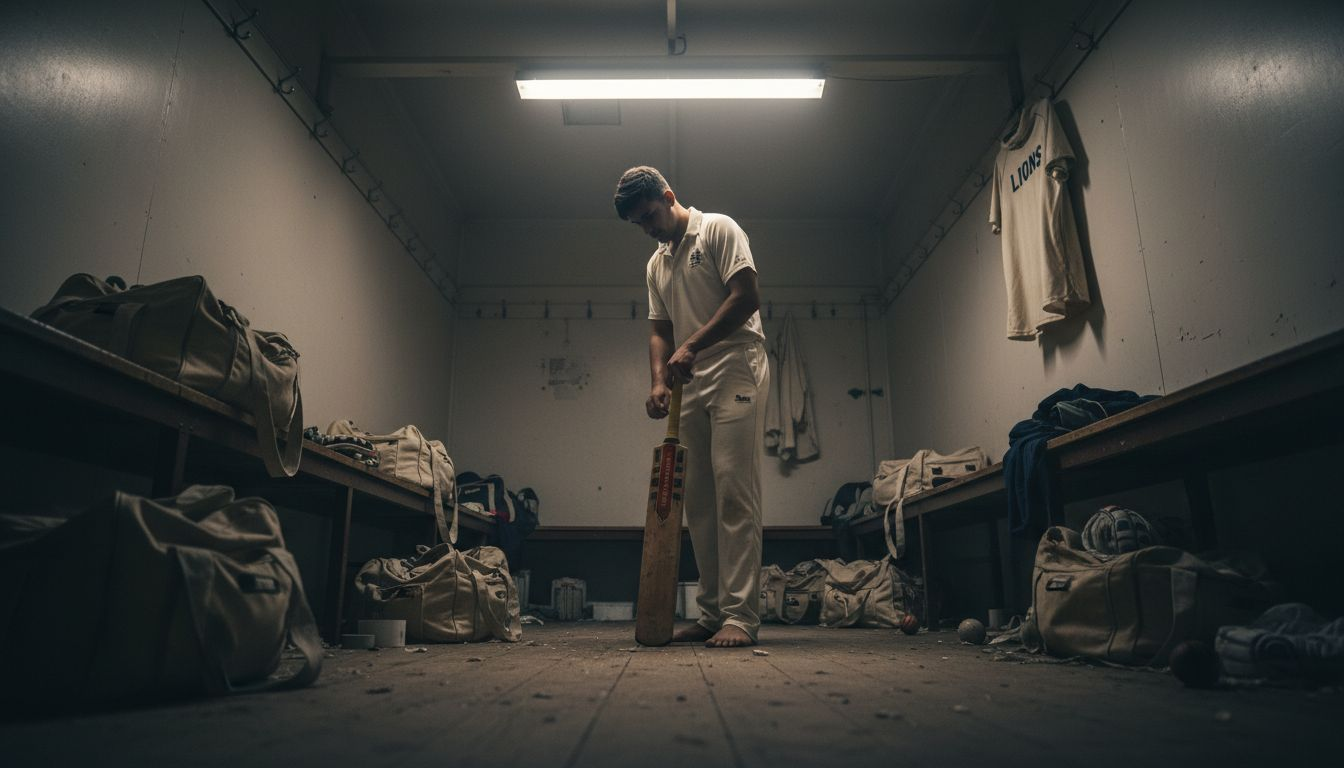
Carry out multiple practice swings to assess the bat’s responsiveness. A well matched bat will feel like a natural extension of your arm with smooth weight transfer and minimal strain. If possible ask an experienced coach or senior player to observe your technique and provide feedback on how the bat complements your individual playing style.
Expert Suggestion: Practice your batting technique with multiple bats before making a final purchase to ensure you find the most comfortable match for your playing style.
Step 4: Verify Weight Suitability for Play
Choosing the right cricket bat involves understanding bat performance characteristics that directly impact your gameplay. The weight of your bat is a critical factor that can significantly influence your batting technique and overall comfort during play.
To determine weight suitability, start by lifting the bat with your dominant hand. A well suited bat should feel comfortable and balanced without causing immediate strain. Cricket bat weight considerations suggest that younger players typically benefit from lighter bats around 2.4 to 2.7 pounds, while more experienced players might prefer slightly heavier options between 2.7 and 3 pounds. The key is finding a weight that allows you to swing smoothly and maintain control throughout your batting motion.
Pay attention to how the bat feels during practice swings. If you find yourself struggling to control the bat or experiencing rapid arm fatigue, it might be too heavy. Conversely, a bat that feels too light might not provide the power you need for effective shots. Your ideal bat weight should allow you to swing with confidence and maintain proper technique without excessive effort.
Expert Suggestion: Ask a coach or experienced player to observe your bat handling and provide feedback on weight suitability during practice sessions.
Step 5: Confirm Final Size With Grip and Balance
The last crucial step in selecting your cricket bat involves carefully evaluating cricket bat handle design to ensure optimal performance and comfort. Your grip and the bat’s balance are the final indicators that will determine whether you have found the perfect match for your playing style.
Grip assessment requires a hands on approach. Wrap your dominant hand around the bat handle and check for two key elements. First observe how naturally your hand fits the grip thickness. Bat fitting guidelines recommend that the grip should feel comfortable without causing strain or requiring excessive hand tension. Your fingers should wrap around smoothly with minimal additional effort. Next perform several practice swings to evaluate the bat’s overall balance point. A well balanced bat will feel like a natural extension of your arm moving seamlessly during different batting motions.
Pay close attention to how the bat feels during simulated shots. If you experience any awkward weight distribution or uncomfortable grip tension, consider trying alternative models. The perfect cricket bat should inspire confidence with every swing feeling like an intuitive part of your personal batting technique.
Expert Suggestion: Practice batting with multiple bats wearing your standard batting gloves to ensure consistent grip assessment and comfort.
This table summarises vital bat selection criteria and their impact on play:
| Selection Factor | Why It Matters | Impact on Batting | How to Test |
|---|---|---|---|
| Bat Length | Ensures proper stance | Affects reach/swing | Measure alongside body |
| Pickup Comfort | Promotes control | Influences technique | Practice swings |
| Weight Suitability | Reduces fatigue | Maintains shot power | Trial with swings |
| Grip/Balance | Provides hand comfort | Improves confidence | Simulate real shots |
Find Your Perfect Cricket Bat Fit Today
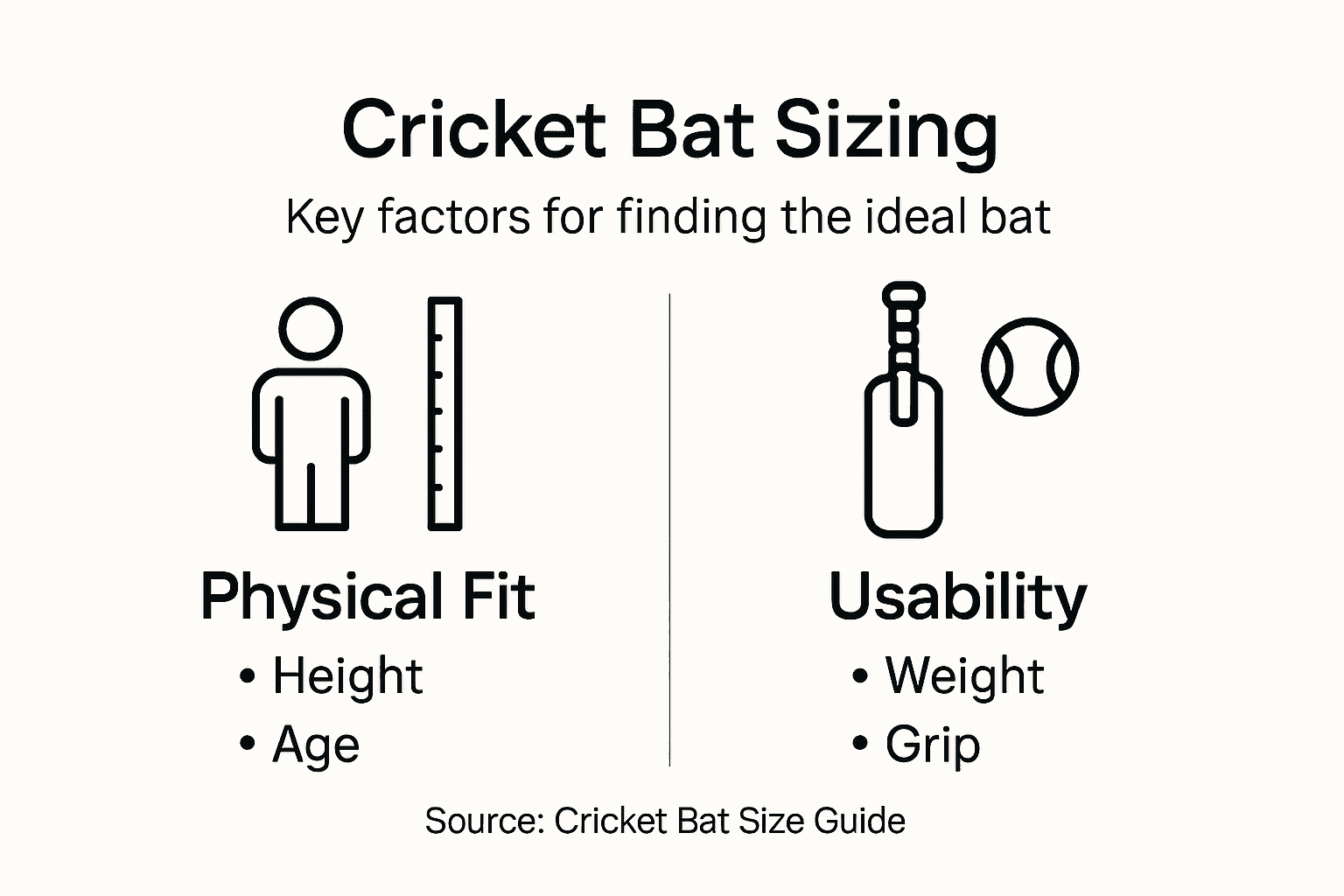
Choosing the right cricket bat size involves more than just picking a length or weight. It requires careful consideration of your height, age, and playing style to ensure maximum comfort, control, and confidence at the crease. This article highlights how important it is to prioritise pickup comfort, weight suitability, and grip balance when selecting your bat.
At cricketbats.com, we understand these challenges and offer a wide range of options tailored to your needs. Whether you are just starting out or a seasoned player, explore our collection of Junior Cricket Bats crafted to suit growing players, or browse top brands like adidas Cricket Bats for trusted performance.

Don’t let uncertain bat size hold back your game. Visit our Home page – Cricket Bats Com now to discover the perfect bat that matches your physical profile and playing style. Act today to experience the confidence that comes with using equipment designed just for you.
Frequently Asked Questions
How do I determine the right cricket bat size for my height?
To determine the right cricket bat size for your height, measure your height from the floor to the top of your head. Then, compare this measurement against standard bat size recommendations based on height ranges to select the appropriate bat length.
What age groups should I consider when choosing a cricket bat?
Consider your age group as it influences bat length recommendations. For example, younger players under 12 generally require shorter bats between 27 and 30 inches, while players aged 13 to 18 may need bats ranging from 31 to 34 inches.
What should I look for in bat weight suitability?
Weight suitability depends on how comfortable the bat feels when lifted and swung. Aim for a bat that feels balanced without causing strain; younger players often benefit from lighter bats of 2.4 to 2.7 pounds, while more experienced players may prefer bats weighing between 2.7 and 3 pounds.
How do I assess the pickup comfort of a cricket bat?
To assess pickup comfort, hold the bat alongside your body and check if it reaches your hip to waistline. Perform practice swings while noting if the bat feels well-balanced; a comfortable pickup contributes to better batting technique.
What should I evaluate for grip and balance in a cricket bat?
Evaluate the grip by wrapping your dominant hand around the handle to ensure it fits comfortably without excessive tension. Additionally, assess the bat’s overall balance during practice swings to confirm it feels like a natural extension of your arm.
How do I ensure I am choosing a cricket bat that suits my playing style?
To ensure the bat suits your playing style, try multiple bats while practicing your technique. Pay attention to how the bat performs during swings and ask for feedback from an experienced player to confirm it enhances your batting performance.
Recommended
Choosing the right cricket bat size can make or break your batting experience, yet more than 60 percent of junior players use bats that do not fit their height or age. For young athletes around the world, including those inspired by British cricket legends, the right bat brings better performance and avoids discomfort. This guide walks you through every step so you can find the perfect match and feel confident every time you step onto the pitch.
Table of Contents
- Step 1: Assess Your Age And Height
- Step 2: Compare Size Charts For Accurate Match
- Step 3: Test Bat Length And Pickup Comfort
- Step 4: Verify Weight Suitability For Play
- Step 5: Confirm Final Size With Grip And Balance
Quick Summary
| Key Insight | Explanation |
|---|---|
| 1. Determine Your Bat Length | Use age and height to choose an appropriate bat length for optimal performance. |
| 2. Test Grip Comfort | Ensure the bat grip feels natural and comfortable to improve handling and technique. |
| 3. Assess Bat Weight | Select a bat weight that allows smooth swings without causing fatigue during play. |
| 4. Confirm Balance During Use | A well-balanced bat enhances control and confidence while batting. |
| 5. Consult Experienced Players | Seek advice from coaches or skilled players to validate your bat selection process. |
Step 1: Assess Your Age and Height
Selecting the right cricket bat starts with understanding your physical dimensions. Age and height charts provide essential guidance for choosing a bat that fits your body perfectly and supports your playing technique.
Your height is the primary indicator for determining bat size. Most junior cricket players between 10 and 18 years will need different bat lengths based on their height range. Generally, younger players under 12 will use shorter bats around 27 to 30 inches, while teenagers approaching adult height might require bats between 32 to 34 inches. Growth patterns play a crucial role in selecting the right equipment.
To measure accurately, stand barefoot and have someone measure your height from the floor to the top of your head. Compare this measurement against standard bat size recommendations for your age group. Remember that comfort and proper grip are just as important as precise length.
Expert Suggestion: Ask a local cricket coach or experienced player to help you confirm your ideal bat size during an in-person measurement.
Here is a quick comparison of how age, height and bat size influence equipment selection:
| Age Group | Height Range | Recommended Bat Length | Typical Bat Weight |
|---|---|---|---|
| Under 12 years | 4’2"–4’8" (127–142 cm) | 27–30 inches | 2.4–2.6 pounds |
| 13 to 15 years | 4’9"–5’6" (145–167 cm) | 31–33 inches | 2.5–2.7 pounds |
| 15 to 18 years | 5’7"–6’2" (170–188 cm) | 33–34 inches | 2.7–3 pounds |
| Adult | Above 6’2" (189+ cm) | 34–38 inches | 2.8–3 pounds |
Step 2: Compare Size Charts for Accurate Match
Matching the perfect cricket bat requires careful comparison across multiple standard bat size charts. These charts are your roadmap to finding the most suitable equipment for your playing style and physical dimensions.
Typically, cricket bat size charts categorise measurements by age groups and height ranges. International bat standards indicate bats can range up to 38 inches in length and 4.25 inches in width. For junior players, this means systematically checking charts that correlate your exact height with recommended bat lengths. Pay close attention to the incremental changes between age groups as they can significantly impact your batting performance.
When comparing charts, focus on three key measurements: your current age, height, and preferred playing position. Some charts break down recommendations by junior categories like Under 11, Under 13, and Under 15, while others provide more granular height based recommendations. Cross reference multiple sources to ensure accuracy and consistency in your selection.
Expert Suggestion: Always try holding the actual bat before purchasing to confirm the size chart recommendation feels comfortable in your hands.
Step 3: Test Bat Length and Pickup Comfort
Understanding the nuanced cricket bat performance factors is crucial for selecting the right equipment. Pickup comfort refers to how a bat feels when you hold and swing it a critical aspect of batting technique that directly impacts your performance.
To properly test bat length and pickup, start by holding the bat vertically alongside your body. The ideal bat should reach somewhere between your hip and waistline when standing upright. Next, simulate batting motions by holding the bat and performing practice swings. Pay attention to how the bat feels balanced in your hands notice whether it feels too heavy at the top or awkwardly distributed. Cricket bat construction plays a significant role in determining this sensation of balance and comfort.
Carry out multiple practice swings to assess the bat’s responsiveness. A well matched bat will feel like a natural extension of your arm with smooth weight transfer and minimal strain. If possible ask an experienced coach or senior player to observe your technique and provide feedback on how the bat complements your individual playing style.
Expert Suggestion: Practice your batting technique with multiple bats before making a final purchase to ensure you find the most comfortable match for your playing style.
Step 4: Verify Weight Suitability for Play
Choosing the right cricket bat involves understanding bat performance characteristics that directly impact your gameplay. The weight of your bat is a critical factor that can significantly influence your batting technique and overall comfort during play.
To determine weight suitability, start by lifting the bat with your dominant hand. A well suited bat should feel comfortable and balanced without causing immediate strain. Cricket bat weight considerations suggest that younger players typically benefit from lighter bats around 2.4 to 2.7 pounds, while more experienced players might prefer slightly heavier options between 2.7 and 3 pounds. The key is finding a weight that allows you to swing smoothly and maintain control throughout your batting motion.
Pay attention to how the bat feels during practice swings. If you find yourself struggling to control the bat or experiencing rapid arm fatigue, it might be too heavy. Conversely, a bat that feels too light might not provide the power you need for effective shots. Your ideal bat weight should allow you to swing with confidence and maintain proper technique without excessive effort.
Expert Suggestion: Ask a coach or experienced player to observe your bat handling and provide feedback on weight suitability during practice sessions.
Step 5: Confirm Final Size With Grip and Balance
The last crucial step in selecting your cricket bat involves carefully evaluating cricket bat handle design to ensure optimal performance and comfort. Your grip and the bat’s balance are the final indicators that will determine whether you have found the perfect match for your playing style.
Grip assessment requires a hands on approach. Wrap your dominant hand around the bat handle and check for two key elements. First observe how naturally your hand fits the grip thickness. Bat fitting guidelines recommend that the grip should feel comfortable without causing strain or requiring excessive hand tension. Your fingers should wrap around smoothly with minimal additional effort. Next perform several practice swings to evaluate the bat’s overall balance point. A well balanced bat will feel like a natural extension of your arm moving seamlessly during different batting motions.
Pay close attention to how the bat feels during simulated shots. If you experience any awkward weight distribution or uncomfortable grip tension, consider trying alternative models. The perfect cricket bat should inspire confidence with every swing feeling like an intuitive part of your personal batting technique.
Expert Suggestion: Practice batting with multiple bats wearing your standard batting gloves to ensure consistent grip assessment and comfort.
This table summarises vital bat selection criteria and their impact on play:
| Selection Factor | Why It Matters | Impact on Batting | How to Test |
|---|---|---|---|
| Bat Length | Ensures proper stance | Affects reach/swing | Measure alongside body |
| Pickup Comfort | Promotes control | Influences technique | Practice swings |
| Weight Suitability | Reduces fatigue | Maintains shot power | Trial with swings |
| Grip/Balance | Provides hand comfort | Improves confidence | Simulate real shots |
Find Your Perfect Cricket Bat Fit Today
Choosing the right cricket bat size involves more than just picking a length or weight. It requires careful consideration of your height, age, and playing style to ensure maximum comfort, control, and confidence at the crease. This article highlights how important it is to prioritise pickup comfort, weight suitability, and grip balance when selecting your bat.
At cricketbats.com, we understand these challenges and offer a wide range of options tailored to your needs. Whether you are just starting out or a seasoned player, explore our collection of Junior Cricket Bats crafted to suit growing players, or browse top brands like adidas Cricket Bats for trusted performance.
Don’t let uncertain bat size hold back your game. Visit our Home page – Cricket Bats Com now to discover the perfect bat that matches your physical profile and playing style. Act today to experience the confidence that comes with using equipment designed just for you.
Frequently Asked Questions
How do I determine the right cricket bat size for my height?
To determine the right cricket bat size for your height, measure your height from the floor to the top of your head. Then, compare this measurement against standard bat size recommendations based on height ranges to select the appropriate bat length.
What age groups should I consider when choosing a cricket bat?
Consider your age group as it influences bat length recommendations. For example, younger players under 12 generally require shorter bats between 27 and 30 inches, while players aged 13 to 18 may need bats ranging from 31 to 34 inches.
What should I look for in bat weight suitability?
Weight suitability depends on how comfortable the bat feels when lifted and swung. Aim for a bat that feels balanced without causing strain; younger players often benefit from lighter bats of 2.4 to 2.7 pounds, while more experienced players may prefer bats weighing between 2.7 and 3 pounds.
How do I assess the pickup comfort of a cricket bat?
To assess pickup comfort, hold the bat alongside your body and check if it reaches your hip to waistline. Perform practice swings while noting if the bat feels well-balanced; a comfortable pickup contributes to better batting technique.
What should I evaluate for grip and balance in a cricket bat?
Evaluate the grip by wrapping your dominant hand around the handle to ensure it fits comfortably without excessive tension. Additionally, assess the bat’s overall balance during practice swings to confirm it feels like a natural extension of your arm.
How do I ensure I am choosing a cricket bat that suits my playing style?
To ensure the bat suits your playing style, try multiple bats while practicing your technique. Pay attention to how the bat performs during swings and ask for feedback from an experienced player to confirm it enhances your batting performance.