
News News
Role of Professional Batmakers: Elevating Player Performance Role of Professional Batmakers: Elevating Player Performance
Choosing your next cricket bat is about more than picking a brand or following trends—it is a decision shaped by your unique style and the demands of real performance. For players who want gear that genuinely enhances their game, understanding the work of a professional batmaker makes all the difference. Every detail, from timber selection to handcrafted shaping, transforms ordinary equipment into a true extension of your skills. Discover how skilled craftsmanship leads to bats that outperform mass-produced alternatives and why this expertise could change the way you play.
Table of Contents
- Defining The Professional Batmaker’s Craft
- Types Of Cricket Bats And Their Properties
- How Batmakers Enhance Bat Performance
- Customisation And Player-Specific Designs
- Common Misconceptions And Pitfalls
Key Takeaways
| Point | Details |
|---|---|
| Importance of Craftsmanship | Professional batmakers combine traditional techniques with modern precision to create custom bats that enhance player performance. |
| Wood Selection Matters | The type and quality of willow impact a bat’s durability and performance, with English willow preferred by professionals for its superior characteristics. |
| Customisation is Key | Tailored bats, designed around individual playing styles and preferences, provide significant performance improvements over standard options. |
| Avoid Common Misconceptions | Brand names and price tags do not guarantee quality; focus on the actual performance and proper maintenance of the bat instead. |
Defining the Professional Batmaker’s Craft
A professional batmaker is far more than someone who shapes wood. They’re a skilled craftsperson combining science, tradition, and intimate knowledge of the game to create bats that perform. Each bat represents hours of deliberate work and countless decisions that separate good equipment from game-changing gear.
The craft begins with understanding wood itself. Professional batmakers select premium-grade timber, typically English willow or Kashmir willow, based on grain structure, density, and moisture content. They inspect each plank meticulously, rejecting any wood with defects that might compromise performance or durability.
What distinguishes professionals from mass manufacturers is their hands-on approach to quality control. They don’t rely solely on machines. Instead, they combine traditional techniques with modern precision tools to achieve exact specifications that standard factory production simply cannot match.
The core responsibilities of a professional batmaker include:
- Selecting and seasoning premium timber with specific moisture profiles
- Hand-shaping the blade to achieve optimal weight distribution and balance points
- Testing and refining edge thickness for superior performance and durability
- Crafting handles that provide comfort and control tailored to individual players
- Finishing and protective coating applications using quality materials
- Quality inspection at multiple stages to identify and correct issues early
Understanding cricket bat manufacturing processes reveals why professional batmakers invest so much attention on the details that matter most to your game.
The philosophy behind professional batmaking centres on customisation and player-first design. Rather than producing thousands of identical bats, professionals work with specifications that reflect your playing style, strength, and preferences. A batmaker might adjust edge profile, handle shape, or weight distribution based on your feedback—something impossible in factory settings.
Professional batmakers view each bat as a partnership between craftsperson and player, where the tool is literally shaped around the individual wielding it.
They also understand wood behaviour in ways that purely technical training cannot teach. Years of handling timber teaches a batmaker how wood responds to humidity, temperature, and different playing conditions. This knowledge translates directly into bats that maintain performance throughout the season.
The investment in professional-made bats reflects this expertise. You’re purchasing not just a finished product, but the accumulated knowledge of someone who has spent years perfecting their craft. That expertise shows in every stroke.
Pro tip: When choosing a professional batmaker, ask about their experience with your playing style and format—they should tailor recommendations based on your specific needs, not just offer their standard catalogue.
Types of Cricket Bats and Their Properties
Not all cricket bats are created equal. The type you choose directly affects your ability to score runs, handle different deliveries, and maintain control throughout a match. Understanding what separates one bat from another helps you select equipment that genuinely suits your game.
The primary distinction comes down to willow type. English willow bats are lightweight, offer superior rebound, and deliver exceptional performance—making them the choice of professionals worldwide. Kashmir willow bats are heavier and more affordable, suiting amateur players developing their skills without the premium price tag.
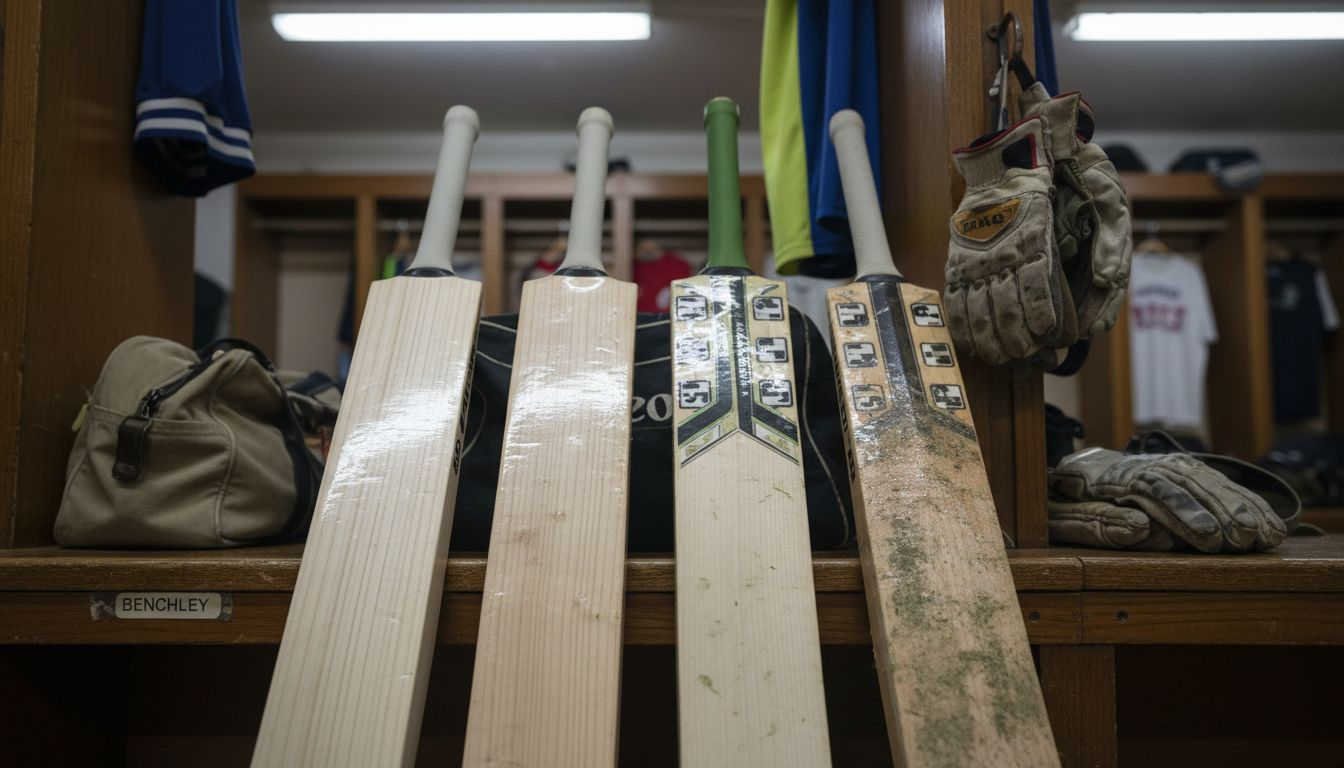
Here’s a concise comparison of the two main willow types used in cricket bats:
| Willow Type | Performance Characteristics | Typical Users | Durability and Price |
|---|---|---|---|
| English Willow | Superior rebound, lightweight, high power | Professionals & advanced amateurs | Excellent, premium-priced |
| Kashmir Willow | Heavier, less rebound, more affordable | Beginners & casual players | Good, budget-friendly |
Beyond willow choice, professional batmakers consider multiple design factors that impact how you play:
- Edge thickness influences power generation and sweet spot size
- Blade shape affects ball contact and control during different shot types
- Handle design determines comfort and vibration absorption
- Weight distribution changes how the bat feels and responds
- Grain structure in the wood affects durability and performance consistency
Research into historical bat design improvements reveals that modern designs significantly outperform older versions through optimised moment of inertia and sweet spot positioning, which increase power transfer whilst reducing vibration.
Bat length and weight vary based on your age, strength, and playing position. Younger players typically use shorter, lighter bats for better control, whilst experienced batters often prefer heavier bats for increased momentum and run-scoring potential.
The sweet spot—where the bat meets the ball with maximum efficiency—varies depending on edge profile and weight distribution. A professional batmaker positions this strategically based on your playing style.
Different formats demand different bat properties. T20 cricket favours lighter bats with larger sweet spots for aggressive shot-making. Test cricket allows heavier bats optimised for control and consistency over long innings. One-day cricket sits somewhere between, requiring balance and versatility.
To clarify how match formats influence bat selection, here’s a summary table:
| Cricket Format | Bat Design Priorities | Ideal Bat Features |
|---|---|---|
| T20 | Aggressive shot-making | Lightweight, enlarged sweet spot |
| Test | Control and durability | Heavier, balanced weight distribution |
| One-Day | Versatility and balance | Medium weight, adaptable profile |
Bat performance characteristics also depend on how professionals finish the wood. Protective coatings, handle wrapping, and edge sealing all influence durability and how the bat responds under various weather conditions throughout the season.
Pro tip: Test multiple bats with different edge profiles and weights before committing to your selection—what feels perfect in the nets might differ when facing genuine pace and swing.
How Batmakers Enhance Bat Performance
The difference between an average bat and a truly exceptional one lies in the techniques professional batmakers use to unlock its potential. These aren’t cosmetic touches—they’re strategic enhancements that directly affect how you perform at the crease.
Batmakers start by understanding what actually drives performance. Balance, pick-up, and sweet spot location matter far more than appearance or price tag. A skilled craftsperson knows that wood quality and precise construction determine whether you’ll generate consistent power or struggle through key moments.
One critical technique is controlled pressing. Professional batmakers apply targeted pressure to the wood fibres, enhancing their resilience and improving rebound characteristics. This isn’t random compression—it’s calculated, strategic pressure applied to specific areas where you’ll make contact with the ball.
Custom shaping is another game-changer:
- Adjusting blade thickness patterns to optimise weight distribution
- Crafting profiles that suit your particular batting style and strengths
- Positioning the sweet spot precisely where your technique naturally makes contact
- Creating blade curves that enhance ball control during different shot types
Handle fitting receives equally careful attention. Professional batmakers shape handles to reduce vibration and improve grip comfort, which directly translates to better control during intense play. A handle that fits your hands properly absorbs shock more effectively.
Batmakers don’t just manufacture bats; they engineer performance improvements tailored to your individual needs, playing format, and batting technique.
The wood preparation process itself makes a massive difference. Seasoning timber to exact moisture levels, selecting grain patterns that offer durability, and carefully inspecting for hidden flaws all contribute to a bat that performs consistently throughout the season.
Professional batmakers also understand that different formats demand different enhancements. A T20 bat requires different specifications than one optimised for Test cricket. They adjust pressing intensity, blade profiles, and weight distribution accordingly.
These enhancement techniques enable bats to deliver maximum power and control, but only when the fundamentals are right. This is why investing in a professionally made bat from someone who understands your game provides genuine performance gains.
Pro tip: Discuss your specific playing style, shot preferences, and match format with your batmaker before ordering—they can then tailor pressing, shaping, and handle design specifically to your needs.
Customisation and Player-Specific Designs
Off-the-shelf bats work for some players, but they rarely work perfectly for you. Professional batmakers recognise this fundamental truth and build customisation into everything they do. A bat truly tailored to your strengths, weaknesses, and playing style transforms your performance at the crease.
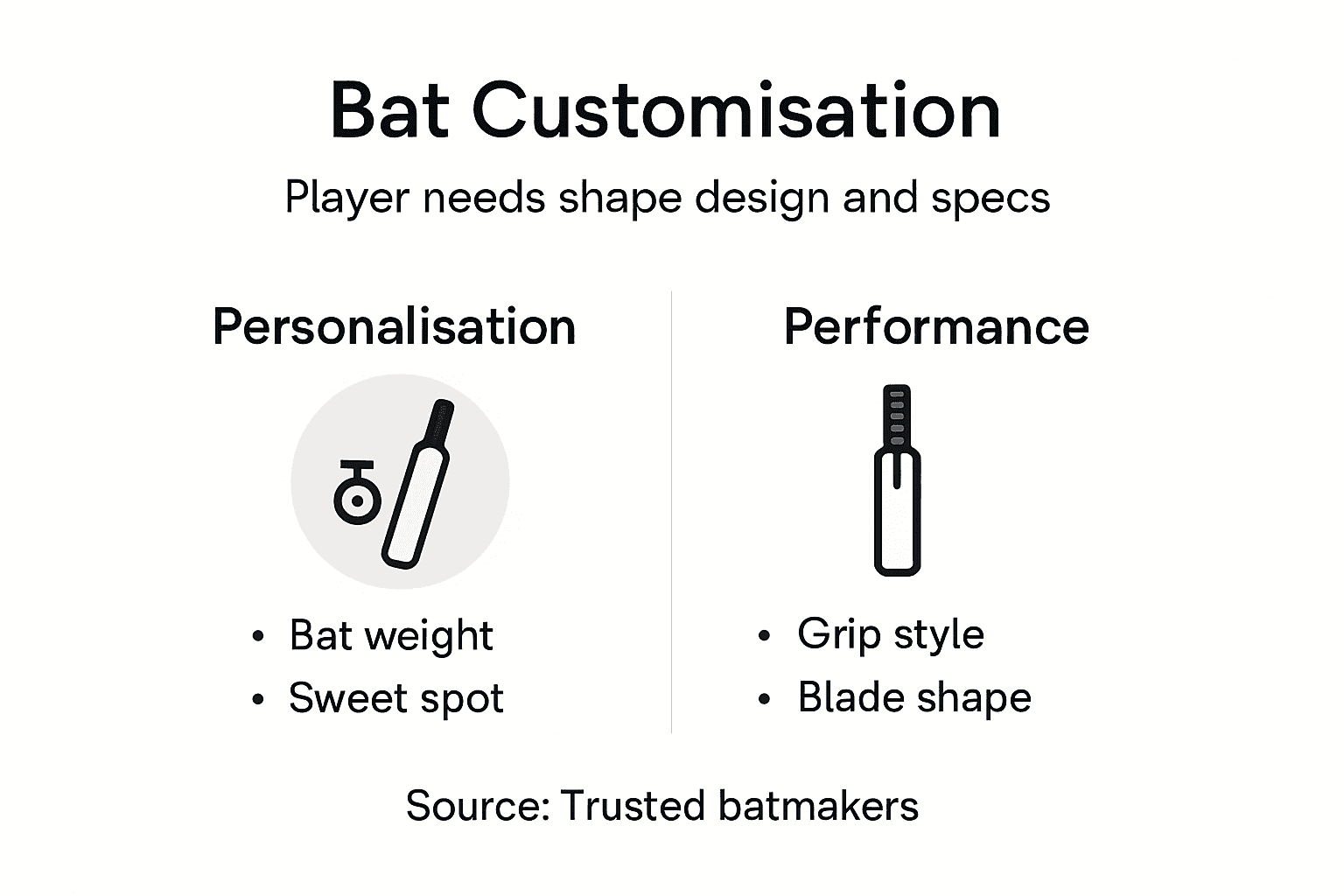
Customisation starts with understanding your game. A batmaker needs to know how you score runs, which deliveries trouble you most, and what equipment characteristics help you perform best. This isn’t a generic questionnaire—it’s a detailed conversation about your cricket.
Scientific optimisation now combines with traditional craftsmanship. Advanced techniques like parametric modelling and genetic algorithms allow batmakers to customise critical features such as vibration nodal points and the centre of percussion, directly enhancing ball velocity whilst reducing vibration.
Key customisation areas include:
- Weight distribution tailored to your strength and batting style
- Handle thickness and shape matching your hand size and grip preference
- Blade profile optimised for the shots you play most frequently
- Sweet spot positioning aligned with your natural technique
- Edge thickness suited to your playing aggression and match format
These modifications aren’t cosmetic adjustments. They’re fundamental design changes that affect how the bat performs when you actually use it. A lighter bat might suit aggressive T20 batting, whilst a heavier design provides stability during Test cricket.
Custom bats represent the intersection of craftsmanship and scientific optimisation, targeting your specific performance requirements rather than designing for an imaginary average player.
Professional batmakers also consider your physical characteristics. Taller players need different balance points than shorter batters. Stronger players benefit from different blade configurations than those still developing power. A batmaker takes these factors seriously.
The durability advantages of customised bats matter equally. Because the bat is designed around your specific technique, it experiences fewer stress points during normal use. You’ll get longer performance from equipment built precisely for you.
Customisation also accounts for match conditions. A bat optimised for English summer conditions might differ from one designed for Australian heat and dryness. Professional batmakers adjust accordingly.
Pro tip: Provide your batmaker with detailed information about your strongest shots, the deliveries you struggle against, and your typical scoring areas—these insights allow them to design a bat that genuinely enhances your natural strengths.
Common Misconceptions and Pitfalls
Players often make costly mistakes when selecting and maintaining cricket bats, frequently due to widespread myths about what actually matters. Understanding these pitfalls prevents you from wasting money on inferior equipment or damaging quality bats through poor care.
The biggest misconception is that brand name equals quality. A famous brand doesn’t guarantee superior performance. Handmade bats crafted by professional batmakers frequently outperform mass-produced counterparts due to superior wood selection, pressing methods, and individualised shaping. Marketing budgets and retail presence don’t translate to better bats.
Price is another misleading indicator. Expensive doesn’t automatically mean better. Conversely, cheap bats often deliver poor performance and create safety risks that undermine your game. The sweet spot lies in investing in professional-made equipment offering genuine value.
Common misconceptions include:
- Brand recognition guarantees performance advantages
- Heavier bats always generate more power
- Price tag reflects bat quality and durability
- Any willow bat performs identically to others
- Pressing and finishing are purely cosmetic processes
- Maintenance and knocking-in don’t significantly affect lifespan
Poor maintenance causes early bat failure regardless of quality. Many players underestimate the importance of proper knocking-in, which gradually prepares the wood fibres for match conditions. Skipping this process leads to early failures and disappointing performance.
Under-pressed or poorly finished bats are prone to damage and reduced lifespan, even if the raw materials were premium quality.
Another pitfall is expecting immediate performance from new bats. Quality equipment requires time to break in properly. The bat’s fibres need gradual conditioning through the knocking-in process before they perform optimally.
Players also mistake weight for quality. A heavier bat doesn’t guarantee superior performance if the weight distribution is poor. Professional batmakers understand that optimal balance matters far more than raw weight.
Finally, many players ignore wood quality entirely, assuming all willow is identical. This fundamentally misunderstands how grain structure, density, and moisture content directly affect performance and durability. Professional batmakers select timber with meticulous care precisely because these factors matter.
Pro tip: When evaluating a bat, focus on how it feels and performs during practice rather than trusting price tags or brand names—then commit to proper knocking-in to unlock its genuine potential.
Elevate Your Game with Expertly Crafted Cricket Bats
The article highlights the vital role professional batmakers play in transforming raw willow into customised, high-performance cricket bats that suit your unique playing style, weight preferences, and match format. If you have struggled with generic bats that do not fit your needs or felt uncertain about choosing the right balance and sweet spot placement for your technique, the solution lies in selecting quality equipment shaped by expertise and attention to detail. Key concerns like wood quality, precise weight distribution, and handle comfort impact every stroke you play.
At cricketbats.com, we understand these challenges and feature a curated collection of premium cricket bats from trusted brands that cater to players seeking performance and durability. Whether you are after an English willow bat tailored for advanced play or a Kashmir willow option for developing your skills, our range supports your growth with equipment designed to enhance control and power.
Explore our selection today to experience the difference that professional craftsmanship and player-specific design can make in your game.

Match your ambition with the right cricket bat now. Visit cricketbats.com to browse our expertly chosen bats and elevate every innings with gear crafted to empower your performance. Discover how proper equipment tailored for you turns potential into precision.
Frequently Asked Questions
What is the role of a professional batmaker in cricket?
A professional batmaker crafts cricket bats with a focus on player performance, combining traditional techniques and modern precision to create customised bats tailored to individual playing styles.
How do professional batmakers select the wood for cricket bats?
They choose premium-grade timber, typically English or Kashmir willow, based on grain structure, density, and moisture content, carefully inspecting each piece to ensure it meets performance and durability standards.
What are the key factors that influence bat performance?
Key factors include edge thickness, blade shape, handle design, weight distribution, and the positioning of the sweet spot, all of which are tailored to enhance the batting experience based on player specifications.
How can I ensure proper maintenance of my cricket bat?
Proper maintenance involves knocking-in the bat to prepare the wood fibres, avoiding exposure to moisture, and storing it in a cool, dry place to prevent damage and ensure longevity.
Recommended
- Cricket Bat Customisation Guide for Optimal Performance – Cricket Bats Com
- What Is Custom Bat Making and Why It Matters – Cricket Bats Com
- 7 Key Advantages of Branded Cricket Bats for Players – Cricket Bats Com
- Role of Club Level Bats – Impact on Amateur Performance – Cricket Bats Com
- How to Evaluate Player Performance in Basketball Effectively – Hoop Mentality
Choosing your next cricket bat is about more than picking a brand or following trends—it is a decision shaped by your unique style and the demands of real performance. For players who want gear that genuinely enhances their game, understanding the work of a professional batmaker makes all the difference. Every detail, from timber selection to handcrafted shaping, transforms ordinary equipment into a true extension of your skills. Discover how skilled craftsmanship leads to bats that outperform mass-produced alternatives and why this expertise could change the way you play.
Table of Contents
- Defining The Professional Batmaker’s Craft
- Types Of Cricket Bats And Their Properties
- How Batmakers Enhance Bat Performance
- Customisation And Player-Specific Designs
- Common Misconceptions And Pitfalls
Key Takeaways
| Point | Details |
|---|---|
| Importance of Craftsmanship | Professional batmakers combine traditional techniques with modern precision to create custom bats that enhance player performance. |
| Wood Selection Matters | The type and quality of willow impact a bat’s durability and performance, with English willow preferred by professionals for its superior characteristics. |
| Customisation is Key | Tailored bats, designed around individual playing styles and preferences, provide significant performance improvements over standard options. |
| Avoid Common Misconceptions | Brand names and price tags do not guarantee quality; focus on the actual performance and proper maintenance of the bat instead. |
Defining the Professional Batmaker’s Craft
A professional batmaker is far more than someone who shapes wood. They’re a skilled craftsperson combining science, tradition, and intimate knowledge of the game to create bats that perform. Each bat represents hours of deliberate work and countless decisions that separate good equipment from game-changing gear.
The craft begins with understanding wood itself. Professional batmakers select premium-grade timber, typically English willow or Kashmir willow, based on grain structure, density, and moisture content. They inspect each plank meticulously, rejecting any wood with defects that might compromise performance or durability.
What distinguishes professionals from mass manufacturers is their hands-on approach to quality control. They don’t rely solely on machines. Instead, they combine traditional techniques with modern precision tools to achieve exact specifications that standard factory production simply cannot match.
The core responsibilities of a professional batmaker include:
- Selecting and seasoning premium timber with specific moisture profiles
- Hand-shaping the blade to achieve optimal weight distribution and balance points
- Testing and refining edge thickness for superior performance and durability
- Crafting handles that provide comfort and control tailored to individual players
- Finishing and protective coating applications using quality materials
- Quality inspection at multiple stages to identify and correct issues early
Understanding cricket bat manufacturing processes reveals why professional batmakers invest so much attention on the details that matter most to your game.
The philosophy behind professional batmaking centres on customisation and player-first design. Rather than producing thousands of identical bats, professionals work with specifications that reflect your playing style, strength, and preferences. A batmaker might adjust edge profile, handle shape, or weight distribution based on your feedback—something impossible in factory settings.
Professional batmakers view each bat as a partnership between craftsperson and player, where the tool is literally shaped around the individual wielding it.
They also understand wood behaviour in ways that purely technical training cannot teach. Years of handling timber teaches a batmaker how wood responds to humidity, temperature, and different playing conditions. This knowledge translates directly into bats that maintain performance throughout the season.
The investment in professional-made bats reflects this expertise. You’re purchasing not just a finished product, but the accumulated knowledge of someone who has spent years perfecting their craft. That expertise shows in every stroke.
Pro tip: When choosing a professional batmaker, ask about their experience with your playing style and format—they should tailor recommendations based on your specific needs, not just offer their standard catalogue.
Types of Cricket Bats and Their Properties
Not all cricket bats are created equal. The type you choose directly affects your ability to score runs, handle different deliveries, and maintain control throughout a match. Understanding what separates one bat from another helps you select equipment that genuinely suits your game.
The primary distinction comes down to willow type. English willow bats are lightweight, offer superior rebound, and deliver exceptional performance—making them the choice of professionals worldwide. Kashmir willow bats are heavier and more affordable, suiting amateur players developing their skills without the premium price tag.
Here’s a concise comparison of the two main willow types used in cricket bats:
| Willow Type | Performance Characteristics | Typical Users | Durability and Price |
|---|---|---|---|
| English Willow | Superior rebound, lightweight, high power | Professionals & advanced amateurs | Excellent, premium-priced |
| Kashmir Willow | Heavier, less rebound, more affordable | Beginners & casual players | Good, budget-friendly |
Beyond willow choice, professional batmakers consider multiple design factors that impact how you play:
- Edge thickness influences power generation and sweet spot size
- Blade shape affects ball contact and control during different shot types
- Handle design determines comfort and vibration absorption
- Weight distribution changes how the bat feels and responds
- Grain structure in the wood affects durability and performance consistency
Research into historical bat design improvements reveals that modern designs significantly outperform older versions through optimised moment of inertia and sweet spot positioning, which increase power transfer whilst reducing vibration.
Bat length and weight vary based on your age, strength, and playing position. Younger players typically use shorter, lighter bats for better control, whilst experienced batters often prefer heavier bats for increased momentum and run-scoring potential.
The sweet spot—where the bat meets the ball with maximum efficiency—varies depending on edge profile and weight distribution. A professional batmaker positions this strategically based on your playing style.
Different formats demand different bat properties. T20 cricket favours lighter bats with larger sweet spots for aggressive shot-making. Test cricket allows heavier bats optimised for control and consistency over long innings. One-day cricket sits somewhere between, requiring balance and versatility.
To clarify how match formats influence bat selection, here’s a summary table:
| Cricket Format | Bat Design Priorities | Ideal Bat Features |
|---|---|---|
| T20 | Aggressive shot-making | Lightweight, enlarged sweet spot |
| Test | Control and durability | Heavier, balanced weight distribution |
| One-Day | Versatility and balance | Medium weight, adaptable profile |
Bat performance characteristics also depend on how professionals finish the wood. Protective coatings, handle wrapping, and edge sealing all influence durability and how the bat responds under various weather conditions throughout the season.
Pro tip: Test multiple bats with different edge profiles and weights before committing to your selection—what feels perfect in the nets might differ when facing genuine pace and swing.
How Batmakers Enhance Bat Performance
The difference between an average bat and a truly exceptional one lies in the techniques professional batmakers use to unlock its potential. These aren’t cosmetic touches—they’re strategic enhancements that directly affect how you perform at the crease.
Batmakers start by understanding what actually drives performance. Balance, pick-up, and sweet spot location matter far more than appearance or price tag. A skilled craftsperson knows that wood quality and precise construction determine whether you’ll generate consistent power or struggle through key moments.
One critical technique is controlled pressing. Professional batmakers apply targeted pressure to the wood fibres, enhancing their resilience and improving rebound characteristics. This isn’t random compression—it’s calculated, strategic pressure applied to specific areas where you’ll make contact with the ball.
Custom shaping is another game-changer:
- Adjusting blade thickness patterns to optimise weight distribution
- Crafting profiles that suit your particular batting style and strengths
- Positioning the sweet spot precisely where your technique naturally makes contact
- Creating blade curves that enhance ball control during different shot types
Handle fitting receives equally careful attention. Professional batmakers shape handles to reduce vibration and improve grip comfort, which directly translates to better control during intense play. A handle that fits your hands properly absorbs shock more effectively.
Batmakers don’t just manufacture bats; they engineer performance improvements tailored to your individual needs, playing format, and batting technique.
The wood preparation process itself makes a massive difference. Seasoning timber to exact moisture levels, selecting grain patterns that offer durability, and carefully inspecting for hidden flaws all contribute to a bat that performs consistently throughout the season.
Professional batmakers also understand that different formats demand different enhancements. A T20 bat requires different specifications than one optimised for Test cricket. They adjust pressing intensity, blade profiles, and weight distribution accordingly.
These enhancement techniques enable bats to deliver maximum power and control, but only when the fundamentals are right. This is why investing in a professionally made bat from someone who understands your game provides genuine performance gains.
Pro tip: Discuss your specific playing style, shot preferences, and match format with your batmaker before ordering—they can then tailor pressing, shaping, and handle design specifically to your needs.
Customisation and Player-Specific Designs
Off-the-shelf bats work for some players, but they rarely work perfectly for you. Professional batmakers recognise this fundamental truth and build customisation into everything they do. A bat truly tailored to your strengths, weaknesses, and playing style transforms your performance at the crease.
Customisation starts with understanding your game. A batmaker needs to know how you score runs, which deliveries trouble you most, and what equipment characteristics help you perform best. This isn’t a generic questionnaire—it’s a detailed conversation about your cricket.
Scientific optimisation now combines with traditional craftsmanship. Advanced techniques like parametric modelling and genetic algorithms allow batmakers to customise critical features such as vibration nodal points and the centre of percussion, directly enhancing ball velocity whilst reducing vibration.
Key customisation areas include:
- Weight distribution tailored to your strength and batting style
- Handle thickness and shape matching your hand size and grip preference
- Blade profile optimised for the shots you play most frequently
- Sweet spot positioning aligned with your natural technique
- Edge thickness suited to your playing aggression and match format
These modifications aren’t cosmetic adjustments. They’re fundamental design changes that affect how the bat performs when you actually use it. A lighter bat might suit aggressive T20 batting, whilst a heavier design provides stability during Test cricket.
Custom bats represent the intersection of craftsmanship and scientific optimisation, targeting your specific performance requirements rather than designing for an imaginary average player.
Professional batmakers also consider your physical characteristics. Taller players need different balance points than shorter batters. Stronger players benefit from different blade configurations than those still developing power. A batmaker takes these factors seriously.
The durability advantages of customised bats matter equally. Because the bat is designed around your specific technique, it experiences fewer stress points during normal use. You’ll get longer performance from equipment built precisely for you.
Customisation also accounts for match conditions. A bat optimised for English summer conditions might differ from one designed for Australian heat and dryness. Professional batmakers adjust accordingly.
Pro tip: Provide your batmaker with detailed information about your strongest shots, the deliveries you struggle against, and your typical scoring areas—these insights allow them to design a bat that genuinely enhances your natural strengths.
Common Misconceptions and Pitfalls
Players often make costly mistakes when selecting and maintaining cricket bats, frequently due to widespread myths about what actually matters. Understanding these pitfalls prevents you from wasting money on inferior equipment or damaging quality bats through poor care.
The biggest misconception is that brand name equals quality. A famous brand doesn’t guarantee superior performance. Handmade bats crafted by professional batmakers frequently outperform mass-produced counterparts due to superior wood selection, pressing methods, and individualised shaping. Marketing budgets and retail presence don’t translate to better bats.
Price is another misleading indicator. Expensive doesn’t automatically mean better. Conversely, cheap bats often deliver poor performance and create safety risks that undermine your game. The sweet spot lies in investing in professional-made equipment offering genuine value.
Common misconceptions include:
- Brand recognition guarantees performance advantages
- Heavier bats always generate more power
- Price tag reflects bat quality and durability
- Any willow bat performs identically to others
- Pressing and finishing are purely cosmetic processes
- Maintenance and knocking-in don’t significantly affect lifespan
Poor maintenance causes early bat failure regardless of quality. Many players underestimate the importance of proper knocking-in, which gradually prepares the wood fibres for match conditions. Skipping this process leads to early failures and disappointing performance.
Under-pressed or poorly finished bats are prone to damage and reduced lifespan, even if the raw materials were premium quality.
Another pitfall is expecting immediate performance from new bats. Quality equipment requires time to break in properly. The bat’s fibres need gradual conditioning through the knocking-in process before they perform optimally.
Players also mistake weight for quality. A heavier bat doesn’t guarantee superior performance if the weight distribution is poor. Professional batmakers understand that optimal balance matters far more than raw weight.
Finally, many players ignore wood quality entirely, assuming all willow is identical. This fundamentally misunderstands how grain structure, density, and moisture content directly affect performance and durability. Professional batmakers select timber with meticulous care precisely because these factors matter.
Pro tip: When evaluating a bat, focus on how it feels and performs during practice rather than trusting price tags or brand names—then commit to proper knocking-in to unlock its genuine potential.
Elevate Your Game with Expertly Crafted Cricket Bats
The article highlights the vital role professional batmakers play in transforming raw willow into customised, high-performance cricket bats that suit your unique playing style, weight preferences, and match format. If you have struggled with generic bats that do not fit your needs or felt uncertain about choosing the right balance and sweet spot placement for your technique, the solution lies in selecting quality equipment shaped by expertise and attention to detail. Key concerns like wood quality, precise weight distribution, and handle comfort impact every stroke you play.
At cricketbats.com, we understand these challenges and feature a curated collection of premium cricket bats from trusted brands that cater to players seeking performance and durability. Whether you are after an English willow bat tailored for advanced play or a Kashmir willow option for developing your skills, our range supports your growth with equipment designed to enhance control and power.
Explore our selection today to experience the difference that professional craftsmanship and player-specific design can make in your game.
Match your ambition with the right cricket bat now. Visit cricketbats.com to browse our expertly chosen bats and elevate every innings with gear crafted to empower your performance. Discover how proper equipment tailored for you turns potential into precision.
Frequently Asked Questions
What is the role of a professional batmaker in cricket?
A professional batmaker crafts cricket bats with a focus on player performance, combining traditional techniques and modern precision to create customised bats tailored to individual playing styles.
How do professional batmakers select the wood for cricket bats?
They choose premium-grade timber, typically English or Kashmir willow, based on grain structure, density, and moisture content, carefully inspecting each piece to ensure it meets performance and durability standards.
What are the key factors that influence bat performance?
Key factors include edge thickness, blade shape, handle design, weight distribution, and the positioning of the sweet spot, all of which are tailored to enhance the batting experience based on player specifications.
How can I ensure proper maintenance of my cricket bat?
Proper maintenance involves knocking-in the bat to prepare the wood fibres, avoiding exposure to moisture, and storing it in a cool, dry place to prevent damage and ensure longevity.
Recommended
- Cricket Bat Customisation Guide for Optimal Performance – Cricket Bats Com
- What Is Custom Bat Making and Why It Matters – Cricket Bats Com
- 7 Key Advantages of Branded Cricket Bats for Players – Cricket Bats Com
- Role of Club Level Bats – Impact on Amateur Performance – Cricket Bats Com
- How to Evaluate Player Performance in Basketball Effectively – Hoop Mentality