
News News
Cricket Bat Maintenance Explained: Boost Performance & Lifespan Cricket Bat Maintenance Explained: Boost Performance & Lifespan
Most british cricket bats on the pitch owe their legendary performance to proper care, not just natural talent. For amateur cricketers in Australia, neglecting bat maintenance can slash your bat’s lifespan by over 50 percent and leave you struggling to match your best innings. Knowing how to protect your prized equipment from heat, moisture, and rough handling means more consistent match days and fewer costly replacements. Discover expert habits that set dedicated players apart and keep your bat competition ready season after season.
Table of Contents
- What Is Cricket Bat Maintenance?
- Types Of Cricket Bats And Care Needs
- Key Steps In Maintaining Your Bat
- Storing, Handling, And Weather Effects
- Common Maintenance Mistakes To Avoid
Key Takeaways
| Point | Details |
|---|---|
| Cricket Bat Maintenance is Essential | Regular maintenance practices enhance the bat’s performance and extend its lifespan across seasons. |
| Different Bats Require Specific Care | English willow and Kashmir willow bats have unique maintenance needs that should be matched to their construction and use. |
| Proper Storage and Handling are Crucial | Store bats in controlled environments and handle them with care to prevent damage from temperature fluctuations and physical impacts. |
| Avoid Common Maintenance Mistakes | Prevent structural damage by correctly applying oil, addressing minor cracks, and adhering to a consistent maintenance routine. |
What Is Cricket Bat Maintenance?
Cricket bat maintenance is a systematic approach to preserving and protecting your cricket bat’s structural integrity, performance, and longevity. At its core, maintenance involves a series of deliberate care practices designed to prevent wood damage, maintain playing characteristics, and extend the bat’s usable life across multiple cricket seasons.
The fundamental goal of bat maintenance is to protect the wooden bat from environmental factors and physical stress. Cricket bat maintenance techniques involve several critical processes, including wood conditioning, moisture management, and protective treatments. These practices help players ensure their bats remain responsive, structurally sound, and capable of delivering optimal performance during matches.
Typical maintenance activities include knocking in new bats to compress wood fibres, applying linseed oil to seal and protect the surface, using protective toe guards, and conducting regular inspections for potential damage. Professional cricketers and serious amateur players understand that a well-maintained bat can significantly enhance playing experience and prevent premature equipment deterioration.
Pro tip: Always store your cricket bat in a cool, dry environment and avoid exposing it to extreme temperature fluctuations or direct sunlight to prevent wood warping and cracking.
Types Of Cricket Bats And Care Needs
Cricket bats represent a diverse range of equipment designed to suit different playing styles, skill levels, and performance requirements. Understanding the various types of cricket bats is crucial for selecting the right tool and implementing appropriate maintenance strategies. Types of cricket bats typically include English willow and Kashmir willow bats, each with unique characteristics that demand specific care approaches.
English willow bats, prized for their superior quality and performance, require more meticulous maintenance due to their delicate wood structure. These high-end bats are typically used by professional and advanced amateur players, necessitating careful oiling, regular inspection, and controlled storage conditions. Kashmir willow bats, more affordable and durable, are often preferred by recreational players and juniors, offering a more robust option that can withstand slightly less rigorous maintenance.
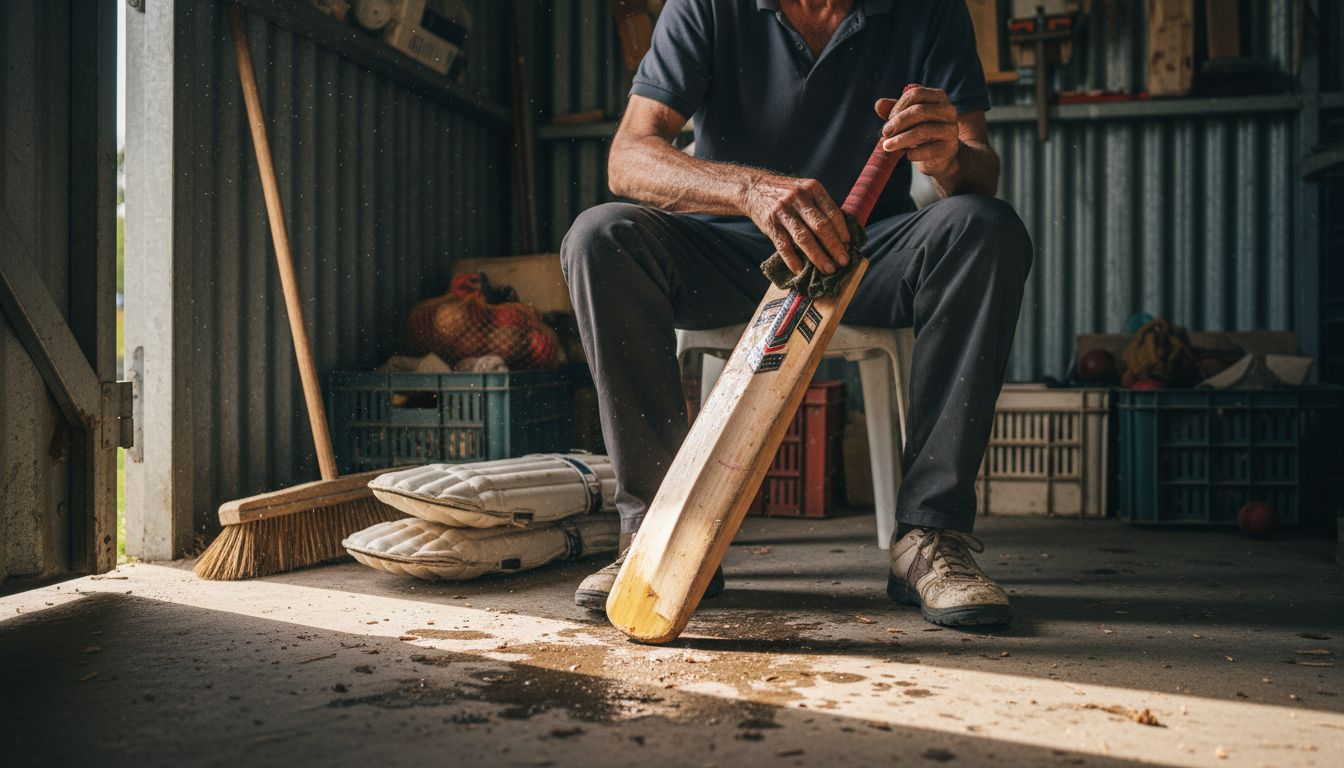
The care needs for cricket bats vary significantly based on their construction and intended use. Professional-grade bats require more intensive maintenance, including precise knocking-in processes, regular linseed oil applications, and protection from moisture and temperature variations. Recreational bats, while more forgiving, still demand consistent care to prevent premature wood deterioration, cracking, and performance decline. Factors such as batting frequency, playing conditions, and storage environment play critical roles in determining the specific maintenance regimen.
Pro tip: Always match your maintenance routine to your bat’s specific wood type and quality, understanding that a one-size-fits-all approach will not effectively preserve your cricket equipment.
Here is a comparison of English willow and Kashmir willow bats and their maintenance needs:
| Attribute | English Willow Bat | Kashmir Willow Bat |
|---|---|---|
| Wood Quality | Premium, fine-grained willow | Coarser, more robust willow |
| Maintenance Required | Meticulous, frequent care | Moderate, less intensive |
| Typical Users | Professionals, advanced | Juniors, casual players |
| Durability | Less durable, delicate | Highly durable, resilient |
| Cost | High price point | More affordable |
Key Steps In Maintaining Your Bat
Maintaining a cricket bat requires a systematic approach that encompasses multiple critical steps designed to preserve its structural integrity and performance potential. Cricket bat maintenance tips provide essential guidance for players seeking to extend their equipment’s lifespan and ensure optimal playing conditions. The most fundamental maintenance process begins with understanding the unique requirements of your specific bat type and implementing targeted care strategies.
The initial stage of bat maintenance involves comprehensive knocking-in, a crucial process that prepares the bat’s wood fibres for competitive play. This technique involves repeatedly striking the bat’s surface with a specialised wooden mallet, gradually compressing the wood and reducing the risk of premature cracking. Professional players typically spend between 6-10 hours carefully knocking in a new bat, using progressively harder strikes to create a resilient playing surface that can withstand high-impact cricket shots.
Subsequent maintenance steps include regular oiling, which helps protect the bat’s wooden surface from moisture absorption and potential structural damage. Players should apply a thin, even layer of linseed oil, carefully avoiding oversaturation that could compromise the bat’s structural integrity. Additionally, storing the bat in a controlled environment away from extreme temperatures and humidity is critical. This involves using protective covers, maintaining consistent room temperatures, and avoiding direct sunlight or damp storage conditions that could warp or degrade the wood.
Pro tip: Invest in a quality bat cover and store your cricket bat vertically in a cool, dry place to minimise potential wood warping and maintain its structural performance.
This table summarises key cricket bat maintenance processes and their main purposes:
| Maintenance Step | Purpose | Impact on Bat Performance |
|---|---|---|
| Knocking-in | Compresses wood fibres | Reduces cracking risk |
| Linseed Oil Application | Protects against moisture | Preserves bat structure |
| Regular Inspection | Identifies early damage | Prevents long-term issues |
| Controlled Storage | Minimises environmental stress | Extends bat lifespan |
Storing, Handling, And Weather Effects
Proper storage, careful handling, and understanding weather impacts are critical components of comprehensive cricket bat maintenance. How to clean cricket bats highlights the importance of protecting your equipment from environmental challenges that can significantly compromise its structural integrity and performance potential. Temperature, humidity, and physical handling play pivotal roles in determining a bat’s longevity and playing characteristics.
Environmental factors pose substantial risks to cricket bat preservation. Extreme temperature variations can cause wood fibres to expand and contract, leading to microscopic fractures and potential structural weakening. Humidity presents an equally challenging threat, with excessive moisture potentially causing wood warping, mould development, and compromised bat performance. Professional players typically store their bats in temperature-controlled environments, maintaining consistent room temperatures between 18-22 degrees Celsius and avoiding locations with dramatic humidity fluctuations.
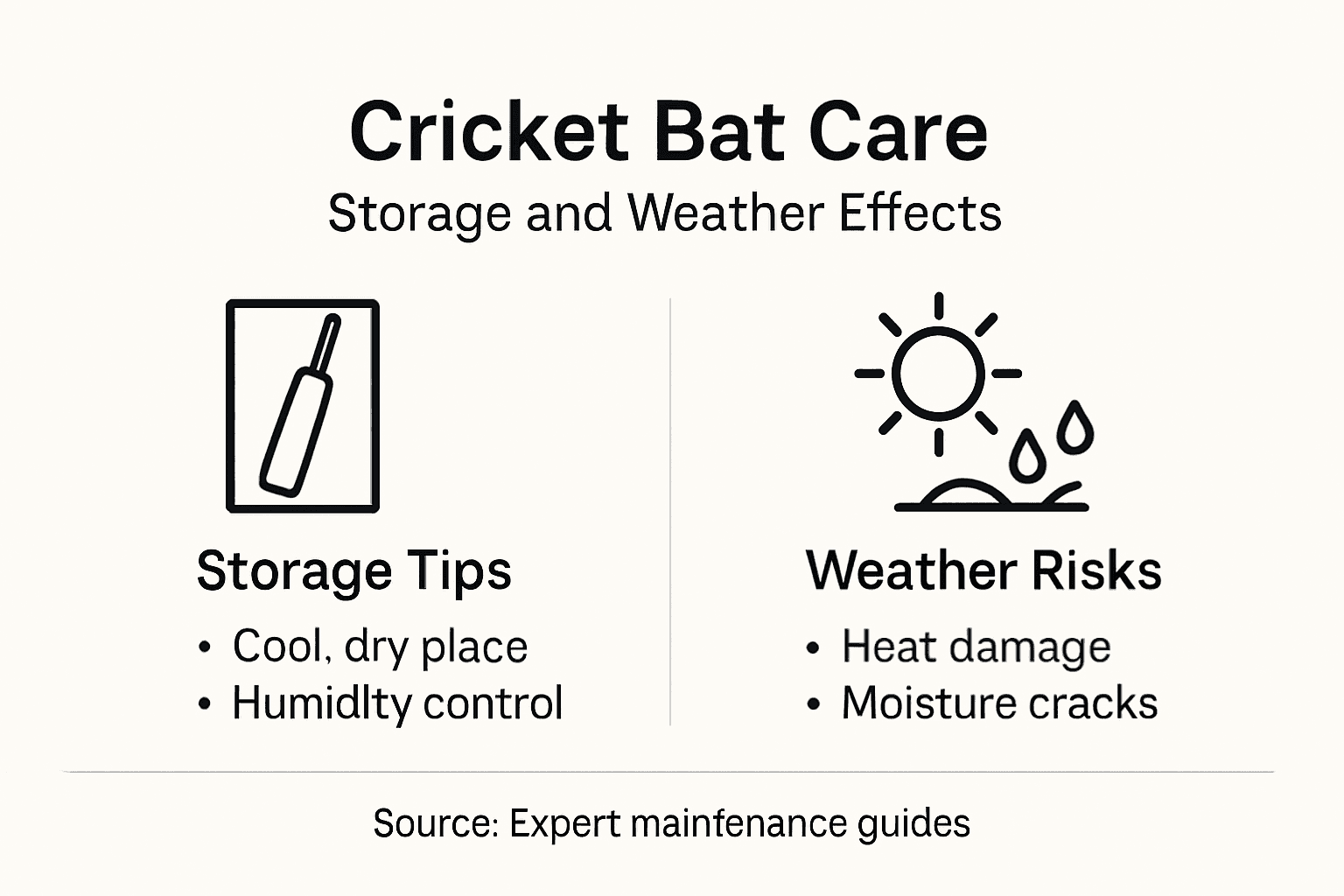
Handling techniques are equally crucial in bat maintenance. Players must develop a nuanced approach to physical interaction with their equipment, avoiding unnecessary impacts and minimising exposure to potential damage. This involves using dedicated bat carriers, avoiding leaning the bat against surfaces, and preventing accidental impacts during transportation and storage. The bat’s toe region remains particularly vulnerable, requiring special protective measures such as toe guards and careful placement to prevent structural damage during non-playing periods.
Pro tip: Invest in a specialised cricket bat cover with humidity control features and always transport your bat in a padded, temperature-regulated bag to minimise environmental stress.
Common Maintenance Mistakes To Avoid
Maintaining a cricket bat requires precision and careful attention to detail. Cricket bat maintenance techniques reveal numerous common errors that can dramatically reduce a bat’s performance and lifespan. Understanding these pitfalls is crucial for players seeking to preserve their cricket equipment and maintain optimal playing conditions.
One of the most significant maintenance mistakes involves improper oiling practices. Excessive or uneven oil application can catastrophically compromise the bat’s structural integrity, causing wood fibres to soften and lose their natural resilience. Players often make the critical error of applying oil near the handle or bottom edges, which can create long-term damage. Professionals recommend using a minimal, evenly distributed layer of linseed oil, carefully applied to prevent oversaturation that might weaken the wood’s natural strength.
Additional maintenance errors include neglecting the critical knocking-in process, using the bat inappropriately to remove dirt or spikes, and storing equipment in environments with extreme temperature or humidity variations. Many amateur players overlook small surface cracks, which can rapidly develop into significant structural weaknesses if left unaddressed. Ignoring these early warning signs of potential damage can lead to premature bat failure, rendering expensive equipment unusable and potentially dangerous during play.
Pro tip: Inspect your cricket bat thoroughly after each use, addressing even minor imperfections immediately to prevent more significant damage developing over time.
Protect Your Investment with Expert Cricket Bat Care
Maintaining the performance and lifespan of your cricket bat is essential to avoid costly replacements and keep your game at its best. The article highlights key challenges such as proper knocking-in, linseed oil application, and protecting your bat from harsh weather conditions. Many players struggle with these steps, risking premature cracking or warping. Whether you use a professional English willow bat or a durable Kashmir willow model, understanding these maintenance essentials is crucial.
New Balance Cricket Bats – Cricket Bats Com offers a premium range of bats designed for both performance and durability.

Upgrade your cricket gear now and secure the right bat that matches your maintenance needs and playing style. Visit cricketbats.com to explore our carefully curated collection with expert advice and free shipping. Start protecting your bat today with quality equipment and accessories from trusted brands. For younger players, be sure to check the Junior Cricket Bats | Cheap Junior Cricket Bats – Cricket Bats Com section to find suitable options that stand up well to regular care.
Don’t wait until damage happens. Take control of your cricket bat’s health with the right tools and expert guidance from our site.
Frequently Asked Questions
What are the essential steps in maintaining a cricket bat?
The key steps in maintaining a cricket bat include knocking in the bat to compress wood fibres, regularly applying linseed oil to protect against moisture, conducting thorough inspections for damage, and storing the bat in a controlled environment to minimise environmental stress.
How often should I oil my cricket bat, and how should I do it?
You should apply linseed oil to your cricket bat regularly, ideally every 3-4 weeks during the playing season. Apply a thin, even layer to the surface of the bat, ensuring not to oversaturate to avoid compromising its structural integrity.
What are the differences between English willow and Kashmir willow bats in terms of maintenance?
English willow bats require more meticulous maintenance due to their finer quality and delicateness, needing frequent oiling and careful inspection. In contrast, Kashmir willow bats are more robust and durable, requiring less intensive maintenance while still needing consistent care to prevent deterioration.
What common mistakes should I avoid when maintaining my cricket bat?
Common mistakes include applying too much or uneven linseed oil, neglecting the knocking-in process, and not inspecting the bat for small cracks after use. It’s crucial to address any minor imperfections immediately to prevent them from developing into larger issues.
Recommended
Most british cricket bats on the pitch owe their legendary performance to proper care, not just natural talent. For amateur cricketers in Australia, neglecting bat maintenance can slash your bat’s lifespan by over 50 percent and leave you struggling to match your best innings. Knowing how to protect your prized equipment from heat, moisture, and rough handling means more consistent match days and fewer costly replacements. Discover expert habits that set dedicated players apart and keep your bat competition ready season after season.
Table of Contents
- What Is Cricket Bat Maintenance?
- Types Of Cricket Bats And Care Needs
- Key Steps In Maintaining Your Bat
- Storing, Handling, And Weather Effects
- Common Maintenance Mistakes To Avoid
Key Takeaways
| Point | Details |
|---|---|
| Cricket Bat Maintenance is Essential | Regular maintenance practices enhance the bat’s performance and extend its lifespan across seasons. |
| Different Bats Require Specific Care | English willow and Kashmir willow bats have unique maintenance needs that should be matched to their construction and use. |
| Proper Storage and Handling are Crucial | Store bats in controlled environments and handle them with care to prevent damage from temperature fluctuations and physical impacts. |
| Avoid Common Maintenance Mistakes | Prevent structural damage by correctly applying oil, addressing minor cracks, and adhering to a consistent maintenance routine. |
What Is Cricket Bat Maintenance?
Cricket bat maintenance is a systematic approach to preserving and protecting your cricket bat’s structural integrity, performance, and longevity. At its core, maintenance involves a series of deliberate care practices designed to prevent wood damage, maintain playing characteristics, and extend the bat’s usable life across multiple cricket seasons.
The fundamental goal of bat maintenance is to protect the wooden bat from environmental factors and physical stress. Cricket bat maintenance techniques involve several critical processes, including wood conditioning, moisture management, and protective treatments. These practices help players ensure their bats remain responsive, structurally sound, and capable of delivering optimal performance during matches.
Typical maintenance activities include knocking in new bats to compress wood fibres, applying linseed oil to seal and protect the surface, using protective toe guards, and conducting regular inspections for potential damage. Professional cricketers and serious amateur players understand that a well-maintained bat can significantly enhance playing experience and prevent premature equipment deterioration.
Pro tip: Always store your cricket bat in a cool, dry environment and avoid exposing it to extreme temperature fluctuations or direct sunlight to prevent wood warping and cracking.
Types Of Cricket Bats And Care Needs
Cricket bats represent a diverse range of equipment designed to suit different playing styles, skill levels, and performance requirements. Understanding the various types of cricket bats is crucial for selecting the right tool and implementing appropriate maintenance strategies. Types of cricket bats typically include English willow and Kashmir willow bats, each with unique characteristics that demand specific care approaches.
English willow bats, prized for their superior quality and performance, require more meticulous maintenance due to their delicate wood structure. These high-end bats are typically used by professional and advanced amateur players, necessitating careful oiling, regular inspection, and controlled storage conditions. Kashmir willow bats, more affordable and durable, are often preferred by recreational players and juniors, offering a more robust option that can withstand slightly less rigorous maintenance.
The care needs for cricket bats vary significantly based on their construction and intended use. Professional-grade bats require more intensive maintenance, including precise knocking-in processes, regular linseed oil applications, and protection from moisture and temperature variations. Recreational bats, while more forgiving, still demand consistent care to prevent premature wood deterioration, cracking, and performance decline. Factors such as batting frequency, playing conditions, and storage environment play critical roles in determining the specific maintenance regimen.
Pro tip: Always match your maintenance routine to your bat’s specific wood type and quality, understanding that a one-size-fits-all approach will not effectively preserve your cricket equipment.
Here is a comparison of English willow and Kashmir willow bats and their maintenance needs:
| Attribute | English Willow Bat | Kashmir Willow Bat |
|---|---|---|
| Wood Quality | Premium, fine-grained willow | Coarser, more robust willow |
| Maintenance Required | Meticulous, frequent care | Moderate, less intensive |
| Typical Users | Professionals, advanced | Juniors, casual players |
| Durability | Less durable, delicate | Highly durable, resilient |
| Cost | High price point | More affordable |
Key Steps In Maintaining Your Bat
Maintaining a cricket bat requires a systematic approach that encompasses multiple critical steps designed to preserve its structural integrity and performance potential. Cricket bat maintenance tips provide essential guidance for players seeking to extend their equipment’s lifespan and ensure optimal playing conditions. The most fundamental maintenance process begins with understanding the unique requirements of your specific bat type and implementing targeted care strategies.
The initial stage of bat maintenance involves comprehensive knocking-in, a crucial process that prepares the bat’s wood fibres for competitive play. This technique involves repeatedly striking the bat’s surface with a specialised wooden mallet, gradually compressing the wood and reducing the risk of premature cracking. Professional players typically spend between 6-10 hours carefully knocking in a new bat, using progressively harder strikes to create a resilient playing surface that can withstand high-impact cricket shots.
Subsequent maintenance steps include regular oiling, which helps protect the bat’s wooden surface from moisture absorption and potential structural damage. Players should apply a thin, even layer of linseed oil, carefully avoiding oversaturation that could compromise the bat’s structural integrity. Additionally, storing the bat in a controlled environment away from extreme temperatures and humidity is critical. This involves using protective covers, maintaining consistent room temperatures, and avoiding direct sunlight or damp storage conditions that could warp or degrade the wood.
Pro tip: Invest in a quality bat cover and store your cricket bat vertically in a cool, dry place to minimise potential wood warping and maintain its structural performance.
This table summarises key cricket bat maintenance processes and their main purposes:
| Maintenance Step | Purpose | Impact on Bat Performance |
|---|---|---|
| Knocking-in | Compresses wood fibres | Reduces cracking risk |
| Linseed Oil Application | Protects against moisture | Preserves bat structure |
| Regular Inspection | Identifies early damage | Prevents long-term issues |
| Controlled Storage | Minimises environmental stress | Extends bat lifespan |
Storing, Handling, And Weather Effects
Proper storage, careful handling, and understanding weather impacts are critical components of comprehensive cricket bat maintenance. How to clean cricket bats highlights the importance of protecting your equipment from environmental challenges that can significantly compromise its structural integrity and performance potential. Temperature, humidity, and physical handling play pivotal roles in determining a bat’s longevity and playing characteristics.
Environmental factors pose substantial risks to cricket bat preservation. Extreme temperature variations can cause wood fibres to expand and contract, leading to microscopic fractures and potential structural weakening. Humidity presents an equally challenging threat, with excessive moisture potentially causing wood warping, mould development, and compromised bat performance. Professional players typically store their bats in temperature-controlled environments, maintaining consistent room temperatures between 18-22 degrees Celsius and avoiding locations with dramatic humidity fluctuations.
Handling techniques are equally crucial in bat maintenance. Players must develop a nuanced approach to physical interaction with their equipment, avoiding unnecessary impacts and minimising exposure to potential damage. This involves using dedicated bat carriers, avoiding leaning the bat against surfaces, and preventing accidental impacts during transportation and storage. The bat’s toe region remains particularly vulnerable, requiring special protective measures such as toe guards and careful placement to prevent structural damage during non-playing periods.
Pro tip: Invest in a specialised cricket bat cover with humidity control features and always transport your bat in a padded, temperature-regulated bag to minimise environmental stress.
Common Maintenance Mistakes To Avoid
Maintaining a cricket bat requires precision and careful attention to detail. Cricket bat maintenance techniques reveal numerous common errors that can dramatically reduce a bat’s performance and lifespan. Understanding these pitfalls is crucial for players seeking to preserve their cricket equipment and maintain optimal playing conditions.
One of the most significant maintenance mistakes involves improper oiling practices. Excessive or uneven oil application can catastrophically compromise the bat’s structural integrity, causing wood fibres to soften and lose their natural resilience. Players often make the critical error of applying oil near the handle or bottom edges, which can create long-term damage. Professionals recommend using a minimal, evenly distributed layer of linseed oil, carefully applied to prevent oversaturation that might weaken the wood’s natural strength.
Additional maintenance errors include neglecting the critical knocking-in process, using the bat inappropriately to remove dirt or spikes, and storing equipment in environments with extreme temperature or humidity variations. Many amateur players overlook small surface cracks, which can rapidly develop into significant structural weaknesses if left unaddressed. Ignoring these early warning signs of potential damage can lead to premature bat failure, rendering expensive equipment unusable and potentially dangerous during play.
Pro tip: Inspect your cricket bat thoroughly after each use, addressing even minor imperfections immediately to prevent more significant damage developing over time.
Protect Your Investment with Expert Cricket Bat Care
Maintaining the performance and lifespan of your cricket bat is essential to avoid costly replacements and keep your game at its best. The article highlights key challenges such as proper knocking-in, linseed oil application, and protecting your bat from harsh weather conditions. Many players struggle with these steps, risking premature cracking or warping. Whether you use a professional English willow bat or a durable Kashmir willow model, understanding these maintenance essentials is crucial.
New Balance Cricket Bats – Cricket Bats Com offers a premium range of bats designed for both performance and durability.
Upgrade your cricket gear now and secure the right bat that matches your maintenance needs and playing style. Visit cricketbats.com to explore our carefully curated collection with expert advice and free shipping. Start protecting your bat today with quality equipment and accessories from trusted brands. For younger players, be sure to check the Junior Cricket Bats | Cheap Junior Cricket Bats – Cricket Bats Com section to find suitable options that stand up well to regular care.
Don’t wait until damage happens. Take control of your cricket bat’s health with the right tools and expert guidance from our site.
Frequently Asked Questions
What are the essential steps in maintaining a cricket bat?
The key steps in maintaining a cricket bat include knocking in the bat to compress wood fibres, regularly applying linseed oil to protect against moisture, conducting thorough inspections for damage, and storing the bat in a controlled environment to minimise environmental stress.
How often should I oil my cricket bat, and how should I do it?
You should apply linseed oil to your cricket bat regularly, ideally every 3-4 weeks during the playing season. Apply a thin, even layer to the surface of the bat, ensuring not to oversaturate to avoid compromising its structural integrity.
What are the differences between English willow and Kashmir willow bats in terms of maintenance?
English willow bats require more meticulous maintenance due to their finer quality and delicateness, needing frequent oiling and careful inspection. In contrast, Kashmir willow bats are more robust and durable, requiring less intensive maintenance while still needing consistent care to prevent deterioration.
What common mistakes should I avoid when maintaining my cricket bat?
Common mistakes include applying too much or uneven linseed oil, neglecting the knocking-in process, and not inspecting the bat for small cracks after use. It’s crucial to address any minor imperfections immediately to prevent them from developing into larger issues.