
News News
How to Store Cricket Bats: 50% Longer Lifespan Tips 2026 How to Store Cricket Bats: 50% Longer Lifespan Tips 2026
Many players see their cricket bats warp, crack, or lose performance far sooner than expected. Often, the culprit isn’t the bat itself but improper storage. Improper storage can reduce bat lifespan by up to 50%, robbing you of valuable seasons. This guide reveals expert methods to protect your cricket bat long-term, maintaining peak performance and maximizing your investment.
Table of Contents
- Introduction And Prerequisites
- Pre-Storage Maintenance: Cleaning And Oiling Your Bat
- Optimizing Storage Environment: Humidity And Temperature Control
- Physical Positioning And Protection Accessories For Cricket Bats
- Common Storage Mistakes To Avoid And How To Fix Them
- Long-Term Storage Techniques And Timeline
- Expected Outcomes And How To Measure Storage Success
- Bring Your Cricket Bat Care To The Next Level With CricketBats.com
- Frequently Asked Questions
Key Takeaways
| Point | Details |
|---|---|
| Lifespan Extension | Proper storage can extend your bat’s life by up to 50% compared to neglectful methods. |
| Climate Control | Maintain 40-60% humidity and temperatures below 25°C to prevent cracking and warping. |
| Oiling Routine | Apply raw linseed oil before storage and reapply monthly during long-term storage. |
| Positioning Matters | Store bats upright using racks with breathable covers to prevent shape distortion. |
| Avoid Damp Areas | Dry, ventilated spaces reduce fungal damage risk by 60%. |
Introduction and Prerequisites
Understanding why cricket bats fail during storage helps you prevent costly damage. Moisture fluctuations cause wood fibres to expand and contract, creating cracks. Temperature extremes dry out natural oils, making willow brittle. Poor positioning leads to warping under the bat’s own weight.
Before storing your bat, you need foundational knowledge of environmental conditions. Ideal humidity ranges between 40-60% to maintain wood moisture balance. Temperature should stay below 25°C to avoid drying and splitting. Direct sunlight and heat sources accelerate deterioration.
Gather essential materials for proper storage:
- Raw linseed oil for moisture retention
- Breathable bat cover for dust protection
- Bat rack for upright positioning
- Clean, dry indoor storage space
Understanding these environmental factors helps you identify suitable storage locations. Avoid garages with fluctuating temperatures or damp basements prone to moisture. A spare bedroom, wardrobe, or climate-controlled storeroom works best.
| Environmental Factor | Recommended Range | Risk if Ignored |
|---|---|---|
| Humidity | 40-60% | Fungal growth or excessive drying |
| Temperature | Below 25°C | Cracking and oil depletion |
| Sunlight Exposure | None | Surface degradation and brittleness |
| Ventilation | Good airflow | Moisture accumulation |
Prepare by assessing your available storage spaces against these criteria. Identify any environmental adjustments needed before you begin the storage process.
Pre-Storage Maintenance: Cleaning and Oiling Your Bat
Cleaning your bat thoroughly removes dirt, grass, and moisture that could cause damage during storage. Use a soft, dry cloth to wipe the blade, edges, and back. Pay attention to the toe, where moisture often accumulates.
Once clean, apply a thin layer of raw linseed oil to the blade face, edges, and toe. Avoid the splice area where wood meets handle. Use a clean cloth to spread oil evenly, working it into the grain. Allow 24-48 hours for complete absorption in a cool, dry place.
Linseed oil should be reapplied regularly, especially before storage and monthly during long-term storage, to maintain moisture balance and prevent cracking. This routine prevents the wood from drying out and losing its natural resilience.
Pro Tip: Test oil absorption by touching the blade after 24 hours. If it feels dry rather than slightly tacky, apply another thin coat.
Follow these steps for pre-storage oiling:
- Clean the bat surface with a dry cloth, removing all debris.
- Pour a small amount of raw linseed oil onto a clean cloth.
- Apply oil in circular motions, covering the blade evenly.
- Let the bat rest horizontally for 24-48 hours in a ventilated area.
- Wipe off any excess oil before moving to storage location.
Regular oiling maintains the wood’s moisture content, preventing brittleness. It also fills microscopic cracks, reducing water penetration. This simple routine dramatically extends bat lifespan and preserves hitting performance. For comprehensive guidance, explore our Cricket Bat Oiling Explained article.
Optimizing Storage Environment: Humidity and Temperature Control
Environmental conditions determine storage success or failure. Cricket bats are made from natural willow, which reacts dramatically to humidity and temperature changes. Controlling these factors prevents warping, fungal growth, and structural damage.
Maintain indoor humidity between 40-60% using a hygrometer to monitor levels. Too much moisture encourages fungal spores to colonize the wood surface. Too little causes the wood to shrink and crack. Moderate humidity preserves the bat’s natural moisture balance.
Keep storage temperature below 25°C, avoiding direct sunlight and heat sources. Storing bats near heaters increases the risk of cracking by 40%. Radiators, boilers, and sunny windowsills are your bat’s worst enemies.
Practical environmental tips:
- Choose interior rooms with stable temperatures year-round
- Avoid garages and sheds with seasonal temperature swings
- Keep bats away from exterior walls prone to condensation
- Use dehumidifiers in naturally damp spaces
- Never store bats in unventilated cupboards or sealed containers
Damp, unventilated storage spots create perfect conditions for fungal growth. Mould weakens wood fibres, creating soft spots that compromise structural integrity. Proper ventilation allows moisture to escape, keeping the bat dry.
“Proper environmental control is non-negotiable for cricket bat longevity. Temperature and humidity fluctuations are the primary causes of premature bat failure, yet they’re entirely preventable with basic awareness.”
Find or create a storage location meeting these standards. A spare wardrobe in a heated bedroom provides ideal conditions. Climate-controlled rooms offer the most reliable protection. Learn more about preventing fungal damage to your cricket bat through proper environmental management.
Physical Positioning and Protection Accessories for Cricket Bats
How you position your bat during storage directly impacts its shape retention. Cricket bats have natural weight distribution that can cause warping if stored incorrectly. Upright storage with proper support prevents these issues.
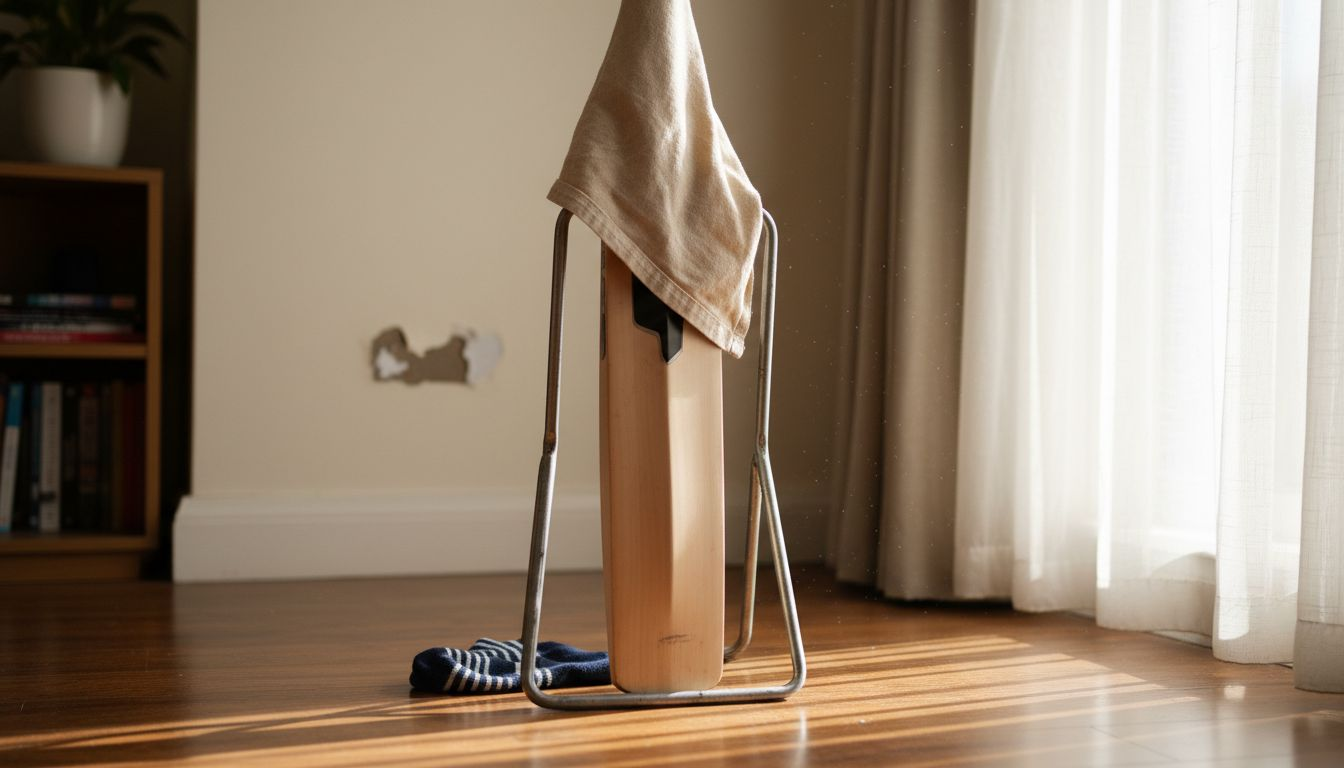
Store bats upright with the blade touching the floor and handle pointing up. Use a bat rack to support the handle, preventing the bat from leaning or falling. This position distributes weight naturally, reducing stress on the willow.
| Storage Method | Warping Risk | Long-Term Shape | Best Use Case |
|---|---|---|---|
| Upright with Rack | Low (10%) | Excellent retention | Long-term storage |
| Flat/Horizontal | Medium (40%) | Moderate retention | Short-term only |
| Leaning in Bag | High (70%) | Poor retention | Not recommended |
Breathable bat covers protect against dust and minor knocks while allowing moisture to escape. These covers prevent surface scratches without trapping humidity. Choose cotton or mesh materials that permit airflow.
Avoid airtight plastic bags or sealed cases. These trap moisture against the wood, creating ideal fungal conditions. Moisture trapped in non-breathable storage leads to surface degradation and structural weakening.
Protective accessories to consider:
- Wall-mounted bat racks for space-efficient vertical storage
- Breathable cotton bat sleeves for dust protection
- Padded bat covers for transport and storage combination
- Free-standing bat stands for easy access storage
Pro Tip: Inspect your bat’s position and cover condition monthly. Adjust any leaning bats immediately and replace covers showing moisture accumulation or mould.
Proper positioning combined with breathable protection keeps your bat ready for action. The minimal investment in a quality rack and cover pays dividends in extended bat life. Discover more about protective storage solutions in our guide on why you should use cricket bags for comprehensive equipment care.
Common Storage Mistakes to Avoid and How to Fix Them
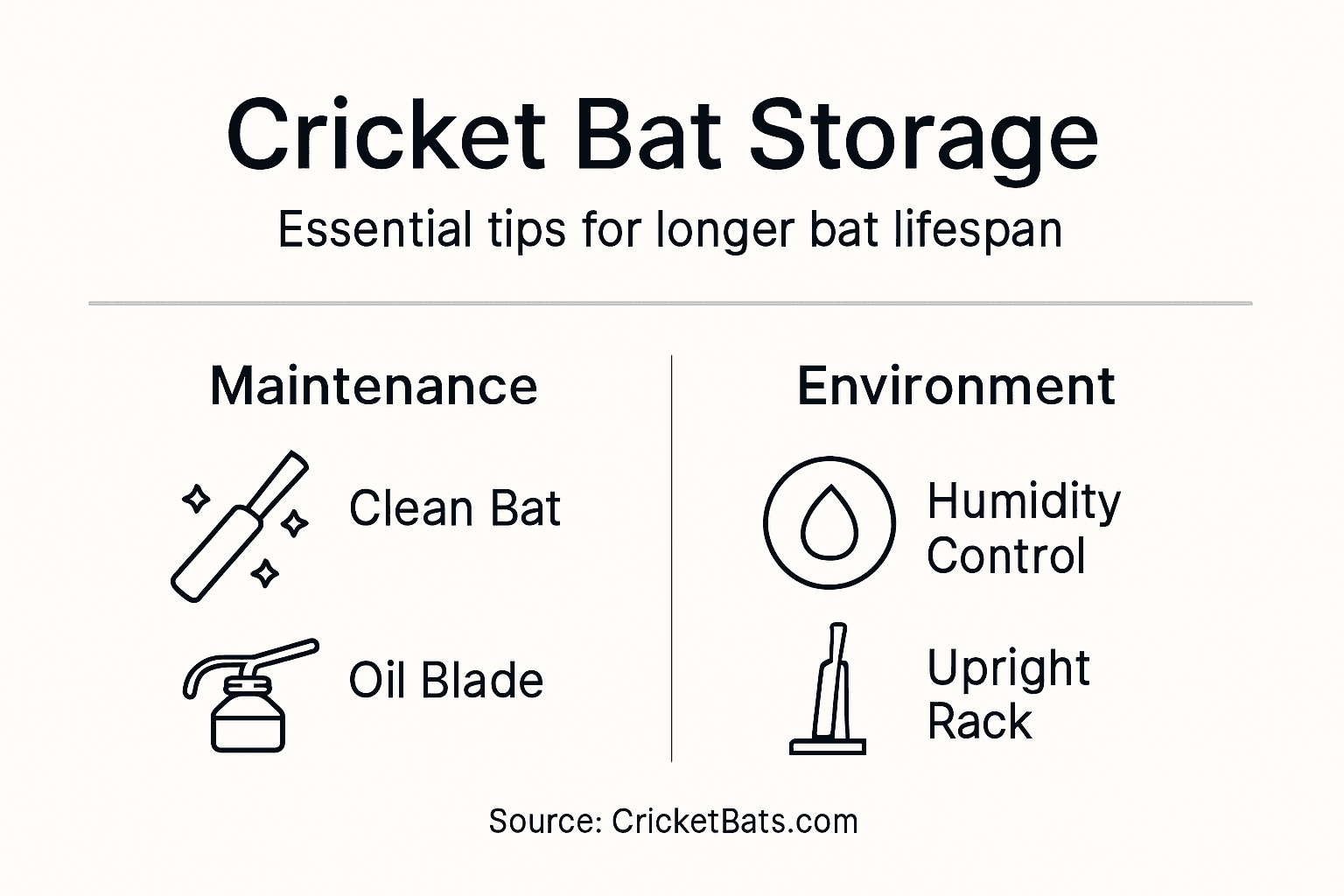
Even experienced players make storage errors that shorten bat lifespan. Recognizing these mistakes helps you avoid costly damage. Each error has a simple fix that protects your investment.
Common mistakes include:
- Storing bats in damp basements or unheated sheds
- Skipping pre-storage oil application
- Placing bats near radiators, heaters, or sunny windows
- Leaning bats against walls without support
- Using airtight containers that trap moisture
Storing bats in damp areas leads to a 60% increase in fungal development causing structural weakening. Fungus penetrates deep into willow fibres, creating irreversible soft spots. Once established, fungal damage cannot be repaired.
Correct these mistakes with targeted fixes:
- Move bats to dry, ventilated indoor spaces immediately
- Apply linseed oil before storage and monthly thereafter
- Relocate bats away from all heat sources and direct sunlight
- Install proper bat racks for upright, supported positioning
- Replace airtight bags with breathable covers
Monthly condition checks during storage catch problems early. Look for surface moisture, discolouration, or musty odours indicating fungal growth. Check for new cracks or changes in wood texture. Early detection allows corrective action before damage becomes severe.
“The difference between a bat lasting two seasons versus five often comes down to storage habits. Small consistent efforts in maintenance and environmental control compound into dramatic lifespan improvements.”
Don’t assume your current storage method is adequate. Assess it honestly against best practices. Making adjustments now prevents discovering damage when you need your bat most.
Long-Term Storage Techniques and Timeline
Off-season storage requires a structured maintenance plan. Cricket bats left unattended for months deteriorate faster than those receiving periodic care. Implementing a simple routine ensures your bat emerges ready for peak performance.
Follow these steps for successful long-term storage:
- Complete thorough cleaning and oiling as described earlier.
- Position bat upright in rack within climate-controlled storage area.
- Cover with breathable sleeve to protect from dust.
- Check monthly to reapply linseed oil if the wood feels dry, maintaining optimal moisture balance.
- Inspect for any environmental changes in storage location.
- Rotate bat position slightly to prevent prolonged pressure points.
Climate-controlled rooms provide the most reliable long-term storage. These spaces maintain consistent temperature and humidity year-round. If climate control isn’t available, choose the most stable interior room in your home.
Maintaining bat shape during extended storage requires consistent upright positioning. Racks designed for cricket bats distribute weight properly. Avoid makeshift solutions that allow bats to lean or rest on edges.
Monthly maintenance checks take five minutes but prevent months of deterioration. Touch the blade to assess dryness. Look for any colour changes indicating moisture or fungal activity. Ensure the storage environment hasn’t changed due to seasonal shifts.
Routine care during storage proves far easier than repairing damage. A well-maintained bat requires minimal preparation when the season begins. You can focus on practice rather than equipment recovery. Our comprehensive Cricket Bat Maintenance Guide covers year-round care strategies for optimal performance.
Expected Outcomes and How to Measure Storage Success
Proper storage delivers measurable benefits that justify the minimal effort required. Understanding these outcomes helps you verify your methods are working. You can track improvements over multiple seasons.
Well-stored bats demonstrate:
- Extended lifespan of up to 50% compared to improperly stored bats
- Dramatically reduced cracking, particularly around edges and toe
- Minimal fungal issues with clean, healthy wood appearance
- Consistent performance measured by sound and rebound quality
Verify storage success through regular visual checks. Look for smooth, crack-free surfaces without discolouration. The wood should maintain its natural colour without dark spots or white fungal patches. Edges should remain firm without soft spots.
Performance indicators reveal storage quality. A properly stored bat produces a clear, resonant sound when struck. The sweet spot retains its responsiveness. Rebound quality remains consistent with the bat’s original characteristics.
Measure success by comparing your bat’s condition season over season. Photograph your bat before storage and after retrieval. Document any changes in appearance or performance. Well-stored bats show minimal deterioration year after year.
Quantifiable improvements in bat longevity translate to significant cost savings. Replacing bats less frequently reduces equipment expenses. You also maintain consistent playing characteristics, improving your game through familiarity with your equipment.
Bring Your Cricket Bat Care to the Next Level with CricketBats.com
Now that you understand proper storage techniques, ensure you have the right tools for success. CricketBats.com offers everything you need to protect your investment and maximize bat performance.

We provide premium cricket bats from trusted manufacturers like Gunn & Moore, built to last with proper care. Our selection includes essential maintenance products such as raw linseed oil, breathable bat covers, and professional storage racks. Each product supports the storage practices outlined in this guide.
Explore quality cricket bats at CricketBats.com to find equipment that rewards careful maintenance. Our expert team understands the relationship between quality gear and proper care. We stock protective accessories designed specifically for cricket equipment longevity. Learn more about proper bat oiling techniques through our detailed guides. Discover the best cricket bags for protection during transport and storage. Invest in your equipment’s future today.
Frequently Asked Questions
How often should I oil my cricket bat when storing it long-term?
Monthly oil application is recommended if the bat feels dry during storage. This routine maintains wood moisture balance and prevents cracking. Use the same raw linseed oil you applied initially. For detailed oiling guidance, see our cricket bat oiling article.
Can I store my cricket bat in a normal bag or case?
Normal bags lacking breathability may trap moisture, causing fungal damage. Breathable bat covers allow essential airflow while protecting against dust and knocks. Use protective racks with breathable covers rather than airtight cases. Learn more in our cricket bags guide.
What is the ideal humidity and temperature for storing cricket bats?
Ideal humidity for bat storage is between 40-60%, with temperature below 25°C to prevent fungal growth and cracking. Avoid direct sunlight and heat sources like radiators. These parameters minimize warping and fungal risks. Monitor your storage area with a hygrometer for accuracy. Additional tips are available in our fungal prevention guide.
What should I do if I discover mould on my stored cricket bat?
Immediately remove the bat from storage and wipe affected areas with a dry cloth. Move to a dry, ventilated space and allow complete air drying. Light surface mould can be cleaned, but deep fungal penetration requires professional assessment. Prevention through proper storage eliminates this issue entirely.
Does the type of willow affect storage requirements?
All willow types require similar storage conditions, though Kashmir willow tolerates slight humidity variations better than English willow. English willow demands stricter environmental control due to its softer, more responsive nature. Both benefit equally from upright positioning, regular oiling, and climate-controlled storage.
Recommended
Many players see their cricket bats warp, crack, or lose performance far sooner than expected. Often, the culprit isn’t the bat itself but improper storage. Improper storage can reduce bat lifespan by up to 50%, robbing you of valuable seasons. This guide reveals expert methods to protect your cricket bat long-term, maintaining peak performance and maximizing your investment.
Table of Contents
- Introduction And Prerequisites
- Pre-Storage Maintenance: Cleaning And Oiling Your Bat
- Optimizing Storage Environment: Humidity And Temperature Control
- Physical Positioning And Protection Accessories For Cricket Bats
- Common Storage Mistakes To Avoid And How To Fix Them
- Long-Term Storage Techniques And Timeline
- Expected Outcomes And How To Measure Storage Success
- Bring Your Cricket Bat Care To The Next Level With CricketBats.com
- Frequently Asked Questions
Key Takeaways
| Point | Details |
|---|---|
| Lifespan Extension | Proper storage can extend your bat’s life by up to 50% compared to neglectful methods. |
| Climate Control | Maintain 40-60% humidity and temperatures below 25°C to prevent cracking and warping. |
| Oiling Routine | Apply raw linseed oil before storage and reapply monthly during long-term storage. |
| Positioning Matters | Store bats upright using racks with breathable covers to prevent shape distortion. |
| Avoid Damp Areas | Dry, ventilated spaces reduce fungal damage risk by 60%. |
Introduction and Prerequisites
Understanding why cricket bats fail during storage helps you prevent costly damage. Moisture fluctuations cause wood fibres to expand and contract, creating cracks. Temperature extremes dry out natural oils, making willow brittle. Poor positioning leads to warping under the bat’s own weight.
Before storing your bat, you need foundational knowledge of environmental conditions. Ideal humidity ranges between 40-60% to maintain wood moisture balance. Temperature should stay below 25°C to avoid drying and splitting. Direct sunlight and heat sources accelerate deterioration.
Gather essential materials for proper storage:
- Raw linseed oil for moisture retention
- Breathable bat cover for dust protection
- Bat rack for upright positioning
- Clean, dry indoor storage space
Understanding these environmental factors helps you identify suitable storage locations. Avoid garages with fluctuating temperatures or damp basements prone to moisture. A spare bedroom, wardrobe, or climate-controlled storeroom works best.
| Environmental Factor | Recommended Range | Risk if Ignored |
|---|---|---|
| Humidity | 40-60% | Fungal growth or excessive drying |
| Temperature | Below 25°C | Cracking and oil depletion |
| Sunlight Exposure | None | Surface degradation and brittleness |
| Ventilation | Good airflow | Moisture accumulation |
Prepare by assessing your available storage spaces against these criteria. Identify any environmental adjustments needed before you begin the storage process.
Pre-Storage Maintenance: Cleaning and Oiling Your Bat
Cleaning your bat thoroughly removes dirt, grass, and moisture that could cause damage during storage. Use a soft, dry cloth to wipe the blade, edges, and back. Pay attention to the toe, where moisture often accumulates.
Once clean, apply a thin layer of raw linseed oil to the blade face, edges, and toe. Avoid the splice area where wood meets handle. Use a clean cloth to spread oil evenly, working it into the grain. Allow 24-48 hours for complete absorption in a cool, dry place.
Linseed oil should be reapplied regularly, especially before storage and monthly during long-term storage, to maintain moisture balance and prevent cracking. This routine prevents the wood from drying out and losing its natural resilience.
Pro Tip: Test oil absorption by touching the blade after 24 hours. If it feels dry rather than slightly tacky, apply another thin coat.
Follow these steps for pre-storage oiling:
- Clean the bat surface with a dry cloth, removing all debris.
- Pour a small amount of raw linseed oil onto a clean cloth.
- Apply oil in circular motions, covering the blade evenly.
- Let the bat rest horizontally for 24-48 hours in a ventilated area.
- Wipe off any excess oil before moving to storage location.
Regular oiling maintains the wood’s moisture content, preventing brittleness. It also fills microscopic cracks, reducing water penetration. This simple routine dramatically extends bat lifespan and preserves hitting performance. For comprehensive guidance, explore our Cricket Bat Oiling Explained article.
Optimizing Storage Environment: Humidity and Temperature Control
Environmental conditions determine storage success or failure. Cricket bats are made from natural willow, which reacts dramatically to humidity and temperature changes. Controlling these factors prevents warping, fungal growth, and structural damage.
Maintain indoor humidity between 40-60% using a hygrometer to monitor levels. Too much moisture encourages fungal spores to colonize the wood surface. Too little causes the wood to shrink and crack. Moderate humidity preserves the bat’s natural moisture balance.
Keep storage temperature below 25°C, avoiding direct sunlight and heat sources. Storing bats near heaters increases the risk of cracking by 40%. Radiators, boilers, and sunny windowsills are your bat’s worst enemies.
Practical environmental tips:
- Choose interior rooms with stable temperatures year-round
- Avoid garages and sheds with seasonal temperature swings
- Keep bats away from exterior walls prone to condensation
- Use dehumidifiers in naturally damp spaces
- Never store bats in unventilated cupboards or sealed containers
Damp, unventilated storage spots create perfect conditions for fungal growth. Mould weakens wood fibres, creating soft spots that compromise structural integrity. Proper ventilation allows moisture to escape, keeping the bat dry.
“Proper environmental control is non-negotiable for cricket bat longevity. Temperature and humidity fluctuations are the primary causes of premature bat failure, yet they’re entirely preventable with basic awareness.”
Find or create a storage location meeting these standards. A spare wardrobe in a heated bedroom provides ideal conditions. Climate-controlled rooms offer the most reliable protection. Learn more about preventing fungal damage to your cricket bat through proper environmental management.
Physical Positioning and Protection Accessories for Cricket Bats
How you position your bat during storage directly impacts its shape retention. Cricket bats have natural weight distribution that can cause warping if stored incorrectly. Upright storage with proper support prevents these issues.
Store bats upright with the blade touching the floor and handle pointing up. Use a bat rack to support the handle, preventing the bat from leaning or falling. This position distributes weight naturally, reducing stress on the willow.
| Storage Method | Warping Risk | Long-Term Shape | Best Use Case |
|---|---|---|---|
| Upright with Rack | Low (10%) | Excellent retention | Long-term storage |
| Flat/Horizontal | Medium (40%) | Moderate retention | Short-term only |
| Leaning in Bag | High (70%) | Poor retention | Not recommended |
Breathable bat covers protect against dust and minor knocks while allowing moisture to escape. These covers prevent surface scratches without trapping humidity. Choose cotton or mesh materials that permit airflow.
Avoid airtight plastic bags or sealed cases. These trap moisture against the wood, creating ideal fungal conditions. Moisture trapped in non-breathable storage leads to surface degradation and structural weakening.
Protective accessories to consider:
- Wall-mounted bat racks for space-efficient vertical storage
- Breathable cotton bat sleeves for dust protection
- Padded bat covers for transport and storage combination
- Free-standing bat stands for easy access storage
Pro Tip: Inspect your bat’s position and cover condition monthly. Adjust any leaning bats immediately and replace covers showing moisture accumulation or mould.
Proper positioning combined with breathable protection keeps your bat ready for action. The minimal investment in a quality rack and cover pays dividends in extended bat life. Discover more about protective storage solutions in our guide on why you should use cricket bags for comprehensive equipment care.
Common Storage Mistakes to Avoid and How to Fix Them
Even experienced players make storage errors that shorten bat lifespan. Recognizing these mistakes helps you avoid costly damage. Each error has a simple fix that protects your investment.
Common mistakes include:
- Storing bats in damp basements or unheated sheds
- Skipping pre-storage oil application
- Placing bats near radiators, heaters, or sunny windows
- Leaning bats against walls without support
- Using airtight containers that trap moisture
Storing bats in damp areas leads to a 60% increase in fungal development causing structural weakening. Fungus penetrates deep into willow fibres, creating irreversible soft spots. Once established, fungal damage cannot be repaired.
Correct these mistakes with targeted fixes:
- Move bats to dry, ventilated indoor spaces immediately
- Apply linseed oil before storage and monthly thereafter
- Relocate bats away from all heat sources and direct sunlight
- Install proper bat racks for upright, supported positioning
- Replace airtight bags with breathable covers
Monthly condition checks during storage catch problems early. Look for surface moisture, discolouration, or musty odours indicating fungal growth. Check for new cracks or changes in wood texture. Early detection allows corrective action before damage becomes severe.
“The difference between a bat lasting two seasons versus five often comes down to storage habits. Small consistent efforts in maintenance and environmental control compound into dramatic lifespan improvements.”
Don’t assume your current storage method is adequate. Assess it honestly against best practices. Making adjustments now prevents discovering damage when you need your bat most.
Long-Term Storage Techniques and Timeline
Off-season storage requires a structured maintenance plan. Cricket bats left unattended for months deteriorate faster than those receiving periodic care. Implementing a simple routine ensures your bat emerges ready for peak performance.
Follow these steps for successful long-term storage:
- Complete thorough cleaning and oiling as described earlier.
- Position bat upright in rack within climate-controlled storage area.
- Cover with breathable sleeve to protect from dust.
- Check monthly to reapply linseed oil if the wood feels dry, maintaining optimal moisture balance.
- Inspect for any environmental changes in storage location.
- Rotate bat position slightly to prevent prolonged pressure points.
Climate-controlled rooms provide the most reliable long-term storage. These spaces maintain consistent temperature and humidity year-round. If climate control isn’t available, choose the most stable interior room in your home.
Maintaining bat shape during extended storage requires consistent upright positioning. Racks designed for cricket bats distribute weight properly. Avoid makeshift solutions that allow bats to lean or rest on edges.
Monthly maintenance checks take five minutes but prevent months of deterioration. Touch the blade to assess dryness. Look for any colour changes indicating moisture or fungal activity. Ensure the storage environment hasn’t changed due to seasonal shifts.
Routine care during storage proves far easier than repairing damage. A well-maintained bat requires minimal preparation when the season begins. You can focus on practice rather than equipment recovery. Our comprehensive Cricket Bat Maintenance Guide covers year-round care strategies for optimal performance.
Expected Outcomes and How to Measure Storage Success
Proper storage delivers measurable benefits that justify the minimal effort required. Understanding these outcomes helps you verify your methods are working. You can track improvements over multiple seasons.
Well-stored bats demonstrate:
- Extended lifespan of up to 50% compared to improperly stored bats
- Dramatically reduced cracking, particularly around edges and toe
- Minimal fungal issues with clean, healthy wood appearance
- Consistent performance measured by sound and rebound quality
Verify storage success through regular visual checks. Look for smooth, crack-free surfaces without discolouration. The wood should maintain its natural colour without dark spots or white fungal patches. Edges should remain firm without soft spots.
Performance indicators reveal storage quality. A properly stored bat produces a clear, resonant sound when struck. The sweet spot retains its responsiveness. Rebound quality remains consistent with the bat’s original characteristics.
Measure success by comparing your bat’s condition season over season. Photograph your bat before storage and after retrieval. Document any changes in appearance or performance. Well-stored bats show minimal deterioration year after year.
Quantifiable improvements in bat longevity translate to significant cost savings. Replacing bats less frequently reduces equipment expenses. You also maintain consistent playing characteristics, improving your game through familiarity with your equipment.
Bring Your Cricket Bat Care to the Next Level with CricketBats.com
Now that you understand proper storage techniques, ensure you have the right tools for success. CricketBats.com offers everything you need to protect your investment and maximize bat performance.
We provide premium cricket bats from trusted manufacturers like Gunn & Moore, built to last with proper care. Our selection includes essential maintenance products such as raw linseed oil, breathable bat covers, and professional storage racks. Each product supports the storage practices outlined in this guide.
Explore quality cricket bats at CricketBats.com to find equipment that rewards careful maintenance. Our expert team understands the relationship between quality gear and proper care. We stock protective accessories designed specifically for cricket equipment longevity. Learn more about proper bat oiling techniques through our detailed guides. Discover the best cricket bags for protection during transport and storage. Invest in your equipment’s future today.
Frequently Asked Questions
How often should I oil my cricket bat when storing it long-term?
Monthly oil application is recommended if the bat feels dry during storage. This routine maintains wood moisture balance and prevents cracking. Use the same raw linseed oil you applied initially. For detailed oiling guidance, see our cricket bat oiling article.
Can I store my cricket bat in a normal bag or case?
Normal bags lacking breathability may trap moisture, causing fungal damage. Breathable bat covers allow essential airflow while protecting against dust and knocks. Use protective racks with breathable covers rather than airtight cases. Learn more in our cricket bags guide.
What is the ideal humidity and temperature for storing cricket bats?
Ideal humidity for bat storage is between 40-60%, with temperature below 25°C to prevent fungal growth and cracking. Avoid direct sunlight and heat sources like radiators. These parameters minimize warping and fungal risks. Monitor your storage area with a hygrometer for accuracy. Additional tips are available in our fungal prevention guide.
What should I do if I discover mould on my stored cricket bat?
Immediately remove the bat from storage and wipe affected areas with a dry cloth. Move to a dry, ventilated space and allow complete air drying. Light surface mould can be cleaned, but deep fungal penetration requires professional assessment. Prevention through proper storage eliminates this issue entirely.
Does the type of willow affect storage requirements?
All willow types require similar storage conditions, though Kashmir willow tolerates slight humidity variations better than English willow. English willow demands stricter environmental control due to its softer, more responsive nature. Both benefit equally from upright positioning, regular oiling, and climate-controlled storage.